What Is Sexual Orientation OCD and Why Does It Cause So Much Distress?
Have you ever had a thought pop into your head that made you feel uncomfortable or confused? For people with Sexual Orientation OCD (sometimes called SO-OCD or “gay OCD”), these thoughts happen constantly and cause intense worry about their sexual identity. This isn’t about someone questioning their sexuality in a healthy way—it’s about obsessive, unwanted thoughts that create massive distress and doubt.
Sexual Orientation OCD is a subtype of Obsessive-Compulsive Disorder where a person experiences persistent, intrusive thoughts that make them question their sexual orientation. These thoughts aren’t based on genuine attraction or feelings, but rather on anxiety-driven doubt that won’t go away (Williams et al., 2015). The person typically has no actual desire to change their orientation—instead, they feel terrified by the possibility that they might be different from who they’ve always believed themselves to be.
 Teenagers engage in an open and supportive conversation about sexual orientation.
People with SO-OCD often experience intense anxiety when they notice any thought or feeling that could be interpreted as questioning their sexuality. They might analyse every interaction, every glance, every feeling, searching for “proof” of their fears. This constant mental checking becomes exhausting and overwhelming.
How Sexual Orientation OCD Differs From Genuine Questioning
It’s completely normal and healthy for people to question their sexual orientation, especially during adolescence and young adulthood. However, SO-OCD is fundamentally different from this natural exploration process. Understanding these differences can help you recognise whether you or someone you know might be dealing with OCD rather than genuine identity exploration.
Healthy Questioning Versus OCD
When someone is genuinely exploring their sexual orientation, they typically feel curious rather than terrified. They might feel excited, nervous, or uncertain, but there’s usually an element of self-discovery that feels authentic (American Psychological Association, 2021). In contrast, people with SO-OCD feel trapped by their thoughts and desperately want them to stop.
With healthy questioning, a person might think “I wonder if I’m attracted to this person” and then naturally move on with their day. Someone with SO-OCD thinks “What if I’m attracted to this person?” and then spends hours analysing that single moment, checking their physical responses, reviewing their past relationships, and seeking reassurance from others.
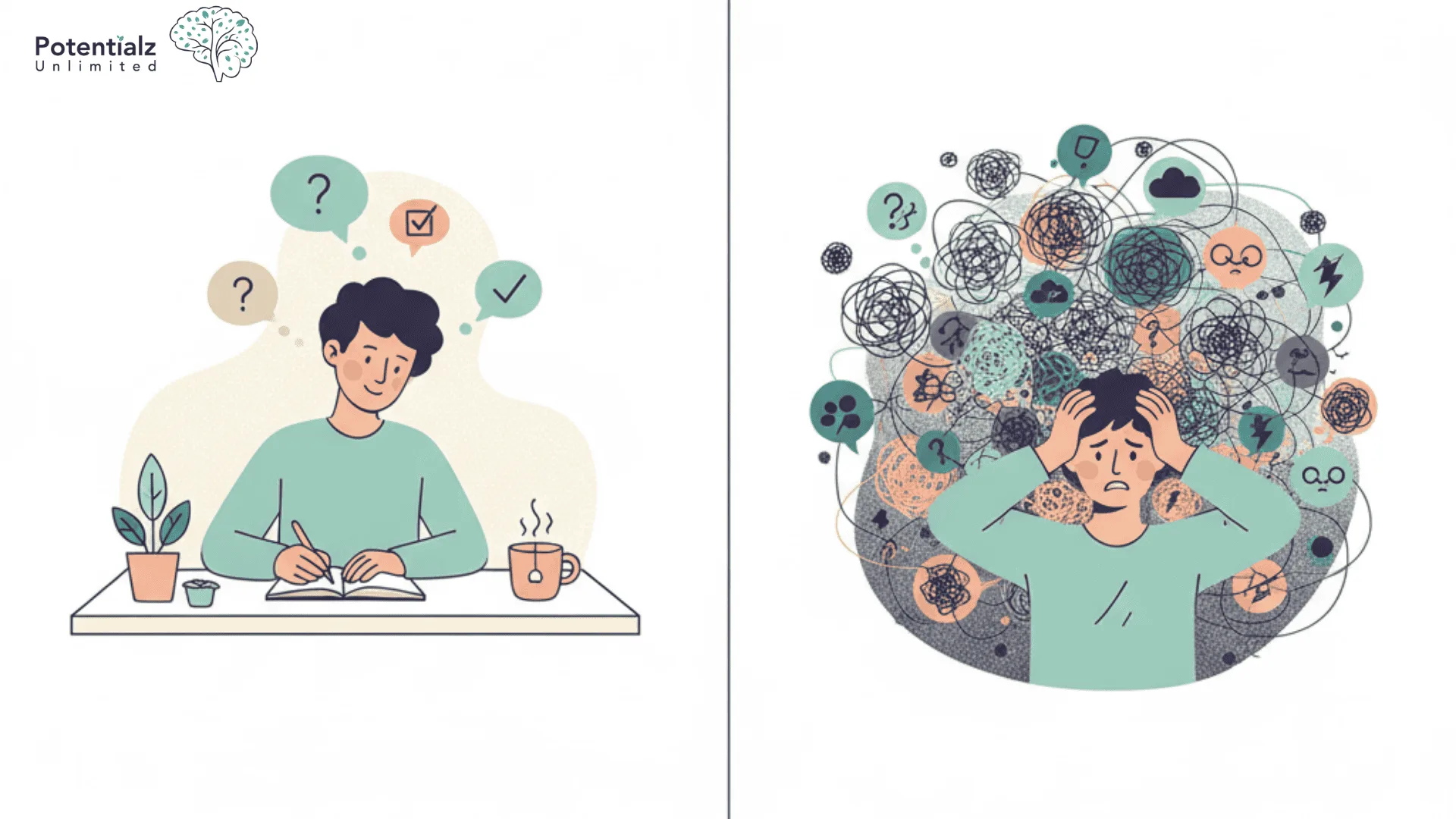 Navigating Thoughts: A comparison between healthy questioning through journaling and the overwhelming nature of OCD thoughts.
The key difference lies in the distress level and the compulsive behaviour that follows. According to research published in the Journal of Anxiety Disorders, people with SO-OCD experience their thoughts as ego-dystonic, meaning the thoughts feel completely inconsistent with their actual identity and values (Williams et al., 2015). They don’t want to explore these thoughts—they want them gone.
Common Obsessions in Sexual Orientation OCD
Sexual Orientation OCD can manifest in various ways, but certain patterns of obsessive thoughts appear frequently. Understanding these patterns can help you recognise SO-OCD in yourself or others.
Intrusive Thoughts About Attraction
People with SO-OCD might constantly check whether they feel attracted to people of a particular gender. They might stare at someone and ask themselves “Am I attracted to this person?” or “Did I just have a sexual thought about them?” These checks aren’t based on genuine attraction—they’re anxiety-driven tests that the person feels compelled to perform.
Fear of “Becoming” a Different Orientation
Many people with SO-OCD express fear that they’re “turning” gay, straight, or bisexual, as if sexual orientation can suddenly change against their will. Research shows that sexual orientation is typically stable throughout adulthood, and genuine shifts in attraction happen gradually, not suddenly due to intrusive thoughts (Rosario et al., 2006).
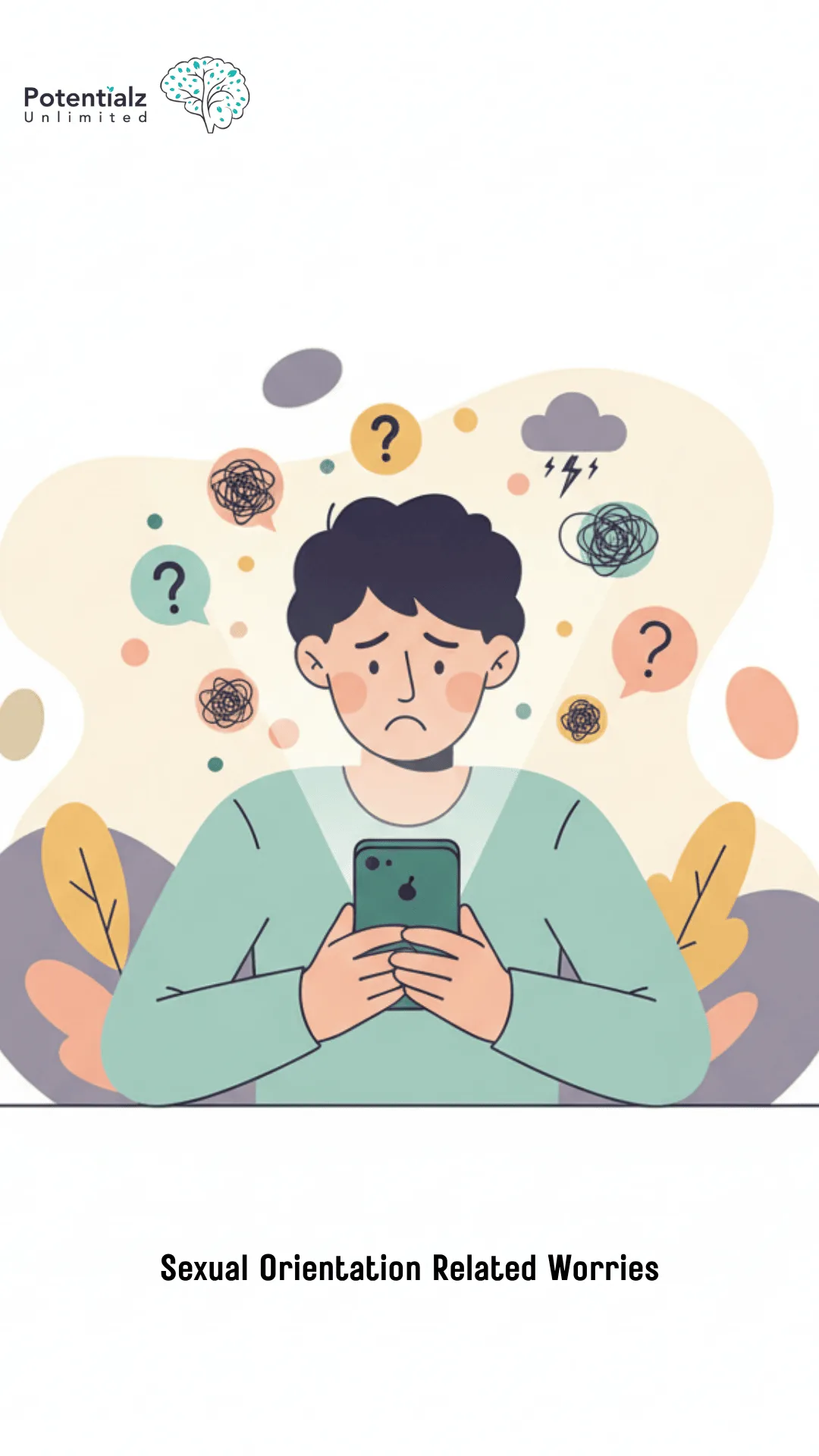 A person scrolls through their phone, filled with anxiety and confusion about their sexual orientation, depicted by surrounding question marks and worry symbols.
Analysing Past Behaviours and Relationships
People with SO-OCD often spend hours reviewing their entire romantic and sexual history, searching for “evidence” that might prove or disprove their fears. They might question whether they truly enjoyed past intimate experiences or whether certain childhood friendships had hidden romantic undertones.
The Compulsive Behaviours That Keep SO-OCD Going
Like all forms of OCD, Sexual Orientation OCD involves not just obsessions but also compulsions—repetitive behaviours or mental acts that a person feels driven to perform to reduce anxiety. Unfortunately, these compulsions actually make the problem worse over time.
Mental Checking and Review
The most common compulsion in SO-OCD is mental checking. This might involve reviewing interactions repeatedly, testing physical arousal responses, or analysing thoughts to determine their “true meaning.” According to research in Behaviour Research and Therapy, mental compulsions are just as problematic as physical compulsions in maintaining OCD symptoms (Moulding et al., 2014).
Reassurance Seeking
People with SO-OCD often ask friends, family members, or partners for reassurance about their sexuality. They might ask questions like “Do I seem gay to you?” or “Do you think I’m attracted to women?” While reassurance temporarily reduces anxiety, it reinforces the OCD cycle by teaching the brain that the doubt is dangerous and needs to be resolved immediately.
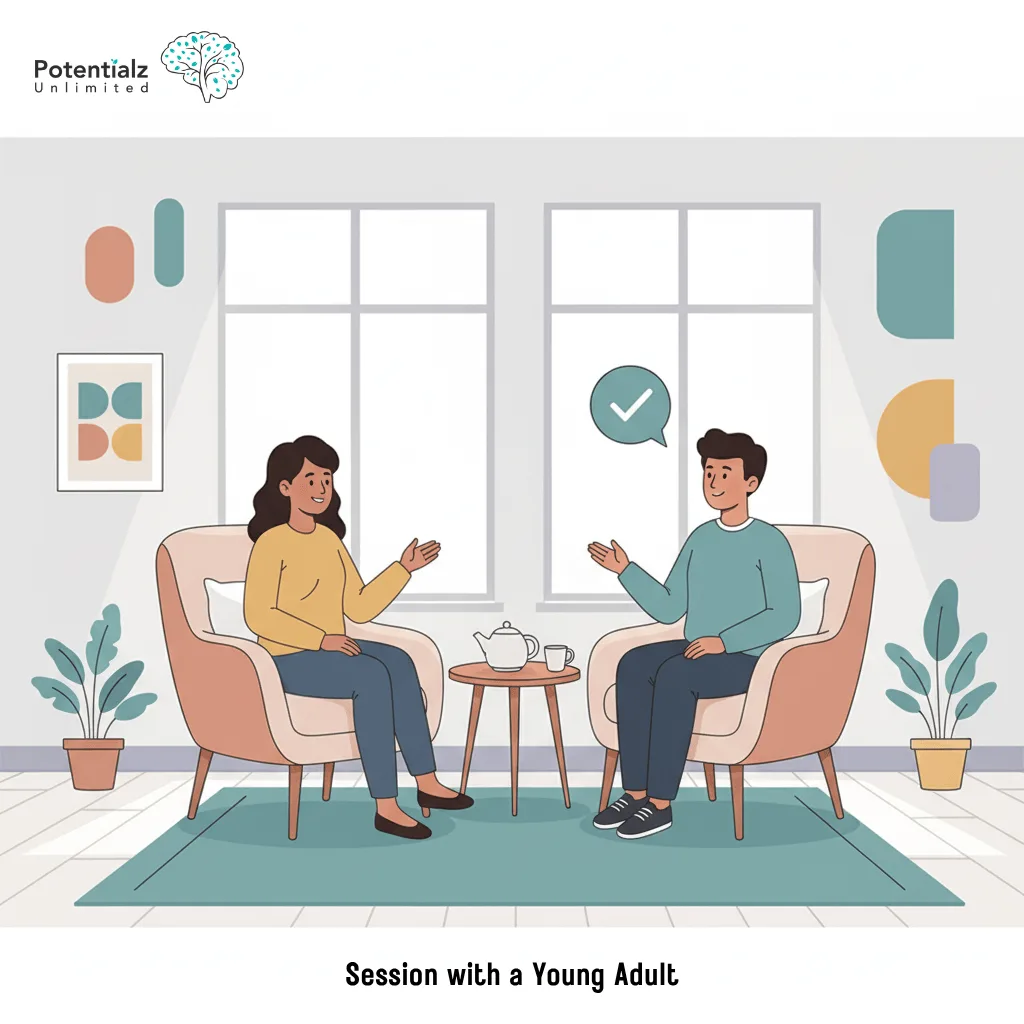 Therapist and client engage in a supportive session focused on addressing sexual orientation OCD, fostering understanding and growth in a comfortable setting.
Avoidance Behaviours
Many people with SO-OCD start avoiding situations that trigger their obsessions. This might include avoiding certain friends, refusing to watch particular types of media, or steering clear of public spaces where they might encounter people who trigger their doubts. At Potentialz Psychology Practice in Bella Vista, we see how these avoidance patterns can significantly impact daily functioning and relationships.
Why Sexual Orientation OCD Develops
OCD doesn’t discriminate—it can affect anyone regardless of their actual sexual orientation. Understanding why SO-OCD develops can help reduce shame and increase self-compassion.
The Role of Anxiety and Doubt
OCD latches onto whatever themes cause the most distress for a particular person. For someone who highly values certainty about their identity, sexual orientation becomes a vulnerable target for OCD’s “what if” questions (Radomsky & Alcolado, 2010). The condition isn’t caused by suppressed desires or hidden truths—it’s caused by the brain’s anxiety system malfunctioning.
Cultural and Social Factors
Growing up in environments where sexuality is a taboo topic or where certain orientations are stigmatised can make people more vulnerable to developing SO-OCD. The more importance a person places on their sexual identity, and the more anxiety they have about being “different,” the more likely OCD is to exploit these fears.
 A heartwarming illustration depicting a diverse community gathering, where people of all ages and backgrounds share laughter, food, and support one another.
Research published in Clinical Psychology Review indicates that thought-action fusion—believing that having a thought is as meaningful as actually doing something—plays a significant role in OCD development (Shafran & Rachman, 2004). People with SO-OCD often believe that having a fleeting thought about someone means they must be attracted to them.
How Sexual Orientation OCD Affects Daily Life
Living with SO-OCD can be exhausting and isolating. The constant mental battles affect every aspect of life, from relationships to work performance to emotional wellbeing.
Impact on Relationships
SO-OCD can strain romantic relationships significantly. Partners might feel hurt when asked repeatedly for reassurance, or confused about why their loved one seems so distressed. The person with SO-OCD might avoid physical intimacy because it triggers more checking and doubt.
Academic and Work Performance
The mental energy spent on obsessions and compulsions leaves less cognitive resources for study or work. Students might struggle to concentrate in class, while adults might find their work performance declining as they spend hours trapped in mental compulsions.
Social Isolation
Many people with SO-OCD withdraw from social situations to avoid triggers. They might stop hanging out with certain friends, avoid social events, or limit their activities to only “safe” environments. This isolation can worsen depression and anxiety symptoms that often accompany OCD.
 Lost in thought: A solitary moment in a bustling café, where inner worries overshadow the lively chatter around.
If you’re experiencing these challenges, seeking help from an OCD psychologist in Bella Vista can make a significant difference in reclaiming your life.
Evidence-Based Treatment for Sexual Orientation OCD
The good news is that Sexual Orientation OCD is highly treatable with the right therapeutic approach. The gold standard treatment combines specific psychological interventions that target both the obsessions and compulsions.
Cognitive Behavioural Therapy for OCD
Cognitive Behavioural Therapy (CBT) specifically designed for OCD helps people understand how their thoughts, feelings, and behaviours interact to maintain the disorder. A CBT psychologist in Bella Vista can help you identify the thinking patterns that fuel your OCD and develop healthier responses.
CBT for OCD includes cognitive restructuring, which helps challenge the distorted beliefs that maintain the disorder. For example, someone with SO-OCD might believe “If I have this thought, it must mean something important about my sexuality.” CBT helps examine whether this belief is actually accurate or helpful (Wilhelm & Steketee, 2006).
Exposure and Response Prevention
Exposure and Response Prevention (ERP) is the most effective component of OCD treatment. This involves gradually exposing yourself to feared thoughts or situations while resisting the urge to perform compulsions. For SO-OCD, this might mean allowing intrusive thoughts to exist without mentally checking, seeking reassurance, or avoiding triggers.
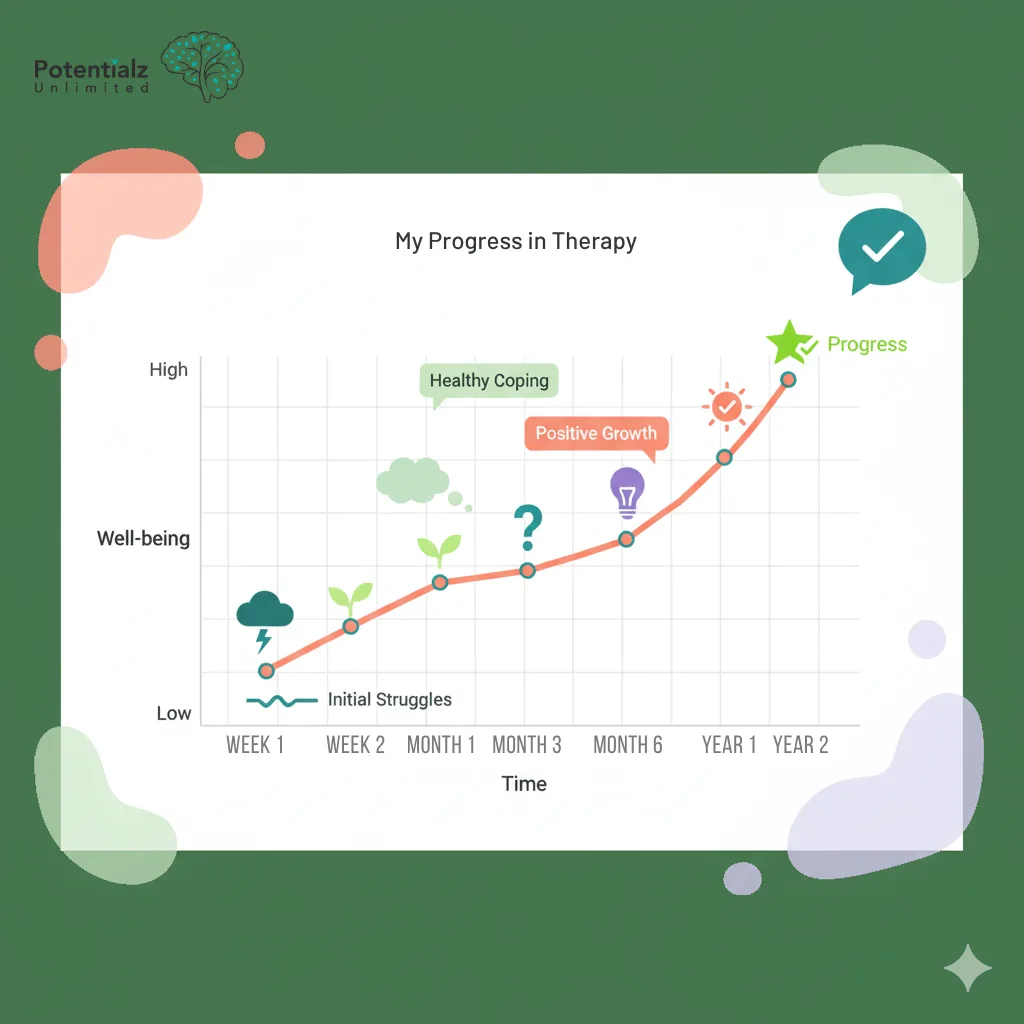 Tracking therapeutic progress: a journey from initial struggles to notable growth and healthy coping over two years.
According to research in the Archives of General Psychiatry, ERP leads to significant symptom reduction in approximately 60-85% of people who complete treatment (Foa et al., 2005). The treatment works by teaching your brain that uncertainty is tolerable and that you don’t need to resolve every doubt immediately.
Acceptance and Commitment Therapy
Acceptance and Commitment Therapy (ACT) is increasingly used alongside traditional CBT for OCD. ACT teaches people to accept unwanted thoughts as normal brain events rather than threats that need to be eliminated. This approach helps reduce the struggle against intrusive thoughts, which paradoxically makes them less powerful and frequent (Twohig et al., 2010).
Supporting Someone With Sexual Orientation OCD
If someone you care about is struggling with SO-OCD, your support can be invaluable. However, it’s important to support them in ways that actually help rather than accidentally reinforcing their OCD.
What Not to Do
Avoid providing reassurance when asked questions about their sexuality or attraction. While it seems helpful in the moment, reassurance actually strengthens the OCD cycle. Similarly, don’t encourage avoidance behaviours or participate in their compulsions by helping them “analyse” situations.
Helpful Ways to Support
Instead, encourage professional treatment and validate their distress without validating the OCD’s questions. You might say “I can see you’re really struggling with these thoughts, and that must be exhausting. Have you considered speaking with a psychologist who specialises in OCD?” Learning about OCD together can also help both of you understand what’s happening and why certain responses are more helpful than others.
 Two friends share coffee and a supportive conversation, their body language reflecting empathy and understanding.
If your loved one is seeking treatment, consider encouraging them to contact our team for psychology services in Bella Vista tailored for anxiety disorders and OCD.
Finding the Right Support for Sexual Orientation OCD
Recovery from SO-OCD is possible, but it requires working with mental health professionals who understand OCD specifically. Not all therapists are trained in ERP and OCD treatment, so finding the right support is crucial.
What to Look for in a Therapist
Seek a psychologist who has specific training and experience in treating OCD using evidence-based approaches like CBT and ERP. They should be willing to discuss their treatment approach and explain how they’ll help you reduce compulsions rather than just talking about your thoughts.
At Potentialz Psychology Practice, our clinical psychologists in Bella Vista have extensive experience treating various OCD subtypes, including Sexual Orientation OCD. We use evidence-based approaches tailored to each person’s unique situation.
Additional Support Options
Some people benefit from combining individual therapy with support groups where they can connect with others who understand SO-OCD. Online communities can also provide valuable peer support, though they shouldn’t replace professional treatment.
 Warm and inviting reception area at a psychology practice, where clients await their OCD treatment appointments in a comforting and serene environment.
For those also dealing with related conditions like anxiety or depression, comprehensive treatment addressing all concerns is important for optimal recovery.
Moving Forward: Hope and Recovery
Sexual Orientation OCD can feel overwhelming, but thousands of people have successfully recovered and reclaimed their lives. Treatment works, and with the right support, you can learn to coexist with uncertainty without letting it control your daily functioning.
Recovery doesn’t mean you’ll never have an intrusive thought again—it means those thoughts will lose their power over you. You’ll develop skills to recognise OCD for what it is and respond to it effectively. Over time, the thoughts naturally decrease in frequency and intensity as your brain learns they’re not threats requiring immediate action.
Remember that having SO-OCD says nothing about your actual sexual orientation. It’s simply OCD latching onto a theme that causes you distress. Whether you’re straight, gay, bisexual, or anywhere on the spectrum, you deserve support in managing this challenging condition.
If you’re struggling with intrusive thoughts about sexual orientation, reaching out for help is the first step toward recovery. Contact our team of experienced psychologists to schedule an assessment and begin your journey toward freedom from OCD’s grip.
Knowledge Check Quiz
Question 1: What is the main difference between Sexual Orientation OCD and genuine questioning of sexual identity?
a) People with SO-OCD feel curious and excited about exploring their identityb) SO-OCD involves ego-dystonic thoughts that cause distress, while genuine questioning feels more authenticc) There is no difference between themd) SO-OCD only affects teenagers
Answer: B - SO-OCD involves thoughts that feel completely inconsistent with a person’s identity and cause significant distress, while genuine questioning typically involves authentic curiosity.
Question 2: Which treatment approach is considered the gold standard for Sexual Orientation OCD?
a) Medication onlyb) Talk therapy without specific OCD focusc) Cognitive Behavioural Therapy with Exposure and Response Preventiond) Avoiding all triggers permanently
Answer: C - CBT with ERP is the evidence-based gold standard treatment for all types of OCD, including SO-OCD.
Question 3: What is a mental compulsion commonly seen in SO-OCD?
a) Washing hands repeatedlyb) Checking whether you feel attracted to someonec) Organizing items by colourd) Counting to specific numbers
Answer: B - Mental checking, including testing for attraction, is one of the most common compulsions in SO-OCD.
Question 4: How does reassurance-seeking affect SO-OCD?
a) It helps solve the problem permanentlyb) It temporarily reduces anxiety but reinforces the OCD cyclec) It has no effect on the conditiond) It immediately cures the disorder
Answer: B - Reassurance provides short-term relief but teaches the brain that the doubt is dangerous and needs to be resolved, maintaining the OCD cycle.
Need Professional Support?
If you're experiencing mental health concerns, our team is here to help.