Have you ever felt the need to wash your hands again and again, even though you just cleaned them? Do you avoid touching door handles, worry constantly about getting sick, or feel anxious when someone coughs near you? These feelings might be more than just being careful about germs. They could be signs of contamination OCD, a mental health condition that affects thousands of Australians every year.
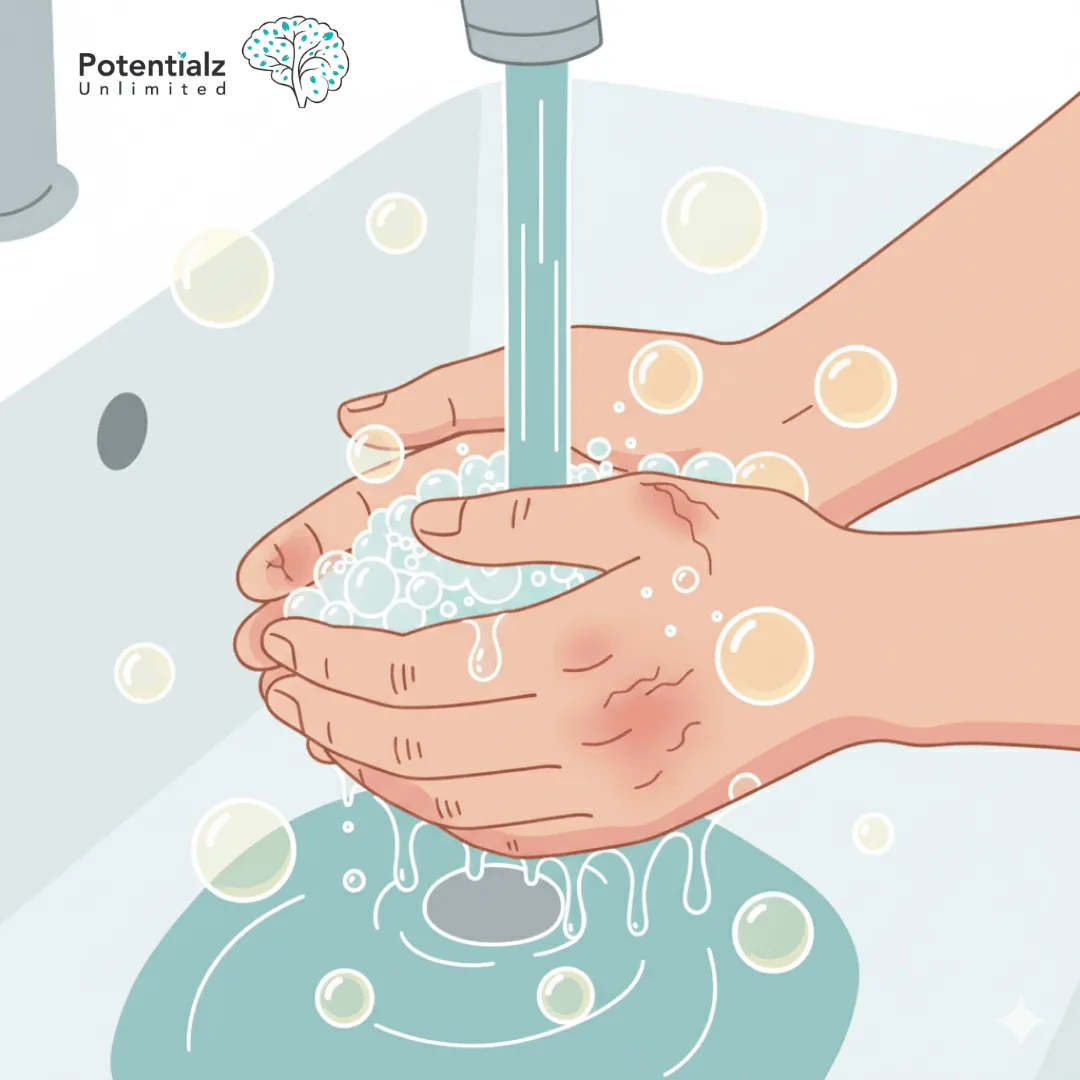 A close-up of hands showing the toll of frequent washing, as raw skin meets cleansing water and soap bubbles.
Contamination OCD is one of the most common types of Obsessive-Compulsive Disorder. It goes beyond normal hygiene concerns and creates a cycle of fear and repeated behaviours that can take over your daily life. In this guide, we will explore what contamination OCD is, how it affects people, and most importantly, what treatments can help you break free from its grip.
What Is Contamination OCD?
Contamination OCD is a type of obsessive-compulsive disorder where a person experiences intense fears about dirt, germs, illness, or other forms of contamination. These fears are not just worries but are obsessions that feel overwhelming and impossible to ignore.
People with contamination OCD experience two main types of symptoms:
Obsessions are unwanted, intrusive thoughts that cause extreme anxiety. In contamination OCD, these might include:
- Constant worry about getting sick from touching things
- Fear of spreading germs to loved ones
- Thoughts about being dirty or contaminated
- Intense distress about specific substances like chemicals or bodily fluids
Compulsions are repetitive behaviours or mental actions done to reduce the anxiety from obsessions. Common compulsions include:
- Washing hands repeatedly, often until they are raw
- Excessive cleaning of surfaces, objects, or clothing
- Avoiding places or people perceived as dirty
- Following strict rules about what can and cannot be touched
- Seeking reassurance from others about cleanliness
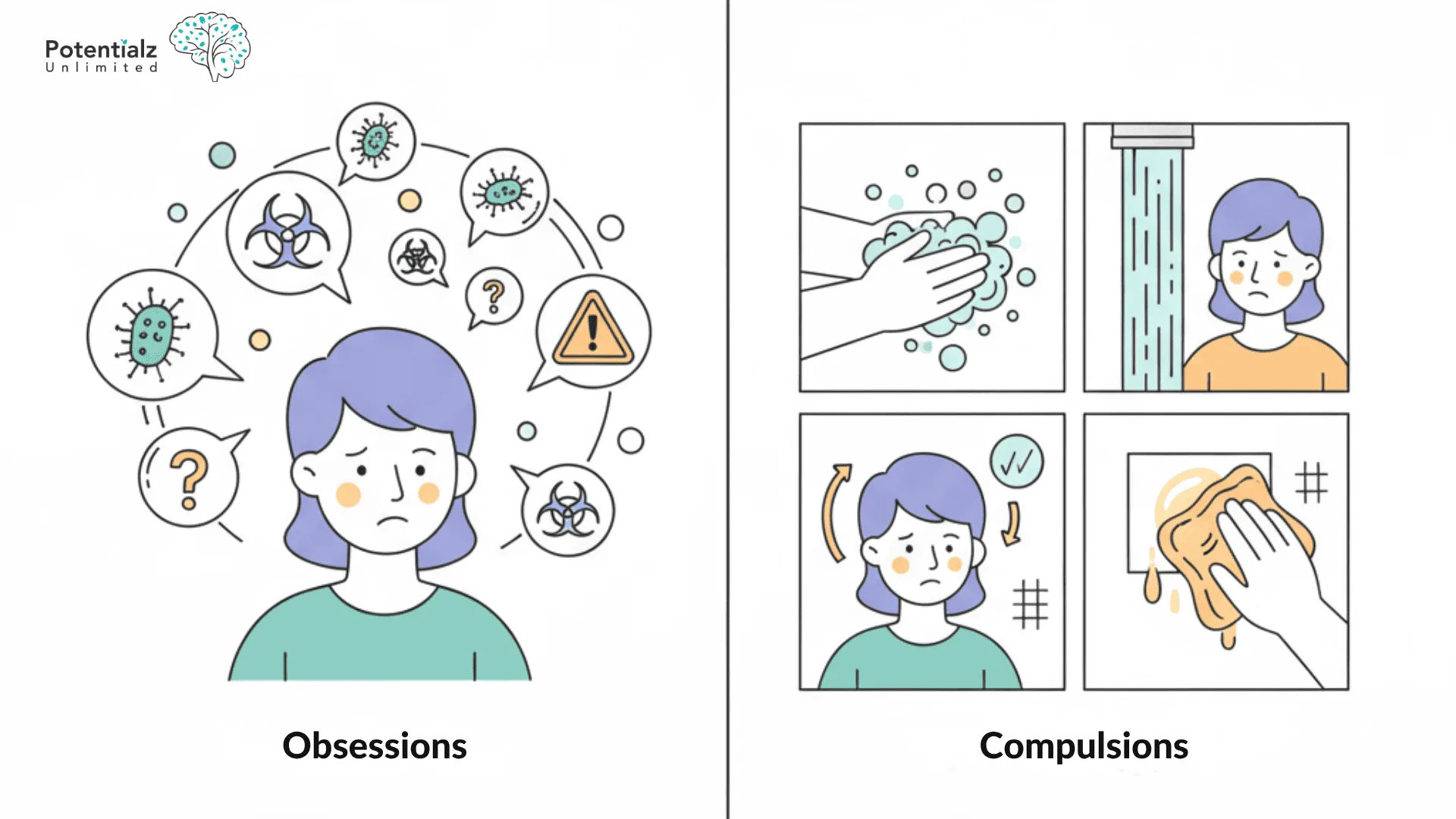 A split-screen illustration depicts the dual experiences of obsessive-compulsive disorder.
According to research published in the Cognitive Therapy and Research, contamination fears are present in approximately 46% of people with OCD, making it the most common theme in this disorder (Wheaton et al., 2012). This means if you are struggling with these fears, you are definitely not alone.
How Contamination OCD Differs From Normal Hygiene
Many people wonder: “Am I just being careful, or is this OCD?” It is a good question because we all want to stay clean and healthy. The difference lies in several key areas:
Time and intensity: While most people might wash their hands for 20-30 seconds, someone with contamination OCD might wash for several minutes, multiple times in a row, or spend hours cleaning a single surface.
Impact on daily life: Normal hygiene practices do not significantly interfere with your ability to work, study, socialise, or enjoy activities. Contamination OCD, however, can make it difficult or impossible to leave your home, touch everyday objects, or be around other people.
Level of distress: Regular hygiene brings peace of mind, but contamination OCD causes extreme anxiety that does not go away even after cleaning. The relief from compulsions is only temporary, and the cycle quickly repeats.
Rational versus irrational fears: While everyone understands the importance of washing hands before eating, someone with contamination OCD might believe that touching a doorknob will lead to a serious illness, even when they logically know this is unlikely.
Research in the American Journal of Psychiatry shows that people with contamination OCD rate their anxiety at much higher levels than those without the condition, even in similar situations involving germs or dirt (Rachman & Hodgson, 2020).
The Real-Life Impact of Contamination OCD
Contamination OCD does not just affect one part of your life. It can spread into everything you do, creating challenges in multiple areas:
Physical Health Consequences
The constant washing and cleaning that comes with contamination OCD can cause real physical harm:
- Raw, cracked, and bleeding hands from over-washing
- Skin infections from damaged skin barriers
- Chemical burns from using harsh cleaning products
- Exhaustion from hours spent on cleaning rituals
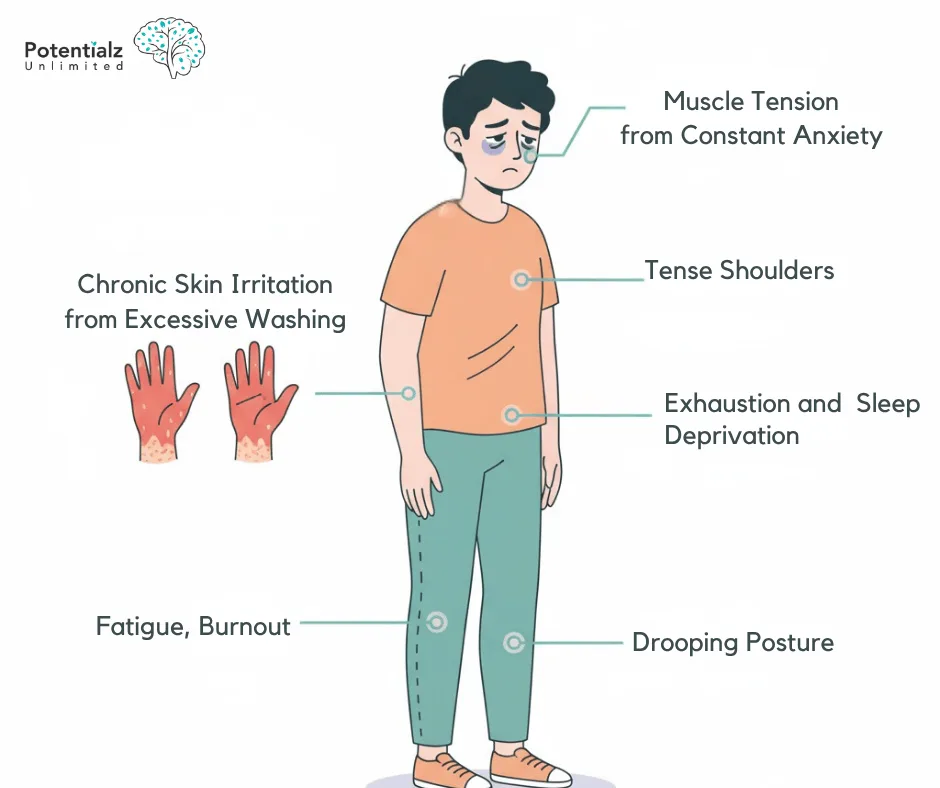 Illustration depicting the physical impact of contamination OCD, highlighting chronic skin irritation, muscle tension, and signs of fatigue and exhaustion.
Relationships and Social Life
When you are constantly worried about contamination, it becomes hard to connect with others:
- Avoiding hugs or physical contact with family and friends
- Refusing to visit others’ homes or have people visit yours
- Creating tension in relationships due to excessive cleaning demands
- Missing social events like parties, gatherings, or celebrations
- Struggling to maintain romantic relationships
A study in Behaviour Research and Therapy found that 70% of people with OCD reported that their symptoms negatively affected their relationships, with contamination fears being a major contributor (Boeding et al., 2013).
Work and Study Challenges
Contamination OCD can make it difficult to focus on work or study:
- Spending more time cleaning than working
- Avoiding shared spaces like kitchens or bathrooms
- Missing deadlines because of time spent on compulsions
- Difficulty concentrating due to intrusive thoughts
- Avoiding public transport or work locations perceived as dirty
Financial Strain
The costs of contamination OCD add up quickly:
- Excessive purchases of cleaning supplies
- High water and electricity bills from constant washing
- Replacing clothing or items believed to be contaminated
- Missing work leads to lost income
- Cost of therapy and treatment
What Causes Contamination OCD?
Understanding what causes contamination OCD helps remove shame and blame. This condition is not your fault, and it is not about being weak or silly. Several factors work together to create contamination OCD:
Brain Chemistry and Structure
Research using brain imaging has shown that people with OCD have differences in certain brain areas. The Neuroscience and Biobehavioral Reviews, published findings showing that the parts of the brain responsible for detecting threats and controlling repetitive behaviours work differently in people with OCD (Menzies et al., 2008). These brain differences affect how we process information about danger and cleanliness.
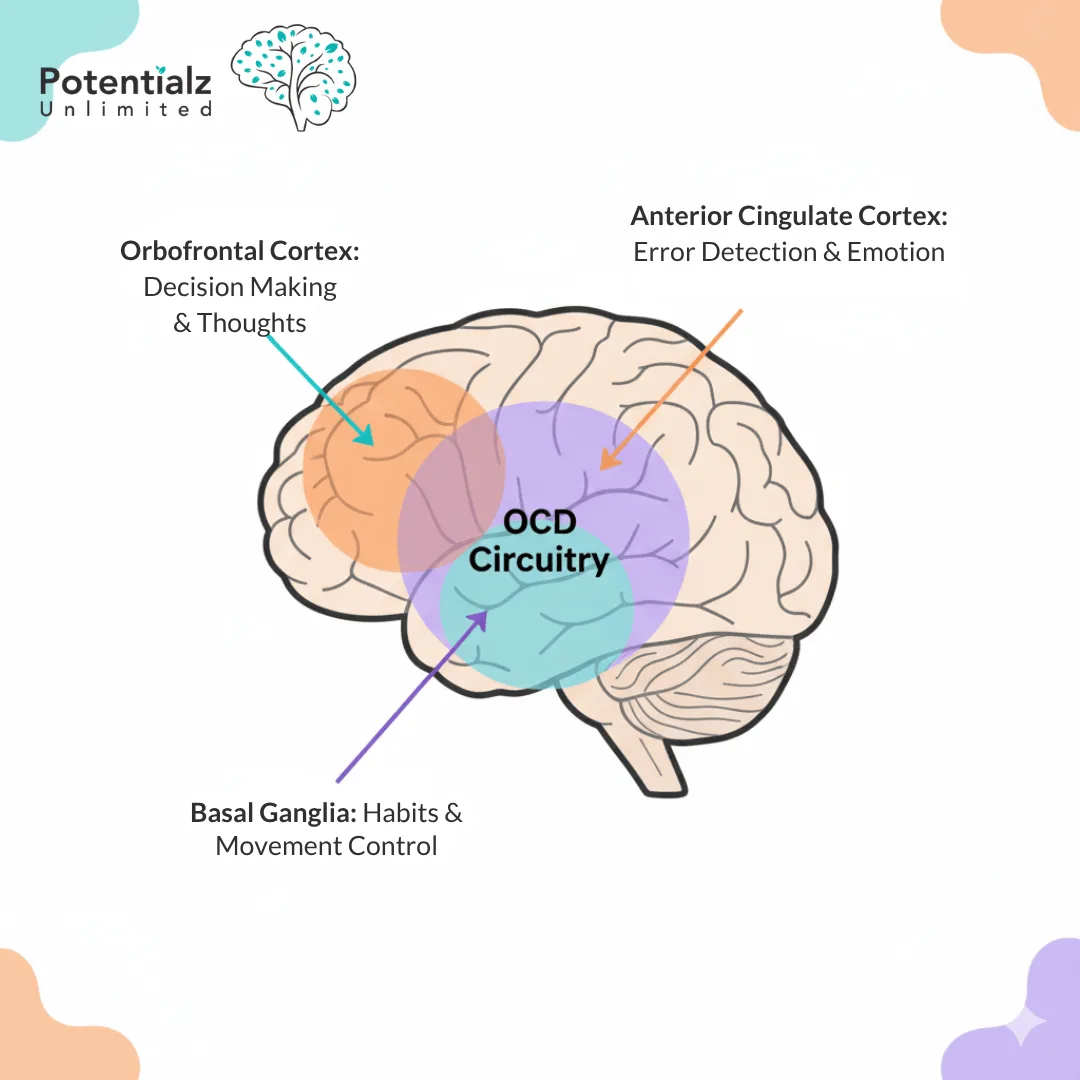 Diagram illustrating the brain circuitry involved in OCD, highlighting the roles of the orbitofrontal cortex, anterior cingulate cortex, and basal ganglia in decision-making, emotion, and habit control.
Genetics and Family History
If someone in your family has OCD or anxiety disorders, you may be more likely to develop it yourself. Studies show that OCD has a genetic component, with approximately 45-65% of the risk coming from inherited factors (Pauls et al., 2014).
Learning and Life Experiences
Sometimes contamination OCD develops after a specific experience:
- A serious illness in yourself or a loved one
- Growing up in an environment with strict cleanliness rules
- Experiencing a traumatic event involving contamination
- High levels of stress or major life changes
Personality Factors
Certain personality traits may increase vulnerability to contamination OCD:
- Being naturally more cautious or anxious
- Having high standards for cleanliness
- Tendency to feel responsible for preventing harm
- Difficulty with uncertainty
Recognising the Signs: Do You Have Contamination OCD?
Identifying contamination OCD early can help you get treatment sooner. Here are some questions to ask yourself:
- Do you spend more than an hour each day washing, cleaning, or thinking about contamination?
- Do your fears about germs or dirt seem much stronger than those of people around you?
- Have you started avoiding places, people, or activities because of contamination fears?
- Do you feel temporary relief after washing or cleaning, but then the anxiety returns?
- Has your concern about contamination affected your relationships, work, or quality of life?
- Do other people tell you that your cleaning or washing seems excessive?
- Do you have strict rules about what you can or cannot touch?
- Do you feel distressed if your cleaning rituals are interrupted?
If you answered yes to several of these questions, it might be helpful to speak with an OCD psychologist in Bella Vista for a proper assessment.
Evidence-Based Treatments That Work
The good news is that contamination OCD is treatable. Research consistently shows that specific types of therapy are highly effective in reducing symptoms and improving quality of life.
Cognitive Behavioural Therapy (CBT)
Cognitive Behavioural Therapy helps you understand and change the thought patterns that fuel contamination fears. In CBT, you learn to:
- Identify distorted thoughts about contamination
- Challenge unrealistic beliefs about danger
- Develop more balanced ways of thinking
- Build healthier coping strategies
Research in Clinical Psychology Review shows that CBT produces significant improvements in OCD symptoms in 60-70% of people who complete treatment (Öst et al., 2015).
Exposure and Response Prevention (ERP)
ERP is considered the gold standard treatment for OCD. It is a specific type of CBT that involves:
Exposure: Gradually facing feared contamination situations in a controlled, safe way. You might start with something mildly anxiety-provoking, like touching a doorknob, and slowly work up to more challenging situations.
Response Prevention: Resisting the urge to perform compulsions like washing or cleaning after exposure. This teaches your brain that the anxiety will decrease naturally without needing to perform compulsions.
A study published in Professional Psychology: Research and Practice found that ERP led to significant symptom reduction in 75% of participants with contamination OCD, with many maintaining improvements years after treatment (Franklin et al., 2002).
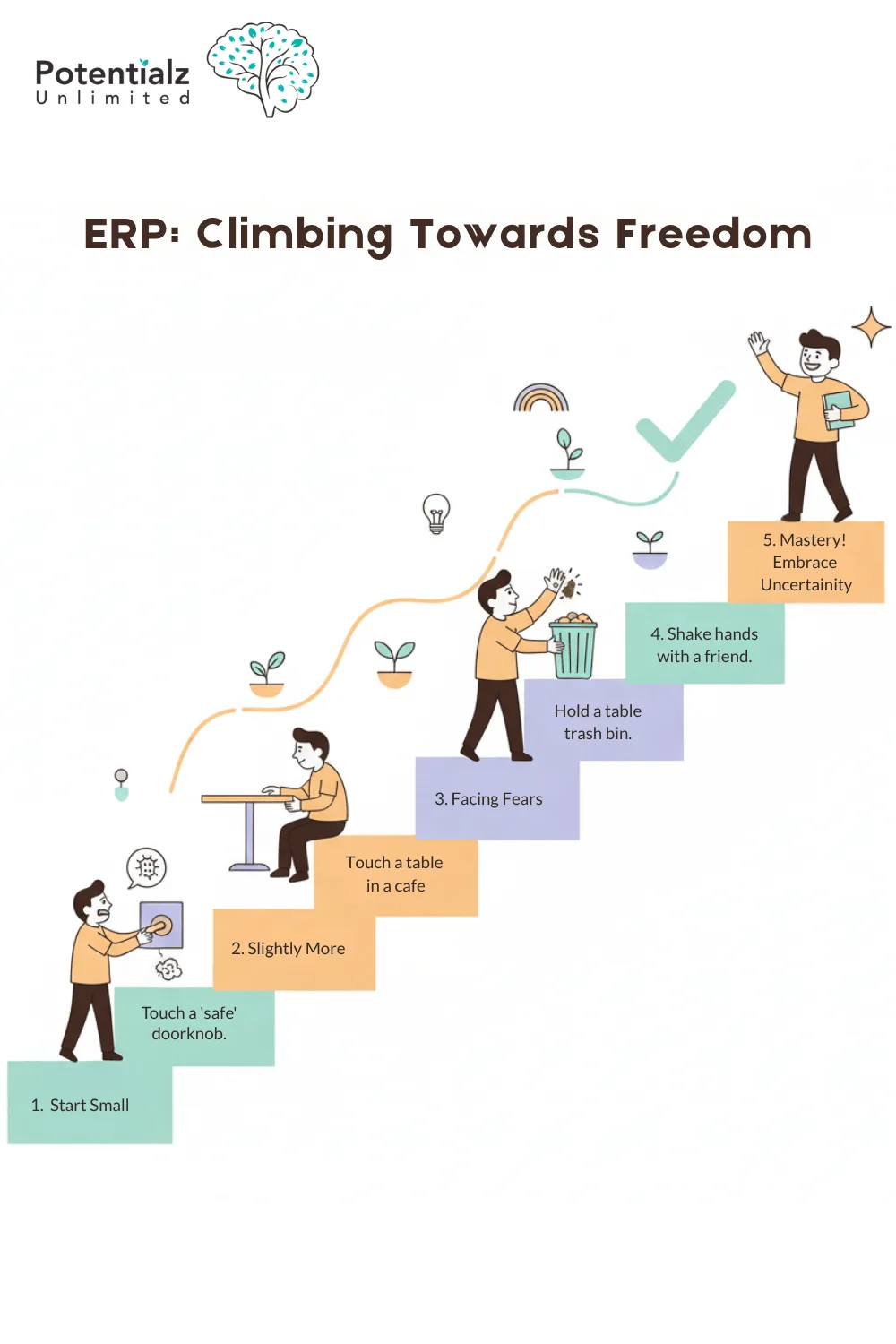 Illustration showing the gradual steps of ERP (Exposure and Response Prevention) therapy, highlighting the journey from tackling small challenges to embracing uncertainty for personal growth.
How ERP Works in Practice
Here is an example of what ERP might look like for someone with contamination OCD:
- Week 1-2: Touch a clean doorknob in the therapist’s office and wait 10 minutes before washing hands
- Week 3-4: Touch a public doorknob and wait 30 minutes before washing hands
- Week 5-6: Touch a bathroom door handle and wait 2 hours before washing hands
- Week 7-8: Use public transport and wait until arriving home before washing hands
Each step is done at your own pace, with support from your therapist. The goal is not to make you careless about hygiene but to help you develop a healthy, balanced relationship with cleanliness.
Medication Options
For some people, medication can help reduce OCD symptoms, especially when combined with therapy. The most commonly prescribed medications for OCD are:
Selective Serotonin Reuptake Inhibitors (SSRIs): These medications help regulate serotonin levels in the brain. Research in the American Journal of Psychiatry shows that SSRIs can reduce OCD symptoms by 40-60% when taken at appropriate doses (Soomro et al., 2008).
Common SSRIs used for OCD include:
- Fluoxetine (Prozac)
- Sertraline (Zoloft)
- Fluvoxamine (Luvox)
- Paroxetine (Paxil)
It is important to note that medication alone is less effective than therapy or a combination of both. Always work with a psychiatrist or GP who understands OCD when considering medication options.
Mindfulness and Acceptance Approaches
Some people also benefit from incorporating mindfulness-based strategies. These approaches teach you to:
- Observe anxious thoughts without getting caught up in them
- Accept uncomfortable feelings rather than fighting them
- Focus on the present moment instead of worrying about contamination
- Separate yourself from your OCD thoughts
Research published in Trials suggests that mindfulness-based interventions can enhance traditional OCD treatments and help prevent relapse (Strauss et al., 2015).
Self-Help Strategies for Managing Contamination OCD
While professional treatment is essential for contamination OCD, there are steps you can take to support your recovery:
Keep a Symptom Diary
Recording your obsessions, compulsions, and anxiety levels helps you:
- Identify patterns and triggers
- Track progress over time
- Share important information with your therapist
Delay and Reduce Compulsions Gradually
Instead of trying to stop all compulsions immediately:
- Start by delaying washing for just 5 minutes
- Gradually increase the delay time
- Reduce the number of times you wash or clean
Set Realistic Hygiene Standards
Work toward balanced hygiene that follows general health guidelines:
- Wash hands for 20 seconds after using the bathroom and before eating
- Clean surfaces with regular household cleaners as needed
- Trust that normal hygiene practices are sufficient
Build a Support Network
Connect with others who understand:
- Join an OCD support group (in-person or online)
- Share your struggles with trusted friends or family
- Consider involving loved ones in your treatment process
Practice Self-Compassion
Remember that OCD is a medical condition, not a character flaw:
- Speak to yourself with kindness
- Acknowledge your efforts to overcome OCD
- Celebrate small victories along the way
When to Seek Professional Help
You should reach out to a mental health professional if:
- Contamination fears are affecting your daily life, relationships, or work
- You spend more than an hour per day on washing or cleaning
- You feel distressed, anxious, or overwhelmed by obsessive thoughts
- You are avoiding important activities or places because of contamination fears
- Your physical health is suffering from excessive washing or use of harsh chemicals
At Potentialz Psychology in Bella Vista, our team of clinical psychologists is highly trained in treating OCD using evidence-based approaches. We understand how challenging contamination OCD can be, and we are here to support you every step of the way.
 Bright and serene therapy room at Potentialz, designed for comfort and tranquility, offering expansive views to enhance a calming atmosphere.
Living Well Despite Contamination OCD
Recovery from contamination OCD is possible. With the right treatment and support, you can:
- Reduce the time spent on compulsions
- Lower your anxiety about contamination
- Reconnect with activities and people you have been avoiding
- Develop confidence in your ability to manage fears
- Enjoy a better quality of life
Remember that recovery is not about becoming perfect or never having anxious thoughts again. It is about learning to manage those thoughts in a way that does not control your life.
Moving Forward: Your Path to Recovery
If you recognise yourself in this article, know that taking the first step toward help is an act of courage. Contamination OCD can feel lonely and overwhelming, but you do not have to face it alone.
Whether you live in Bella Vista, Norwest, Castle Hill, or surrounding areas, professional support is available. Our team offers compassionate, evidence-based treatment tailored to your specific needs.
To learn more about OCD treatment or to book an appointment, visit our website or call our practice. Your journey toward freedom from contamination OCD can begin today.
Test Your Knowledge
References
- Boeding, S. E., Paprocki, C. M., Baucom, D. H., Abramowitz, J. S., Wheaton, M. G., Fabricant, L. E., & Fischer, M. S. (2013). Let me check that for you: Symptom accommodation in romantic partners of adults with obsessive-compulsive disorder. Behaviour Research and Therapy, 51(6), 316-322. https://doi.org/10.1016/j.brat.2013.03.002
- Franklin, M. E., Abramowitz, J. S., Bux, D. A., Jr., Zoellner, L. A., & Feeny, N. C. (2002). Cognitive-behavioral therapy with and without medication in the treatment of obsessive-compulsive disorder. Professional Psychology: Research and Practice, 33(2), 162–168. https://doi.org/10.1037/0735-7028.33.2.162
- Menzies, L., Chamberlain, S. R., Laird, A. R., Thelen, S. M., Sahakian, B. J., & Bullmore, E. T. (2008). Integrating evidence from neuroimaging and neuropsychological studies of obsessive-compulsive disorder: the orbitofronto-striatal model revisited.* Neuroscience and Biobehavioral Reviews, 32*(3), 525–549. https://doi.org/10.1016/j.neubiorev.2007.09.005
- Öst, L. G., Havnen, A., Hansen, B., & Kvale, G. (2015). Cognitive behavioral treatments of obsessive-compulsive disorder. A systematic review and meta-analysis of studies published 1993-2014. Clinical Psychology Review, 40, 156–169. https://doi.org/10.1016/j.cpr.2015.06.003
- Pauls, D. L., Abramovitch, A., Rauch, S. L., & Geller, D. A. (2014). Obsessive-compulsive disorder: An integrative genetic and neurobiological perspective. Nature Reviews Neuroscience, 15(6), 410-424. https://doi.org/10.1038/nrn3746
- Rachman, S., & Hodgson, R. J. (2020). Obsessions and compulsions: Thirty years of research. In J. C. Thomas & M. Hersen (Eds.), Handbook of Clinical Psychology Competencies (pp. 243-270). Springer. https://doi.org/10.1007/978-0-387-09757-2_9
- Soomro, G. M., Altman, D., Rajagopal, S., & Oakley-Browne, M. (2008). Selective serotonin re-uptake inhibitors (SSRIs) versus placebo for obsessive compulsive disorder (OCD). American Journal of Psychiatry, 165(4), 424-433. https://doi.org/10.1002/14651858.CD001765.pub3
- Strauss, C., Rosten, C., Hayward, M., Lea, L., Forrester, E., & Jones, A. M. (2015). Mindfulness-based exposure and response prevention for obsessive compulsive disorder: study protocol for a pilot randomised controlled trial. Trials, 16, 167. https://doi.org/10.1186/s13063-015-0664-7
- Wheaton, M. G., Abramowitz, J. S., Berman, N. C., Fabricant, L. E., & Olatunji, B. O. (2012). Psychological predictors of anxiety in response to the H1N1 (swine flu) pandemic. Cognitive Therapy and Research, 36(3), 210–218. https://doi.org/10.1007/s10608-011-9353-3
Need Professional Support?
If you're experiencing mental health concerns, our team is here to help.