Introduction: Understanding ADHD in Today’s World
Attention Deficit Hyperactivity Disorder (ADHD) affects millions of children and adults worldwide, and getting an accurate diagnosis is crucial for accessing the right support and treatment. For families living in the Hills Council, Parramatta Council, Blacktown Council, and Hawkesbury Council areas, understanding ADHD and the modern diagnostic tools available can make the difference between years of struggle and a path to success.
ADHD is more than just being “hyperactive” or “easily distracted” - it’s a complex neurodevelopmental condition that affects how the brain processes attention, impulse control, and activity levels. With the right assessment tools and professional support, families can get the accurate diagnoses they need to help their children and themselves thrive.
 A welcoming and modern family clinic waiting area, featuring diverse families from the Hills District. A child engages with a psychologist using digital tools, creating a professional and comforting atmosphere.
What is ADHD? Beyond the Stereotypes
ADHD is a neurodevelopmental condition characterised by persistent patterns of inattention, hyperactivity, and impulsivity that interfere with daily functioning and development. But what does this really mean for families?
The Three Core Areas of ADHD
Inattention Symptoms:
- Difficulty sustaining attention in tasks or play activities
- Problems with organisation and losing things frequently
- Forgetfulness in daily activities
- Easily distracted by external stimuli
- Difficulty following through on instructions
Hyperactivity Symptoms:
- Fidgeting or squirming when seated
- Difficulty staying seated in appropriate situations
- Running or climbing in inappropriate situations
- Excessive talking or making noise
Impulsivity Symptoms:
- Difficulty waiting for turns
- Interrupting or intruding on others
- Acting without thinking about consequences
- Making important decisions quickly without consideration
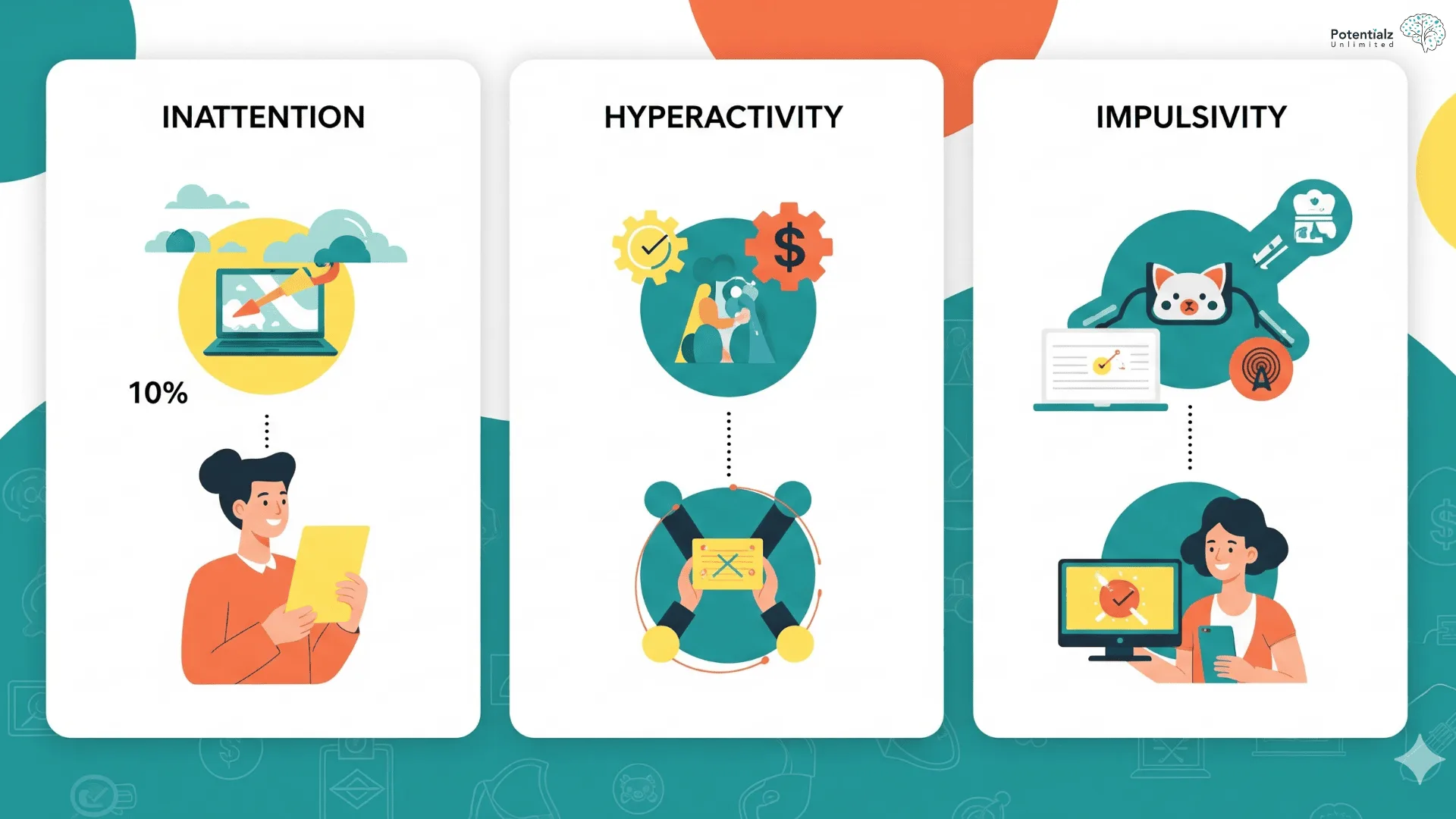 An infographic-style illustration showing the three core ADHD symptom areas (inattention, hyperactivity, impulsivity)
Modern ADHD Diagnosis: A Scientific Approach
Gone are the days when ADHD diagnosis relied solely on subjective observations. Today’s diagnostic process uses scientifically validated tools that provide objective, reliable data to guide clinical decision-making.
The Comprehensive Assessment Process
A proper ADHD assessment involves multiple steps and various sources of information:
- Clinical Interview: Detailed discussion about symptoms, development, and family history
- Standardized Rating Scales: Scientific instruments that measure symptoms objectively
- Multi-informant Assessment: Gathering information from parents, teachers, and the individual
- Rule-out Process: Ensuring symptoms aren’t better explained by other conditions
- Functional Impairment Assessment: Understanding how symptoms affect daily life
Research shows that The Conners 4th Edition™ (Conners 4®) builds on the long history and strengths of the multi-informant Conners Rating Scales and provides a thorough assessment of symptoms and impairments associated with ADHD, as well as common co-occurring problems and disorders in youth aged 6 to 18 years.
Assessment Tools for Children: The Conners 4
What is Conners 4?
The Conners 4th Edition (Conners 4®) provides a comprehensive assessment of symptoms and impairments associated with ADHD and common co-occurring problems and disorders in children and youth aged 6 to 18 years. This latest version represents decades of research and development in ADHD assessment.
Key Features of Conners 4
Multi-Informant Approach
The Conners 4 gathers information from multiple sources, including one or more parents/guardians (using the Conners 4 Parent form), one or more teachers (using the Conners 4 Teacher form), and the youth themselves (using the Conners 4 Self-Report).
Cultural Sensitivity and Inclusivity
Built to maximize fairness and inclusivity, through the use of gender-inclusive language, culturally sensitive items, and items and scales that show no evidence of measurement bias with regard to gender, race/ethnicity, country of residence, or parental education level.
Comprehensive Assessment Areas
- ADHD symptoms (inattention, hyperactivity-impulsivity)
- Emotional regulation difficulties
- Learning and academic problems
- Social relationship challenges
- Anxiety and mood concerns
- Conduct and oppositional behaviours
 A child engages with puzzle pieces in a bright, modern assessment room, while a caregiver observes nearby. Parent and teacher rating forms are neatly organized on a desk, illustrating a supportive and evaluative environment.
How Accurate is Conners 4?
The Conners 4 Parent, Teacher, and Self-Report scale have excellent internal consistency (median omega coefficient = .94), strong test-retest reliability (median r = .89), and moderate to strong inter-rater reliability.
The test developers have ensured high accuracy through:
- Extensive Normative Data: Using U.S. and Canadian census data from a broad representative sample
- Advanced Statistical Methods: Sophisticated algorithms that optimize diagnostic accuracy
- Validity Studies: Research confirming the test accurately identifies ADHD symptoms
- Response Style Analysis: Features that detect inconsistent or careless responding
The Conners 4 Multi-Rater Report
One of the most innovative features is the Multi-Rater Report, which integrates perspectives from parents, teachers, and the youth. Using the Conners 4 Multi-Rater report to discern how ADHD symptoms manifest across diverse settings, clinicians and school psychologists can compare scores across raters, identify significant differences across domains, and craft tailored intervention or support strategies.
Assessment Tools for Adults: CAARS and Screening Methods
Adult ADHD Assessment: A Two-Step Approach
At Potentialz Psychology, we follow best-practice guidelines for adult ADHD assessment using a systematic approach:
Step 1: Initial Screening with ASRS
The Adult ADHD Self-Report Scale (ASRS) version 1.1 is a diagnostic tool designed for the assessment of Attention-Deficit/Hyperactivity Disorder (ADHD) in adults. Developed in collaboration between the World Health Organization (WHO) and researchers at Harvard Medical School.
Step 2: Comprehensive Assessment with CAARS
When screening suggests ADHD symptoms, we proceed with the comprehensive Conners’ Adult ADHD Rating Scales (CAARS) assessment.
 A client engages in a professional consultation with a psychologist, utilizing digital assessment tools in a setting that emphasizes confidentiality and comfort.
The ASRS Screener: First-Line Assessment
The ASRS v1.1 consists of 18 items divided into two parts:
Part A (6 items):
The most predictive questions for ADHD diagnosis
Part B (12 items):
Additional questions providing supplementary information
ASRS Accuracy and Reliability
The ASRS demonstrates excellent diagnostic accuracy for adult ADHD. In a validation study by Brevik et al. (2020) comparing 646 clinically diagnosed ADHD adults with 908 controls, the ASRS achieved an Area Under the Curve (AUC) of 0.904, with the 6-item Part A screener performing equally well (AUC 0.903).
Key benefits of the ASRS include:
- Quick Administration: Takes only 5-10 minutes to complete
- High Sensitivity: Effectively identifies adults who may have ADHD
- Strong Negative Predictive Power: Reliably rules out ADHD when scores are low
- DSM-5 Compatibility: Appropriate for current diagnostic criteria
CAARS: Comprehensive Adult Assessment
When ASRS screening suggests ADHD symptoms, the Conners’ Adult ADHD Rating Scales (CAARS™) scales measure the presence and severity of ADHD symptoms so that you can determine whether or not ADHD is a contributing factor to a client’s difficulties.
CAARS Assessment Areas
The CAARS evaluates eight key areas:
- Inattention/Memory Problems
- Hyperactivity/Restlessness
- Impulsivity/Emotional Lability
- Problems with Self-Concept
- DSM-5 Inattentive Symptoms
- DSM-5 Hyperactive-Impulsive Symptoms
- DSM-5 Total ADHD Symptoms
- ADHD Index
CAARS Versions and Applications
- Long Form (CAARS-L): Comprehensive 66-item assessment providing detailed diagnostic information
- Short Form (CAARS-S): Abbreviated version for time-limited situations or follow-up assessments
- Screening Version (CAARS-SV): Quick screening focused on core ADHD symptoms
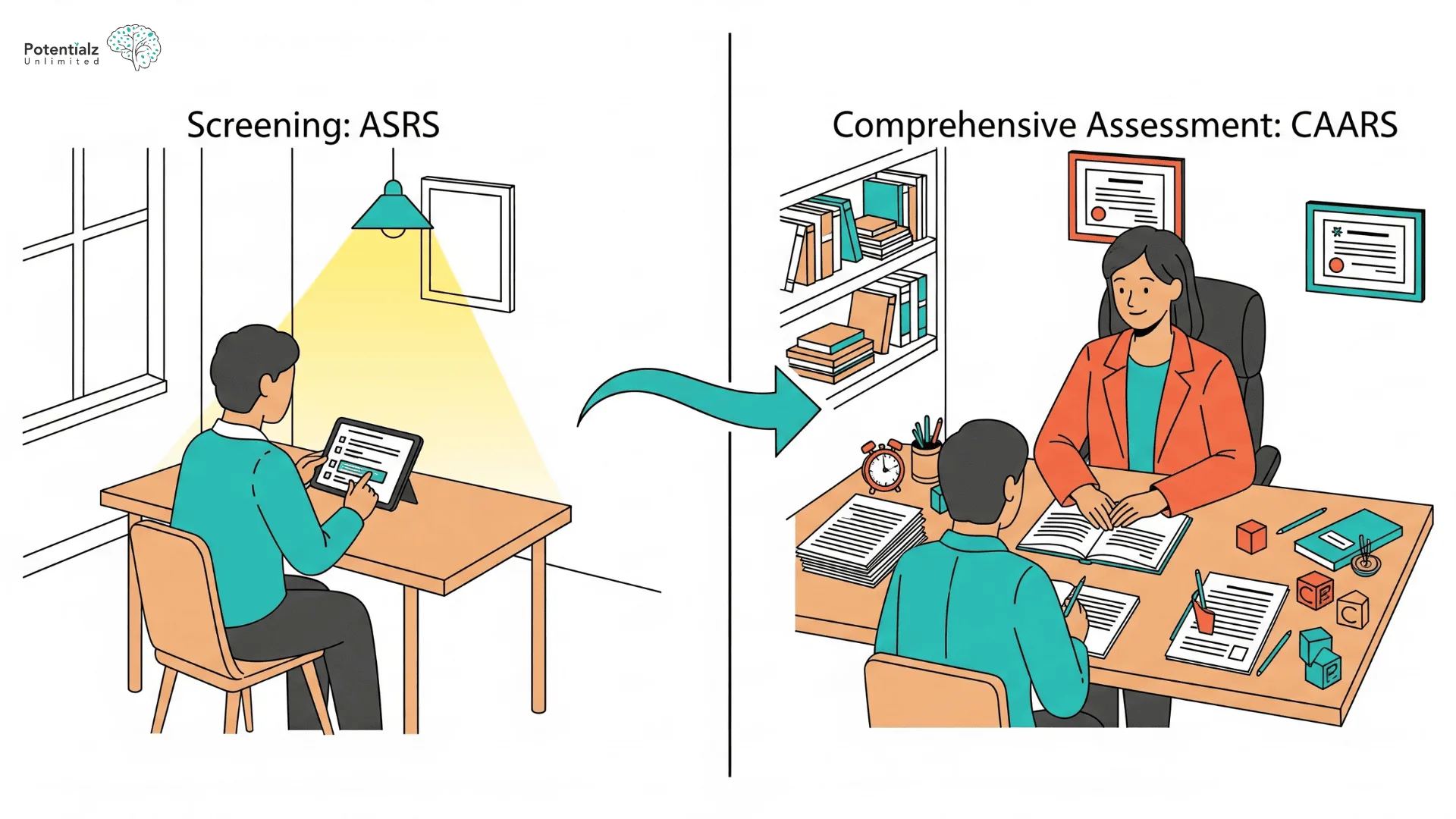 Progressing from ASRS Screening to CAARS Comprehensive Assessment: A Journey from Self-Questionnaire to Professional Evaluation.
The Evolution to CAARS 2: Enhanced Accuracy
What’s New in CAARS 2?
Built upon the original Conners’ Adult ADHD Rating Scales, the Conners Adult ADHD Rating Scales™ 2nd Edition (CAARS™ 2) is designed to surpass its predecessor, providing a more relevant and comprehensive ADHD assessment for adults.
Key improvements include:
- Updated Normative Data: Reflects current population demographics
- Enhanced Cultural Sensitivity: Available in multiple languages with culturally appropriate adaptations
- Improved ADHD Index: Uses advanced statistical techniques for better discrimination
- Alignment with Conners 4: Facilitates lifespan assessment from childhood to adulthood
- Reference Sample Options: Compare against general population or ADHD-diagnosed individuals
Real-World Application: Case Studies
Case Study 1: Emma, Age 8 - Conners 4 Assessment
Emma’s parents noticed she was struggling in Year 2, having difficulty completing homework and often losing school materials. Her teacher reported that Emma seemed to daydream frequently and needed multiple reminders to complete tasks.
Assessment Process:
- Parents completed Conners 4 Parent Form
- Teacher completed Conners 4 Teacher Form
- Clinical interview with parents and Emma
- Multi-Rater Report generated
Results
The Multi-Rater Report showed elevated scores in Inattentive symptoms across home and school settings, with some differences in hyperactive symptoms (higher at home than school). This pattern suggested ADHD predominantly inattentive presentation.
Outcome
Emma received appropriate educational accommodations and behavioral interventions, leading to improved academic performance and self-confidence.
 A young girl engages in an educational activity with a psychologist in a cozy, child-friendly assessment room, surrounded by colorful learning tools and a supportive atmosphere.
Case Study 2: Michael, Age 32 - ASRS and CAARS Assessment
Michael, a software engineer and father of two, sought assessment after his son was diagnosed with ADHD. He recognized similar patterns in his own childhood and current work challenges.
Assessment Process:
- ASRS screening completed online
- ASRS Part A score of 16 (above cutoff of 14)
- Comprehensive CAARS assessment scheduled
- Self-report and observer forms completed
Results
CAARS results showed clinically significant elevations in Inattention/Memory Problems and Problems with Self-Concept scales, confirming ADHD diagnosis.
Outcome
Michael received psychoeducation about ADHD, organizational strategies, and consideration for medication management, resulting in improved work performance and family relationships.
Diagnostic Accuracy: Understanding the Numbers
Reliability Statistics
Conners 4:
- Internal consistency: ω = .94 (excellent)
- Test-retest reliability: r = .89 (strong)
- Inter-rater reliability: r = .84 (strong)
CAARS:
- Internal consistency: ω = .94-.95 (excellent)
- Convergent validity: r = .48-.83 (moderate to strong)
- Factor structure confirmed through rigorous statistical analysis
ASRS:
- Sensitivity: 68.7% (good ability to identify ADHD)
- Specificity: 99.5% (excellent ability to rule out ADHD)
- Area Under Curve: 0.904 (excellent overall accuracy)
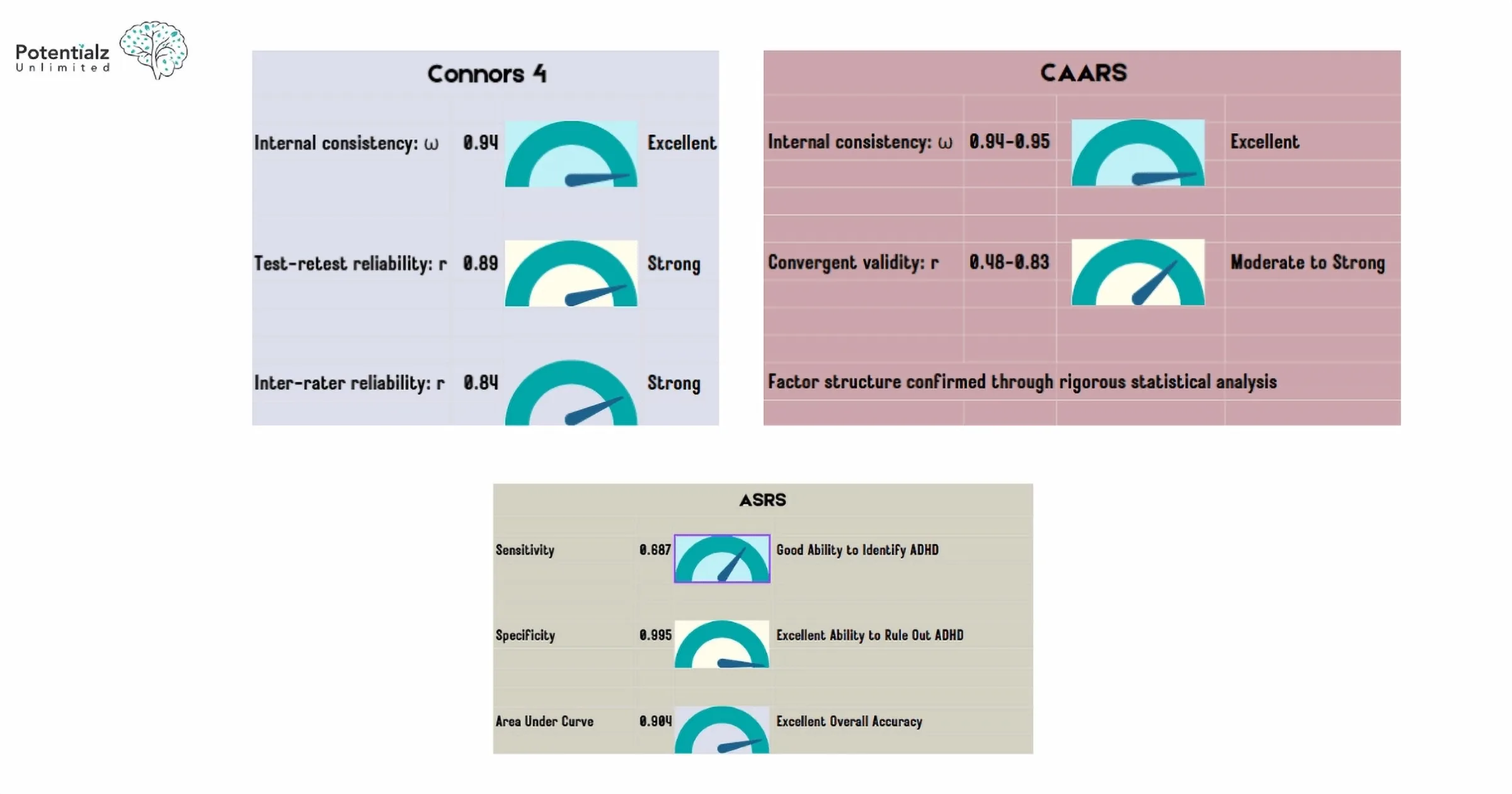 Evaluation metrics for three ADHD assessment tools—Connors 4, CAARS, and ASRS—show high internal consistency, reliability, and validity, indicating strong diagnostic capabilities.
Cultural Considerations in ADHD Assessment
For families from multicultural backgrounds in the Hills, Parramatta, Blacktown, and Hawkesbury areas, cultural factors play an important role in ADHD assessment:
Cultural Sensitivity in Modern Tools
Language Adaptations:
Both Conners 4 and CAARS 2 are available in multiple languages with culturally sensitive translations.
Bias Prevention:
Test developers have specifically examined items for cultural bias and removed or modified problematic content.
Normative Representation:
Current norms include diverse populations reflecting the demographic reality of modern Australia.
Working with Multicultural Families
Effective ADHD assessment in multicultural communities involves:
- Cultural Competency: Assessors who understand diverse cultural perspectives on child behavior and mental health
- Interpreter Services: Professional translation when needed
- Family-Centered Approach: Respecting cultural values while providing evidence-based assessment
- Community Integration: Connecting families with culturally appropriate support services
The Assessment Process at Potentialz
For Children (Ages 6-18): Conners 4 Protocol
Initial Consultation:
- Family history and developmental information
- School performance review
- Behavioral observations across settings
Multi-Informant Assessment:
- Parent rating scales (Conners 4 Parent)
- Teacher rating scales (Conners 4 Teacher)
- Self-report for adolescents (Conners 4 Self-Report)
Comprehensive Analysis:
- Multi-Rater Report generation
- Clinical interpretation of results
- Integration with other assessment data
Feedback and Planning:
- Detailed explanation of results to family
- Educational recommendations
- Treatment planning and referrals
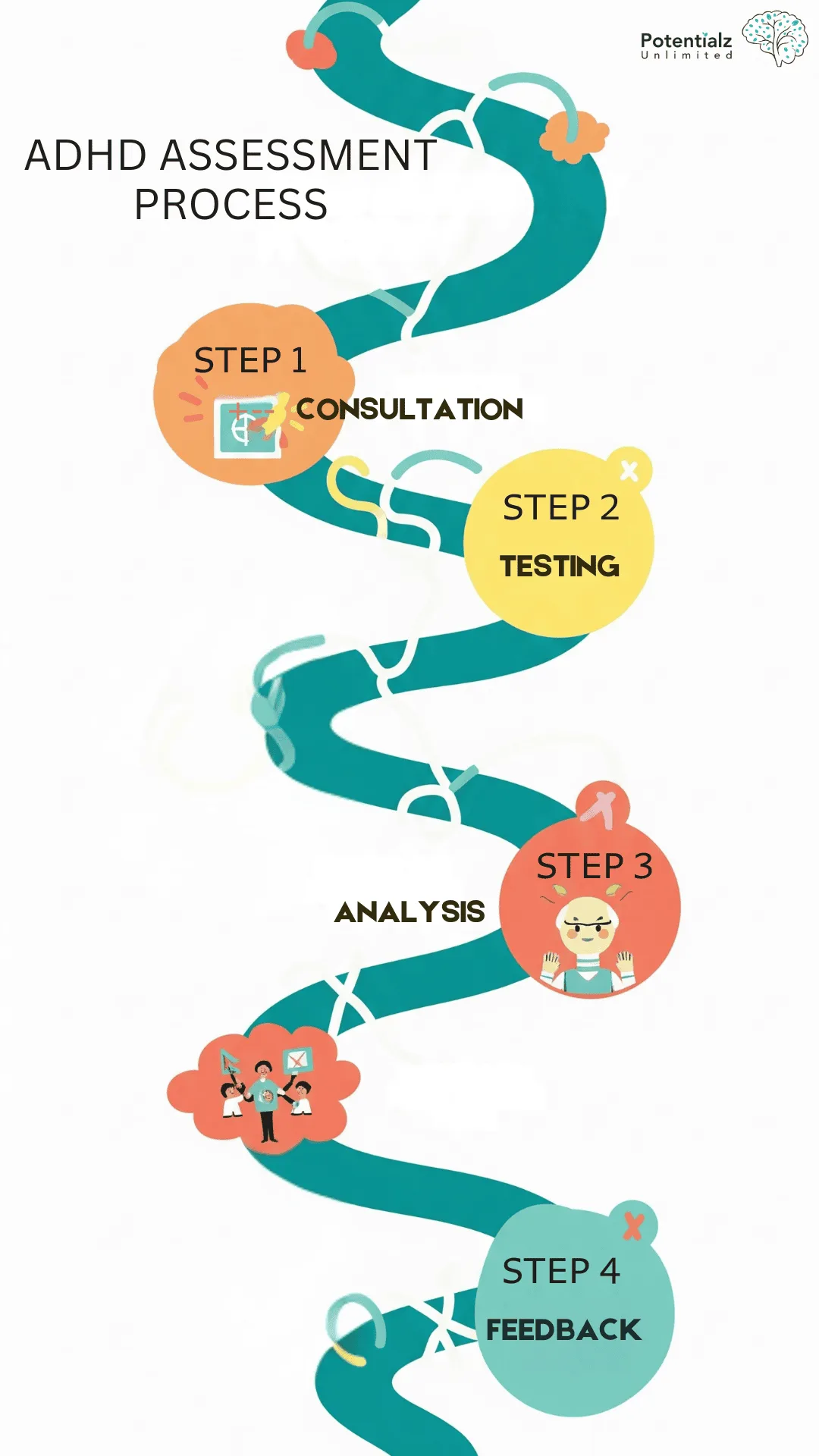 Illustration of the ADHD Assessment Process outlining four key steps: Consultation, Testing, Analysis, and Feedback, presented in a winding flowchart design.
For Adults (18+): ASRS-CAARS Protocol
Stage 1: Screening (ASRS)
- Initial symptom screening
- Quick determination of need for comprehensive assessment
- Review of childhood and current functioning
Stage 2: Comprehensive Assessment (CAARS)
- Self-report detailed symptom rating
- Observer report (spouse/family member when available)
- Clinical interview and history
- Functional impairment assessment
Analysis and Feedback:
- Statistical analysis of rating scale results
- Integration with clinical observations
- Diagnostic determination and treatment recommendations
Understanding Your Assessment Results
Interpreting T-Scores
Assessment results are typically reported as T-scores, which compare your results to others of the same age and gender:
- T-score < 60: Within normal range
- T-score 60-65: Mildly elevated, may warrant monitoring
- T-score 65-70: Moderately elevated, clinically significant
- T-score > 70: Highly elevated, strong indicator of ADHD
What Results Mean for Treatment
Elevated Inattentive Symptoms
May benefit from organizational strategies, environmental modifications, and possibly medication targeting attention.
Elevated Hyperactive-Impulsive Symptoms
May benefit from behavioral interventions, physical activity planning, and impulse control strategies.
Combined Presentation
Comprehensive treatment approach addressing both symptom domains.
Co-occurring Concerns
Additional interventions for anxiety, mood, or learning difficulties identified during assessment.
Beyond Diagnosis: Treatment and Support
Evidence-Based Interventions
For Children:
- Behavioral parent training programs
- School accommodations and modifications
- Social skills training groups
- Medication management when appropriate
For Adults:
- Cognitive behavioral therapy adapted for ADHD
- Organizational and time management coaching
- Workplace accommodations
- Medication management options
Local Support Resources
Families in the Hills, Parramatta, Blacktown, and Hawkesbury areas have access to:
- ADHD support groups and parent networks
- Educational advocacy services
- Specialized tutoring and academic support
- Mental health professionals trained in ADHD treatment
 Families gather in a warm and welcoming environment, sharing experiences and resources about ADHD in a supportive community meeting.
Test Your Knowledge
The Importance of Professional Assessment
Why Accurate Diagnosis Matters
Getting an accurate ADHD diagnosis can be life-changing:
For Children:
- Access to appropriate educational support
- Early intervention preventing secondary problems
- Improved self-esteem and social relationships
- Better academic and life outcomes
For Adults:
- Understanding of lifelong challenges
- Access to effective treatments
- Improved work and relationship functioning
- Reduced risk of anxiety and depression
Red Flags: When to Seek Assessment
For Children:
- Persistent academic underperformance despite adequate intelligence
- Frequent teacher complaints about attention or behavior
- Difficulty with friendships and social situations
- Family conflict around homework and daily routines
For Adults:
- Chronic work performance issues
- Relationship difficulties related to disorganization or inattention
- Struggles with time management and follow-through
- History of academic underachievement
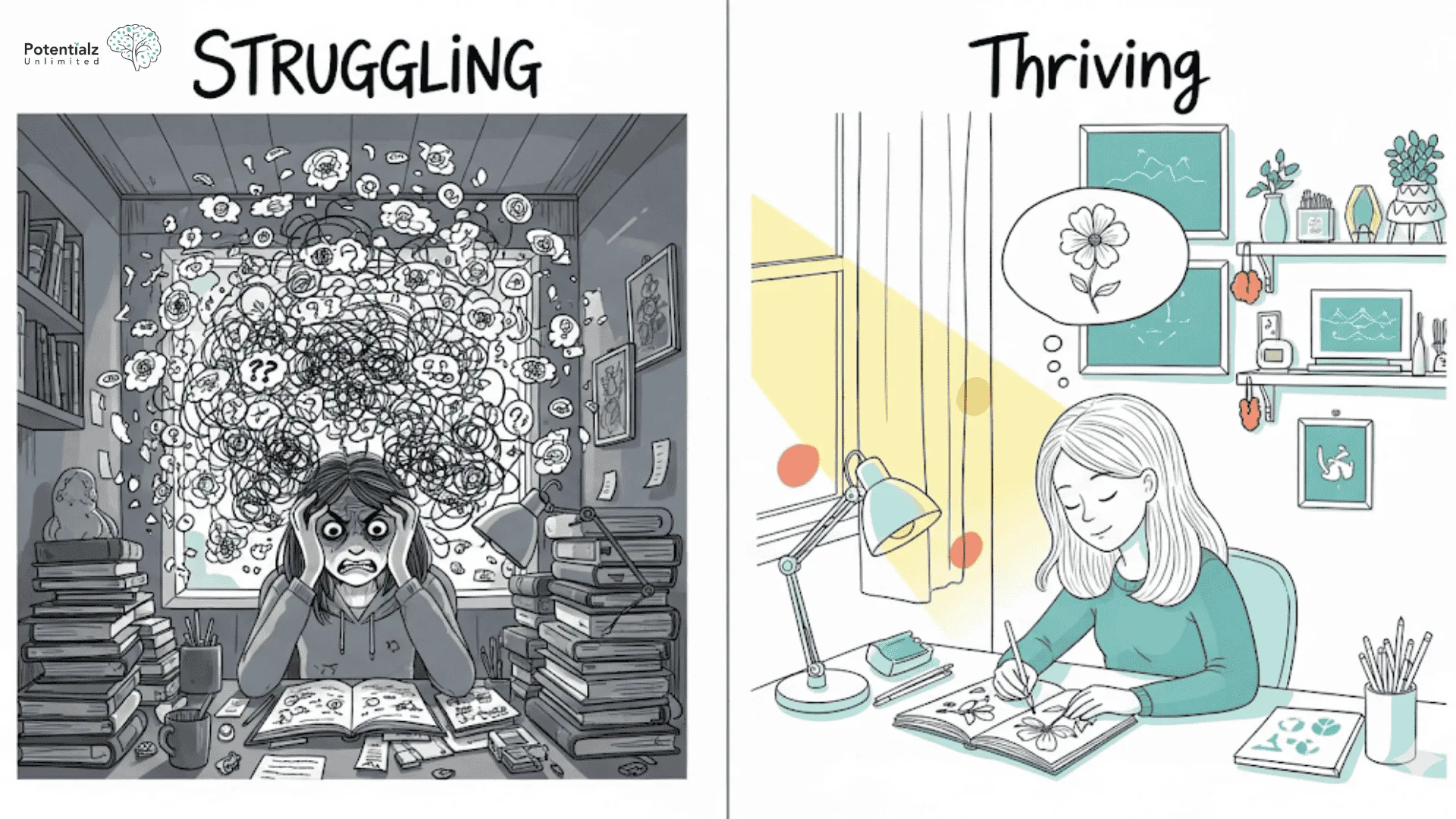 From Chaos to Clarity: The Impact of Proper ADHD Diagnosis and Treatment.
Future Directions in ADHD Assessment
Emerging Technologies
The field of ADHD assessment continues to evolve:
Digital Assessment Tools
Computer-based continuous performance tests that provide objective attention measures
Neuroimaging Integration
Research into brain-based biomarkers that may supplement clinical assessment
Artificial Intelligence
Machine learning approaches to improve diagnostic accuracy
Mobile Monitoring
Apps that track symptoms in real-world settings
Personalized Assessment
Future developments focus on:
- Individual Profiling: Detailed analysis of personal strength and challenge patterns
- Treatment Matching: Using assessment data to predict optimal interventions
- Continuous Monitoring: Ongoing tracking of symptoms and treatment response
Accessing ADHD Assessment Services
Getting Started at Potentialz
Step 1: Initial Contact
- Phone consultation to discuss concerns
- Information gathering about symptoms and history
- Assessment planning and scheduling
Step 2: Comprehensive Assessment
- Multi-session evaluation process
- Standardized testing using Conners 4 (children) or ASRS/CAARS (adults)
- Family and educational consultation
Step 3: Results and Planning
- Detailed feedback session
- Written assessment report
- Treatment and accommodation recommendations
What to Expect During Assessment
Time Investment:
- Children: 2-3 appointments over 2-3 weeks
- Adults: 2 appointments over 1-2 weeks
- Rating scales completed between sessions
Cost and Insurance:
- Medicare rebates available with GP referral
- Private health insurance coverage options
- Payment plans available for families
Preparing for Your Assessment
For Families:
- Gather school reports and previous assessments
- Complete developmental history questionnaires
- Prepare questions about treatment options
For Adults:
- Collect work performance reviews
- Think about childhood and current functioning
- Consider bringing a close family member or partner
Conclusion: Your Path to Accurate Diagnosis
Understanding ADHD and accessing accurate assessment tools represents the first crucial step in a journey toward better outcomes for children and adults affected by this condition. With modern, scientifically validated tools like the Conners 4 for children and the ASRS/CAARS protocol for adults, families in the Hills, Parramatta, Blacktown, and Hawkesbury areas can access world-class diagnostic services.
The key takeaways include:
- Modern assessment is highly accurate when conducted by trained professionals using validated tools
- Cultural sensitivity is built into current assessment instruments
- Multi-informant approaches provide comprehensive understanding of symptoms
- Early diagnosis leads to better outcomes for both children and adults
- Professional assessment is essential for accessing appropriate treatments and accommodations
At Potentialz, we’re committed to providing comprehensive, culturally sensitive ADHD assessments that give families the answers they need to move forward with confidence. Whether you’re concerned about your child’s school performance or recognizing ADHD patterns in yourself, accurate diagnosis opens the door to effective interventions and a brighter future.
Remember: ADHD is a real medical condition that responds well to appropriate treatment. With the right diagnosis and support, individuals with ADHD can leverage their unique strengths while managing their challenges effectively.
Related Potentialz Website Pages
- ADHD Psychologist Bella Vista
- Child Psychologist Bella Vista
- Clinical Psychologist Bella Vista
- Psychological Assessments
- IQ Testing Bella Vista
References
- Conners, C. K. (2023). Conners 4th Edition™ (Conners 4®): Technical manual. Multi-Health Systems Inc.
- Conners, C. K., Erhardt, D., & Sparrow, E. (2024). Conners Adult ADHD Rating Scales™ 2nd Edition (CAARS™ 2): Technical manual. Multi-Health Systems Inc.
- Harrison, A. G., Nay, S., & Armstrong, I. T. (2019). Diagnostic accuracy of the Conners’ Adult ADHD Rating Scale in a postsecondary population. Journal of Attention Disorders, 23(14), 1829-1837. https://doi.org/10.1177/1087054715625299
- Kessler, R. C., Adler, L., Ames, M., Demler, O., Faraone, S., Hiripi, E., Howes, M. J., Jin, R., Secnik, K., Spencer, T., Ustun, T. B., & Walters, E. E. (2005). The World Health Organization Adult ADHD Self-Report Scale (ASRS): A short screening scale for use in the general population. Psychological Medicine, 35(2), 245-256. https://doi.org/10.1017/S0033291704002892
- Kwan, D., Davin, N., Harrison, A. G., & Gillie, S. (2024). Determining cutoff scores on the Conners’ Adult ADHD Rating Scales that can definitively rule out the presence of ADHD in a clinical sample. Applied Neuropsychology: Adult, 1-11. https://doi.org/10.1080/23279095.2024.2336204
- Multi-Health Systems Inc. (2024). Conners 4th Edition™ (Conners 4®): Multi-rater reports. https://mhs.com/blog/enhancing-adhd-assessment-conners-4-multi-rater-reports/
- Multi-Health Systems Inc. (2024). Conners Adult ADHD Rating Scales™ 2nd Edition (CAARS™ 2). https://storefront.mhs.com/collections/caars-2
- Psychology Tools. (2024). Adult ADHD Self-Report Scale (ASRSv1.1). https://psychology-tools.com/test/adult-adhd-self-report-scale
- Takeda, T., Tsuji, Y., & Kurita, H. (2017). Psychometric properties of the Japanese version of the Adult Attention-deficit hyperactivity disorder (ADHD) Self-Report Scale (ASRS-J) and its short scale in accordance with DSM-5 diagnostic criteria. Research in Developmental Disabilities, 63, 59-66. https://doi.org/10.1016/j.ridd.2017.02.011
- Ustun, B., Adler, L. A., Rudin, C., Faraone, S. V., Spencer, T. J., Berglund, P., Gruber, M. J., & Kessler, R. C. (2017). The World Health Organization Adult Attention-Deficit/Hyperactivity Disorder Self-Report Screening Scale for DSM-5. JAMA Psychiatry, 74(5), 520-527. https://doi.org/10.1001/jamapsychiatry.2017.0298
- Western Psychological Services. (2024). Conners’ Adult ADHD Rating Scales (CAARS). https://www.wpspublish.com/caars-conners-adult-adhd-rating-scales
Need Professional Support?
If you're experiencing mental health concerns, our team is here to help.