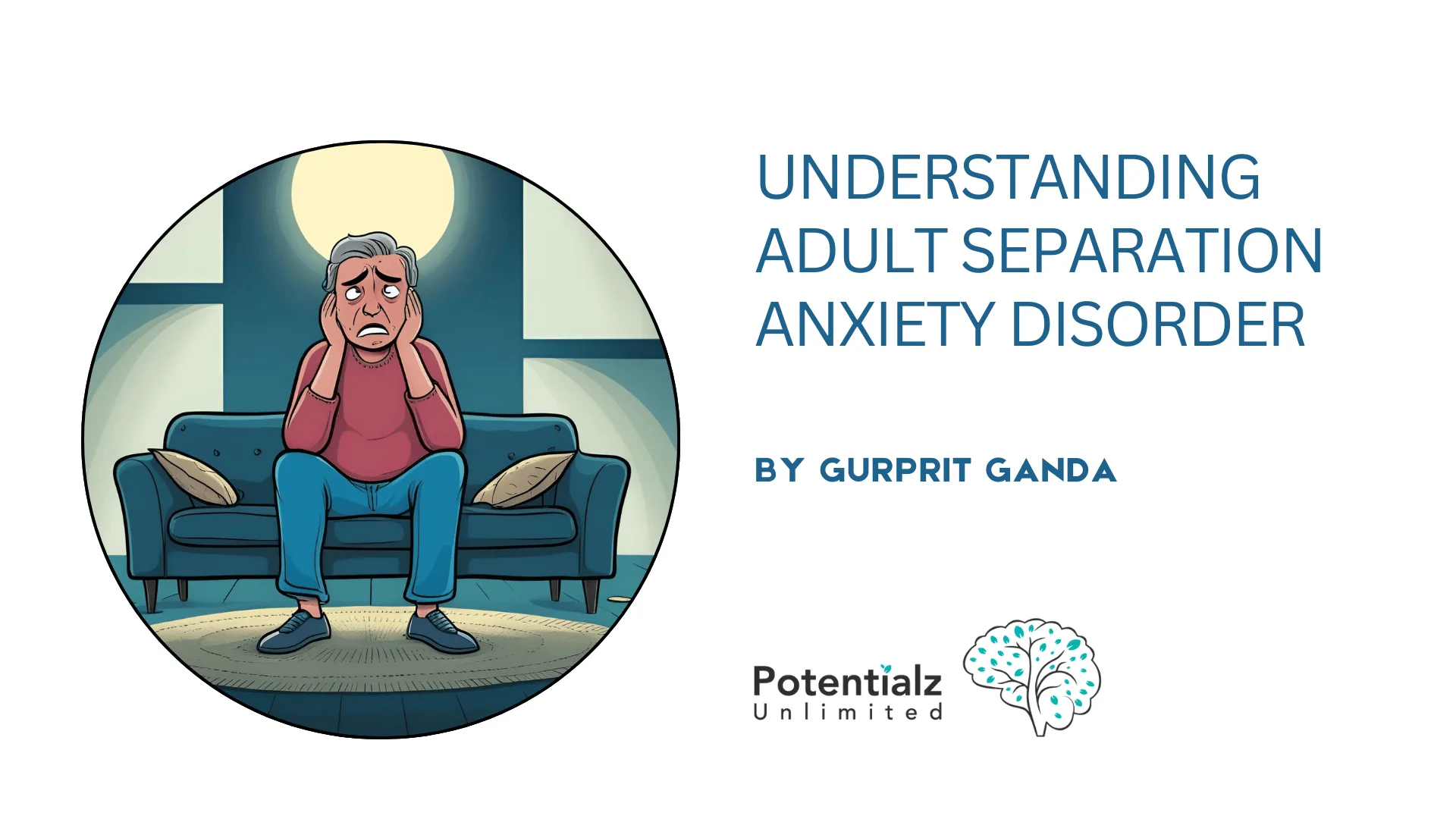
Demystifying Adult Separation Anxiety
Separation anxiety is often thought of as a childhood issue - clingy kids, school refusal, and tantrums at drop-off. But what if these fears don’t fade with age? What if, instead, they morph and persist, quietly shaping adult lives, relationships, and mental health? Recent research and new clinical tools like the ASA-27 are shining a light on Adult Separation Anxiety Disorder (SEPAD), a condition that’s more common-and more misunderstood-than you might think.
In this blog, we’ll break down the science and practicalities of adult separation anxiety, explore how it relates to attachment theory, and show how clinicians can use the ASA-27 to spot and support those struggling with this often-hidden disorder.
1. Why Adult Separation Anxiety Matters
For decades, separation anxiety was seen as a childhood problem. But mounting evidence shows that it can persist into adulthood—or even begin there. Adult Separation Anxiety Disorder (SEPAD) is now recognized in both the DSM-5 and ICD-11 as a core anxiety disorder that can affect people throughout their lives.
Key facts:
- SEPAD affects up to 6.6% of adults over their lifetime—higher than panic disorder or generalized anxiety disorder.
- Two-thirds of adults with SEPAD report onset in adulthood, usually by age 30.
- SEPAD is often missed or misdiagnosed, leading to poor treatment outcomes and unnecessary suffering.
2. Attachment Theory: The Foundation of Separation Anxiety
Attachment theory, pioneered by Bowlby and Ainsworth, explains how our earliest relationships with caregivers shape our ability to handle separation and loss. In mammals, including humans, separation distress is a normal, adaptive response in infancy and childhood. But when this distress becomes excessive, persistent, or irrational, it can lead to separation anxiety-and, eventually, SEPAD.
Attachment styles in childhood:
- **Secure: **Comfortable with closeness and independence.
- Avoidant: Distant, self-reliant, avoids closeness.
- **Ambivalent/Resistant: **Clingy, anxious, hard to soothe.
- **Disorganized: **Confused, fearful, lacks clear strategy for dealing with separation.
Overprotective or inconsistent parenting, trauma, and temperament can all influence attachment style and risk for separation anxiety.
3. Separation Anxiety: From Normal to Disorder
Separation distress is a normal reaction to being apart from loved ones. Separation anxiety, by contrast, involves:
- Anticipatory worry about being separated
- Catastrophic thinking about what might happen
- Physical symptoms (nausea, panic, insomnia)
- Avoidance of situations that might lead to separation
When these symptoms become severe, persistent, and disruptive, they meet criteria for SEPAD.
4. Childhood vs. Adult Separation Anxiety Disorder
Feature
Childhood SEPAD
Adult SEPAD
Typical behaviors
School refusal, clinginess, tantrums, sleep issues
Excessive reassurance-seeking, avoidance, rituals
Focus of anxiety
Parents/caregivers
Attachment figures (partners, children, friends)
Prevalence
5% (12-month), higher in clinical samples
4.8–6.6% (lifetime), often adult onset
Diagnostic criteria
Symptoms ≥4 weeks
Symptoms ≥6 months
Common triggers
School, sleepovers, parental absence
Relationship stress, loss, travel, health worries
**Key insight: **SEPAD is not just “childhood anxiety in grown-ups.” It can begin in adulthood, is shaped by adult relationships, and often co-occurs with other disorders like panic disorder, agoraphobia, or depression.
5. What Does Adult Separation Anxiety Look Like?
Common Signs and Symptoms
- Excessive reassurance-seeking: Constantly calling, texting, or checking on loved ones.
- Reluctance to leave home: Avoiding travel, work, or social events without attachment figures.
- Sleep rituals: Needing lights on, doors open, or someone nearby to sleep.
- Physical symptoms: Nausea, headaches, panic attacks when separated or anticipating separation.
- Nightmares: Recurring dreams about loss, violence, or separation.
- Catastrophic thinking: Persistent worries about harm befalling loved ones or oneself when apart.
- Relationship strain: Intense attachments that can feel overwhelming to both parties.
Case Examples
Katie, 23:
Developed panic attacks after her partner’s drug use increased her fears of losing him. She insisted on constant proximity, struggled to work, and found little relief from standard CBT for panic disorder.
Michael, 50:
A successful executive, he avoided overseas travel unless accompanied by his wife, and required constant updates on her whereabouts. His anxieties intensified when his wife became ill-a pattern rooted in early childhood losses and disrupted caregiving.
6. Why SEPAD Is Often Missed
- **Symptom overlap: **SEPAD can look like panic disorder, OCD, health anxiety, or generalized anxiety disorder.
- **Clinician bias: **Some clinicians see adult separation anxiety as “normal,” especially if they share similar attachment patterns.
- **Patient reluctance: **Many adults are embarrassed to admit these fears or have normalized them due to family or cultural factors.
- **Comorbidity: **Other disorders may mask the underlying separation anxiety.
Result: Many adults go untreated or receive the wrong treatment, leading to chronic impairment and poor response to therapy or medication.
7. The ASA-27: A Breakthrough Tool for Assessment
The Adult Separation Anxiety Questionnaire (ASA-27) is a 27-item self-report tool designed to capture the full range of adult separation anxiety symptoms. Developed by Manicavasagar et al. (2003), it is:
- Unidimensional: Measures overall severity, not subtypes.
- Reliable: Cronbach’s alpha = 0.95, test-retest reliability = 0.86.
- Sensitive and specific: At a cutoff score of 22, sensitivity is 81%, specificity is 84%.
- Practical: Can be used in both clinical and community settings, before and after treatment.
How clinicians use the ASA-27:
- To open conversations about symptoms (e.g., sleep rituals, avoidance, impacts on relationships)
- To measure severity and track progress
- To identify those who may need further assessment for SEPAD
8. Clinical Implications and Treatment
Why does it matter to identify SEPAD?
- Standard treatments for other anxiety disorders (like CBT for panic disorder) may not work unless separation anxiety is addressed.
- SEPAD is linked to higher functional impairment and relapse risk, especially in the context of trauma or grief.
- Addressing SEPAD can improve outcomes for comorbid mood and anxiety disorders.
What to ask in assessment:
- When did symptoms begin? What were the triggers?
- What is the impact on daily life and relationships?
- Are there patterns of avoidance, reassurance-seeking, or catastrophic thinking?
- How do symptoms change with stress, loss, or changes in relationships?
9. Moving Forward: Recognizing and Supporting Adults with SEPAD
For clinicians:
- Be alert to the possibility of adult separation anxiety, especially in clients with “treatment-resistant” anxiety or relationship difficulties.
- Use structured tools like the ASA-27 to guide assessment.
- Normalize discussion of attachment and separation fears-many clients are relieved to have a name for their experience.
For clients and families:
- Understand that separation anxiety is not just “childish” or a personality flaw-it’s a recognized, treatable condition.
- Seek help if anxiety about separation is interfering with your life, work, or relationships.
- Remember: Recovery is possible with the right support.
Key Takeaways
- Adult Separation Anxiety Disorder (SEPAD) is real, common, and often missed.
- Attachment theory helps explain why some people are more vulnerable.
- The ASA-27 is a reliable tool for identifying and measuring adult separation anxiety.
- Proper diagnosis and targeted treatment can dramatically improve quality of life.
References
- American Psychiatric Association. (2013). Diagnostic and statistical manual of mental disorders (5th ed.). https://doi.org/10.1176/appi.books.9780890425596
- Cartwright-Hatton, S., McNicol, K., & Doubleday, E. (2006). Anxiety in a neglected population: prevalence of anxiety disorders in pre-adolescent children. Clinical psychology review, 26(7), 817–833. https://doi.org/10.1016/j.cpr.2005.12.002
- Kessler, R. C., Berglund, P., Demler, O., Jin, R., Merikangas, K. R., & Walters, E. E. (2005). Lifetime prevalence and age-of-onset distributions of DSM-IV disorders in the National Comorbidity Survey Replication. Archives of General Psychiatry, 62(6), 593-602. https://doi.org/10.1001/archpsyc.62.6.593
- Manicavasagar, V., Silove, D., Wagner, R., & Drobny, J. (2003). A self-report questionnaire for measuring separation anxiety in adulthood. Comprehensive psychiatry, 44(2), 146–153. https://doi.org/10.1053/comp.2003.50024
- Shear, M. K., Jin, R., Ruscio, A. M., Walters, E. E., & Kessler, R. C. (2006). Prevalence and correlates of estimated DSM-IV child and adult separation anxiety disorder in the National Comorbidity Survey Replication. American Journal of Psychiatry, 163(6), 1074-1083. https://doi.org/10.1176/ajp.2006.163.6.1074
- Silove, D. M., Marnane, C. L., Wagner, R., Manicavasagar, V. L., & Rees, S. (2010). The prevalence and correlates of adult separation anxiety disorder in an anxiety clinic. BMC psychiatry, 10, 21. https://doi.org/10.1186/1471-244X-10-21
Need Professional Support?
If you're experiencing mental health concerns, our team is here to help.