Introduction
When facing criminal charges in New South Wales, understanding your legal options can make the difference between having a criminal record and walking away without one. Two important provisions in NSW law - Section 10 of the Crimes (Sentencing Procedure) Act 1999 and Section 14 of the Mental Health and Cognitive Impairment Forensic Provisions Act 2020 - offer alternatives to traditional criminal penalties.
While both can result in charges being dismissed without a criminal conviction, they serve very different purposes and have distinct eligibility requirements. This guide will help you understand the key differences between these two options and determine which might apply to your situation.
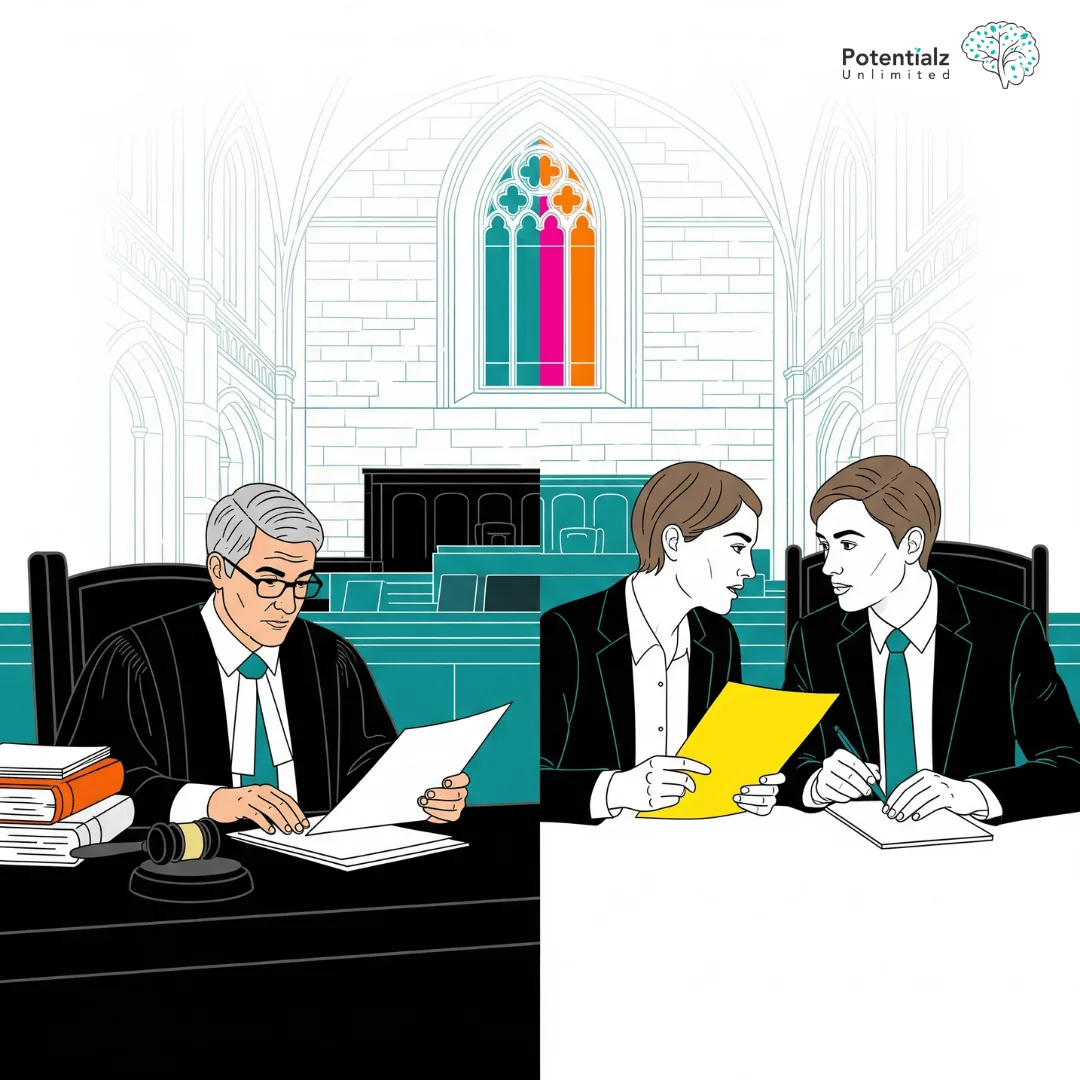 The illustration depicts a courtroom scene with a magistrate reviewing documents on one side and a person consulting with a lawyer on the other
What is a Section 10 Order?
A Section 10 order is a sentencing option under the Crimes (Sentencing Procedure) Act 1999 that allows a court to find someone guilty of an offence but dismiss the charges without recording a criminal conviction. This powerful legal tool means no conviction appears on your criminal record, even though the court has found you guilty of the offence.
Types of Section 10 Orders
There are three types of Section 10 orders available:
Section 10(1)(a) - Outright Dismissal
The court finds the offender guilty of the offence, but the charge is dismissed and no conviction is recorded. This is the most lenient penalty.
Section 10(1)(b) - Conditional Release Order
The offender is found guilty, and no conviction is recorded. However, the offender is placed on a conditional release order, similar to a good behaviour bond, for up to two years.
Section 10(1)(c) - Intervention Program
The court dismisses the charges on condition that the person enters into an agreement to participate in an intervention program.
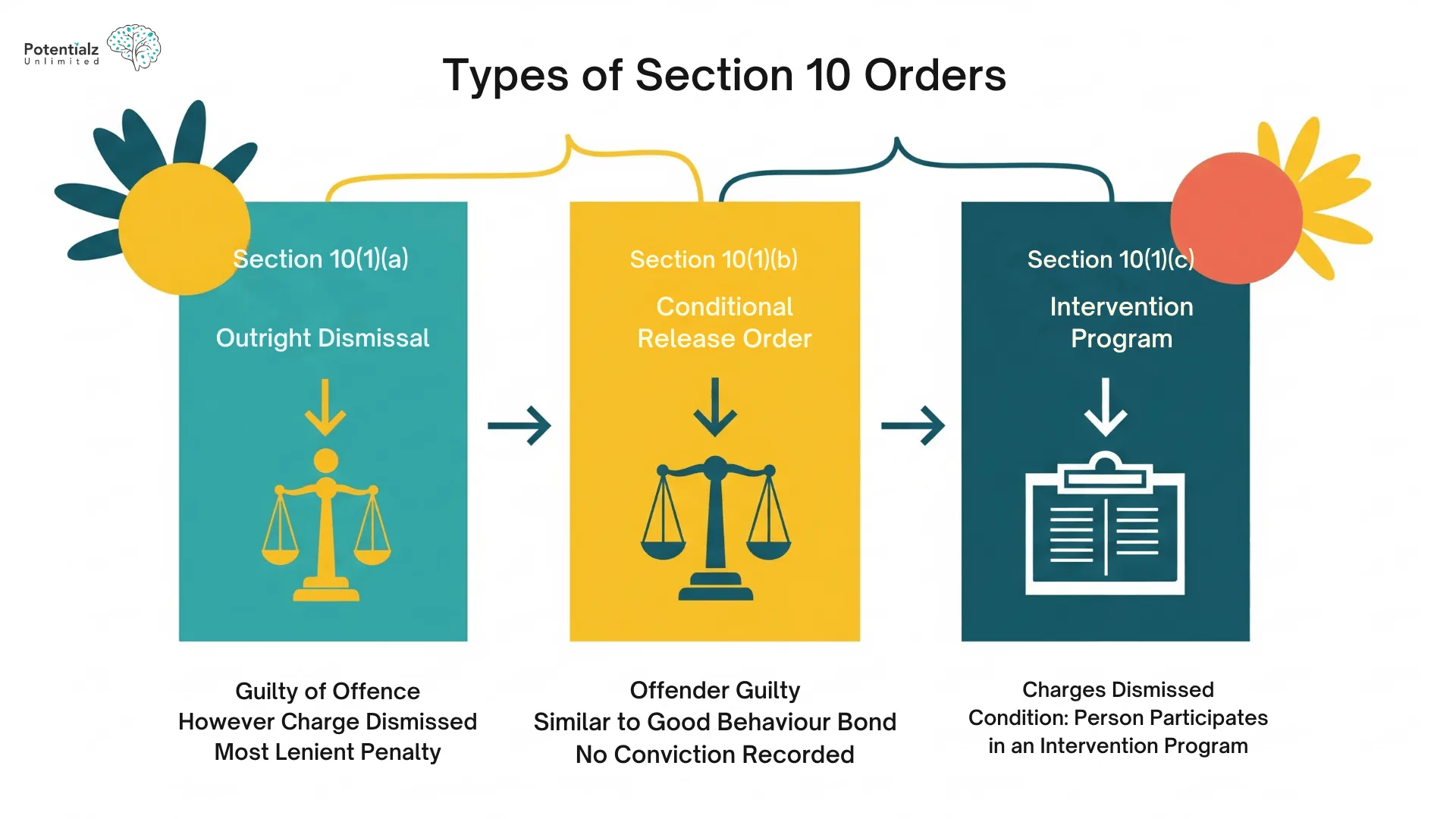 Infographic illustrating the three pathways of Section 10 orders: Outright Dismissal, Conditional Release, and Intervention Programs, each depicted with relevant icons and descriptions of offense handling.
Who is Eligible for Section 10?
There is no automatic right to a section 10, even if the person has no criminal record and is charged with a minor offence. The court will consider each case, and each offender, individually.
Section 10 orders are available for most criminal and traffic offences, but certain restrictions apply:
- Traffic offences: Limited to one Section 10 in five years for certain driving offences
- Serious offences: Less likely to be granted for serious crimes
- Repeat offenders: A court will consider your criminal history when deciding your sentence
What is a Section 14 Order?
A Section 14 order operates under the Mental Health and Cognitive Impairment Forensic Provisions Act 2020, which replaced the previous Section 32 provisions in 2020. This Act changes the way the court system deals with defendants who are found to have mental health conditions or cognitive impairments and subsequently have charges withdrawn.
Purpose of Section 14 Orders
Under the Mental Health and Cognitive Impairment Forensic Provisions Act 2020, the Local Court may divert a person charged with an offence away from the criminal justice system and its usual forms of punishment, into mental health care in circumstances where that person is suffering from a mental health impairment or a cognitive impairment.
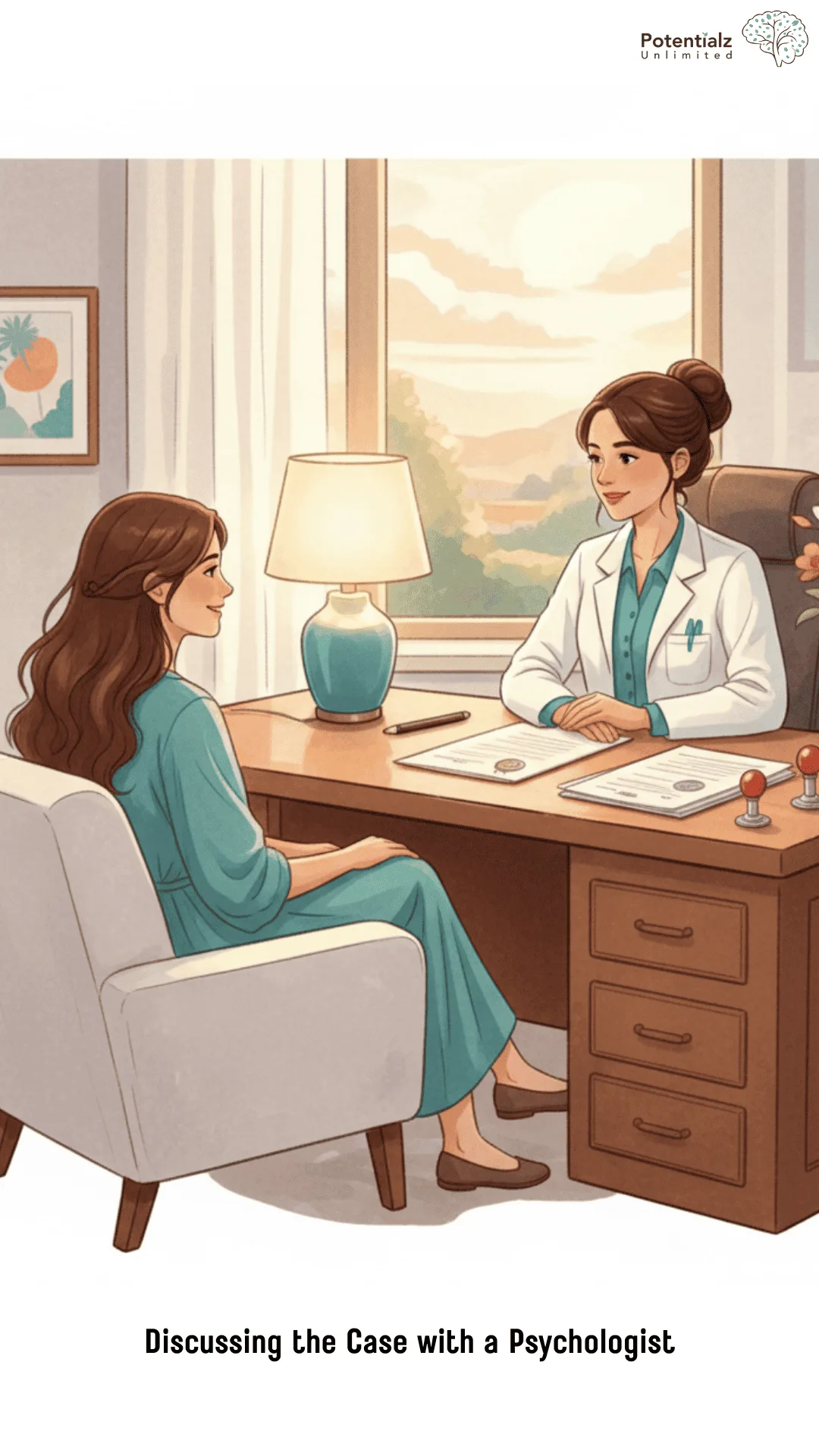 A supportive discussion unfolds between a mental health professional and a client, with court documents in the foreground, set in a warm, welcoming office.
Eligibility Criteria for Section 14
A magistrate may make an order under section 14 if it appears to the magistrate that the defendant has (or had at the time of the alleged offence) a mental health impairment or cognitive impairment, or both.
Mental Health Impairments Include:
- The disturbance impairs the emotional wellbeing, judgement or behaviour of the person
- A substance induced mental disorder that is not temporary
- Depression, anxiety, bipolar disorder, and other mental health conditions
Cognitive Impairments Include:
- The impairments result from damage or dysfunction, development delay or deterioration of the person’s brain or mind
- Autism spectrum disorder
- Intellectual disability and acquired brain injury
Key Differences - Section 10 vs Section 14 Reports
1. Primary Purpose
Section 10
Section 14
General sentencing discretion for any offender
Mental health diversion for specific conditions
Focuses on avoiding criminal record
Focuses on treatment and support
2. Eligibility Requirements
Section 10
Available to anyone, considering factors like:
- The person’s character, criminal history, age, health and mental condition
- Severity of the offence
- Impact of conviction on employment and future prospects
Section 14
Requires evidence of:
- Mental health impairment or cognitive impairment
- Professional psychological or psychiatric assessment
- Treatment plan recommendations
3. Duration and Monitoring
Section 10
- Conditional release orders up to 2 years
- Standard conditions include good behaviour, court appearances if required, and notifying address changes
Section 14
- Treatment/support programs as required
- Magistrates can call discharged defendants back into court for up to 12 months if they fail to follow their treatment program
Application Process and Professional Support
Section 10 Applications
Section 10 applications are typically handled by criminal lawyers who:
- Assess the likelihood of success based on case circumstances
- Prepare character references and supporting documentation
- Make submissions on your character, the severity of the offences, and consequences of conviction
Section 14 Applications
Section 14 applications require specialised mental health assessments:
- Reports from forensic psychologists or psychiatrists
- Comprehensive treatment plans for the future
- Evidence of mental health or cognitive impairment
Professional Insight
At Potentialz, our experienced psychologists regularly prepare both Section 10 and Section 14 reports for NSW courts. These detailed assessments examine not only the presence of mental health or cognitive conditions but also provide comprehensive treatment recommendations that align with legal requirements.
Success Rates and Considerations
Factors Affecting Section 10 Success
Research indicates that Section 10 orders are more likely when:
- The offence is minor or trivial in nature
- The defendant has no prior criminal history
- Strong character references are provided
- A conviction would have significant consequences for employment or travel
A section 10 is less likely where the offence is serious, or where the offender has received a section 10 previously.
Factors Affecting Section 14 Success
Studies show Section 14 applications succeed when:
- Clear evidence of mental health or cognitive impairment exists
- Professional treatment recommendations are comprehensive
- The defendant demonstrates willingness to engage with treatment
- Community safety concerns are adequately addressed
 In a modern office, a lawyer and psychologist collaboratively review client report requirements, fostering a professional discussion.
Test Your Knowledge
Choosing the Right Path
When Section 10 Might Be Appropriate
- First-time offenders with minor charges
- Cases where a conviction would cause disproportionate consequences
- Defendants with strong character references and community ties
- Situations where the offence is considered trivial
When Section 14 Might Be Appropriate
- Defendants with diagnosed mental health conditions
- Cases involving cognitive impairments
- Situations where treatment would better serve justice than punishment
- When mental health factors contributed to the offending behaviour
Real-World Example
Consider Sarah, a university student charged with shoplifting during a severe depressive episode. While she might qualify for either option, Section 14 would be more appropriate because it addresses the underlying mental health condition that contributed to her offending behaviour, providing her with ongoing psychological support rather than just avoiding a conviction.
Legal Implications and Long-term Consequences
Criminal Record Implications
Both Section 10 and Section 14 orders result in no criminal conviction being recorded. However, there are important distinctions:
Section 10
No conviction = no criminal record, but the matter may still appear on some background checks as a “finding of guilt without conviction.”
Section 14
Charges are completely dismissed, with no finding of guilt recorded.
Professional and Travel Implications
For both orders:
- Most employment applications asking about “criminal convictions” can be answered “no”
- Travel to countries with strict entry requirements may still require disclosure
- Professional licensing bodies may have specific requirements
 The benefits of filing a Section 10 or Section 14 appeal, illustrating how proactive steps can lead to employment and global travel.
Recent Legal Developments
The transition from Section 32 to Section 14 in 2020 brought several important changes:
- Extended monitoring period: Section 14 extends monitoring to 12 months compared to the previous 6 months under Section 32
- Broader application: Section 14 applies to more types of offences than the previous Section 32 provisions
- Enhanced community safety: Greater emphasis on risk assessment and community protection
Professional legal and psychological support makes.mp4
Professional Support and Resources
Legal Representation
Both Section 10 and Section 14 applications benefit significantly from professional legal representation. Experienced criminal lawyers understand:
- Court preferences and tendencies
- Required documentation and evidence
- Effective advocacy strategies
- Alternative sentencing options
Psychological Assessment Services
For Section 14 applications, quality psychological assessment is crucial. Professional services should provide:
- Comprehensive diagnostic evaluations
- Detailed treatment recommendations
- Court-appropriate reporting formats
- Follow-up support and monitoring
Potentialz Connection: Our clinic offers comprehensive Section 10 and Section 14 assessment services throughout NSW, including Section 14 reports in Parramatta. Our psychologists have extensive experience with NSW court requirements and work collaboratively with legal teams to achieve the best outcomes for clients.
For more information about our mental health assessment services, visit our clinical psychology services page or explore our range of therapeutic approaches.
Conclusion
Understanding the differences between Section 10 and Section 14 orders is crucial for anyone facing criminal charges in NSW. While both can result in avoiding a criminal conviction, they serve different purposes and populations:
- Section 10 provides general sentencing discretion for any offender, focusing on avoiding the consequences of a criminal record
- Section 14 specifically addresses the needs of people with mental health or cognitive impairments, emphasising treatment over punishment
The choice between these options depends on your individual circumstances, the nature of your charges, and whether mental health or cognitive factors played a role in your situation. Professional legal and psychological support can be invaluable in navigating these complex decisions and achieving the best possible outcome.
Remember, both options represent the NSW legal system’s recognition that sometimes treatment, support, or second chances serve justice better than traditional criminal penalties. With proper professional guidance, these provisions can provide pathways to positive outcomes while addressing underlying issues that may have contributed to offending behaviour.
If you’re facing charges and believe you might qualify for either Section 10 or Section 14, consult with experienced professionals who understand both the legal and psychological aspects of these important provisions.
Related Articles on Potentialz
- Understanding Section 14 of the Mental Health and Cognitive Impairment Forensic Provisions Act
- The What, Why and How of Section 14 Reports in the NSW Judicial System
- Does a Section 14 Show Up on a Police Check
- How to Access Psychological Services in Bella Vista
References
- Legal Aid NSW. (2024). What is a section 14? Retrieved from https://www.legalaid.nsw.gov.au/ways-to-get-help/publications-and-resources/what-is-a-section-14
- NSW Government. (1999). Crimes (Sentencing Procedure) Act 1999. Retrieved from https://legislation.nsw.gov.au/view/whole/html/inforce/current/act-1999-092
Need Professional Support?
If you're experiencing mental health concerns, our team is here to help.