Bottom line up front: Family and marriage therapy offers scientifically-proven methods to strengthen relationships, improve communication, and resolve conflicts. Research shows that 70-90% of couples experience significant improvement through evidence-based approaches like Emotionally Focused Therapy, with particular benefits for multicultural families navigating cultural integration and intergenerational challenges.
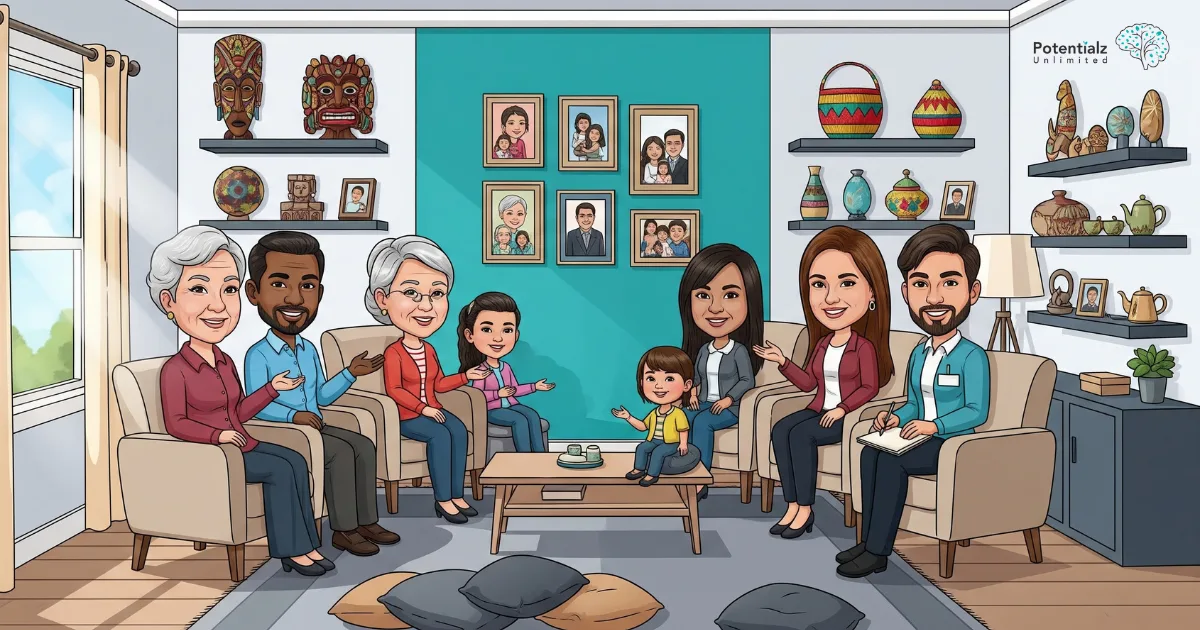 A warm gathering of a multi-generational family in a cozy living room, surrounded by cultural decor and family portraits.
Understanding Relationship Therapy in Today’s Diverse World
Relationship therapy, also known as couples counseling or family therapy, is a specialized form of psychological intervention designed to help families and partners improve their relationships, resolve conflicts, and strengthen emotional bonds. In the vibrant communities around Sydney’s Hills, Parramatta, Blacktown, and Hawkesbury councils, where many families represent first-generation immigrants balancing cultural traditions with modern Australian life, relationship therapy offers invaluable support.
Couple therapy has emerged as an important, widely disseminated form of therapy, with the largest international study of psychotherapists finding that 70% of psychotherapists treat couples. This widespread adoption reflects the proven effectiveness of relationship interventions in addressing not just relationship distress, but also individual mental health concerns.
Think of relationship therapy as a skilled guide helping your family navigate complex terrain. Just as a mountain guide helps climbers reach their destination safely by identifying the best paths and avoiding dangerous pitfalls, a relationship therapist helps families and couples identify healthy communication patterns and avoid destructive cycles.
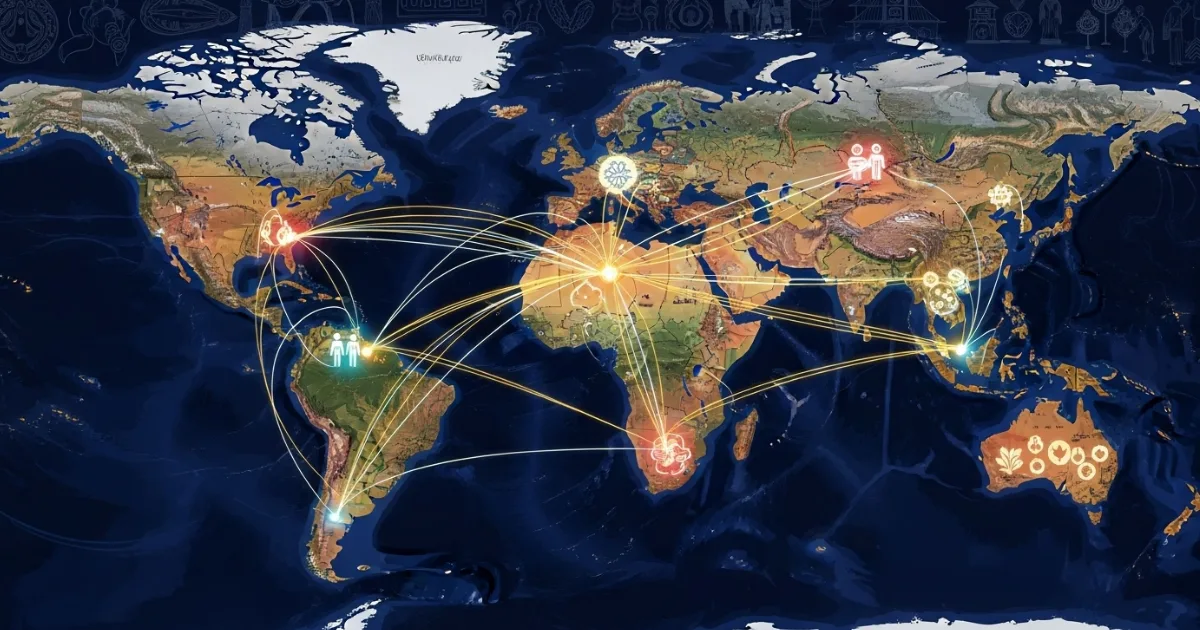 Illuminated pathways across a world map illustrate the interconnected web of diverse cultures, showcasing vibrant exchanges and connections on a global scale.
The Science Behind Relationship Therapy Success
Evidence-Based Effectiveness
Recent meta-analyses reveal impressive success rates for relationship therapy. Emotionally Focused Couples Therapy (EFT), considered the gold standard, shows remarkable outcomes: 90% of couples who undergo EFT significantly improve their relationship, and 70-75% of couples no longer meet criteria for relationship distress following treatment.
Compare this to the 35% success rate of other leading couples therapy approaches, and it becomes clear that choosing the right therapeutic method makes a significant difference. Both EFT and Behavioral Couples Therapy (BCT) demonstrate medium effect sizes (0.43 and 0.45 respectively), meaning couples experience moderate to significant improvements in relationship functioning.
How Therapy Creates Lasting Change
Relationship therapy works by addressing three core areas:
Emotional Connection: Helping partners understand and express their deeper emotions, moving beyond surface-level conflicts to address underlying needs and fears.
Communication Patterns: Teaching couples to recognize and interrupt negative cycles while developing more constructive ways of expressing thoughts and feelings.
Attachment Security: Building a foundation of trust and emotional safety that allows both partners to be vulnerable and supportive.
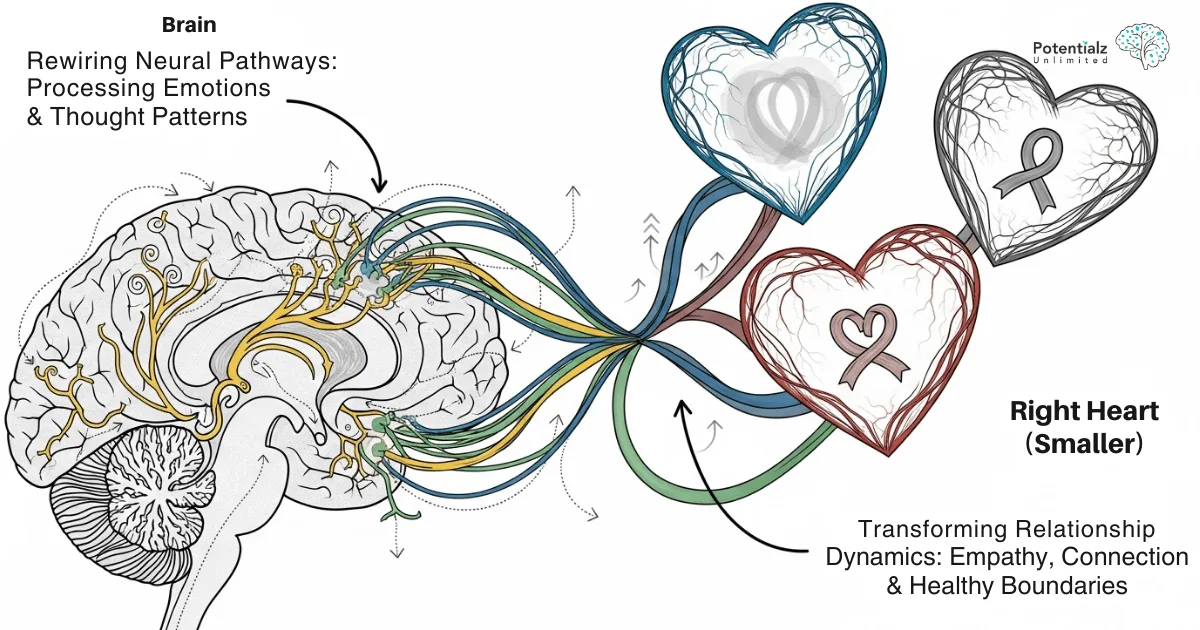 Diagram illustrating the rewiring of neural pathways in the brain, emphasizing the processing of emotions and thought patterns. Arrows signify connections to hearts, symbolizing transformed relationship dynamics through empathy, connection, and healthy boundaries.
Cultural Considerations in Relationship Therapy
Addressing Multicultural Challenges
For families from diverse cultural backgrounds, relationship therapy must navigate additional layers of complexity. Multicultural therapy recognizes that demographic factors such as race, ethnicity, religion, gender identity, and cultural values play critical roles in how someone experiences relationships and communicates with others.
Common multicultural relationship challenges include:
- Intergenerational conflicts between traditional parents and acculturated children
- Communication style differences based on cultural norms
- Role expectations that vary between cultures
- Extended family influences and obligations
- Religious or spiritual differences within partnerships
- Identity struggles for children balancing multiple cultural influences
Culturally Responsive Therapy Approaches
Effective multicultural relationship therapy incorporates several key principles:
Cultural Humility: Therapists approach each family with genuine curiosity about their cultural background rather than making assumptions based on ethnicity or appearance.
Language Sensitivity: Using interpreters when needed and understanding that some concepts don’t translate directly between languages, particularly emotional expressions.
Values Integration: Helping families honor their cultural values while adapting to new environments and generational changes.
Systemic Awareness: Understanding how discrimination, migration stress, and cultural marginalization affect family dynamics and individual well-being.
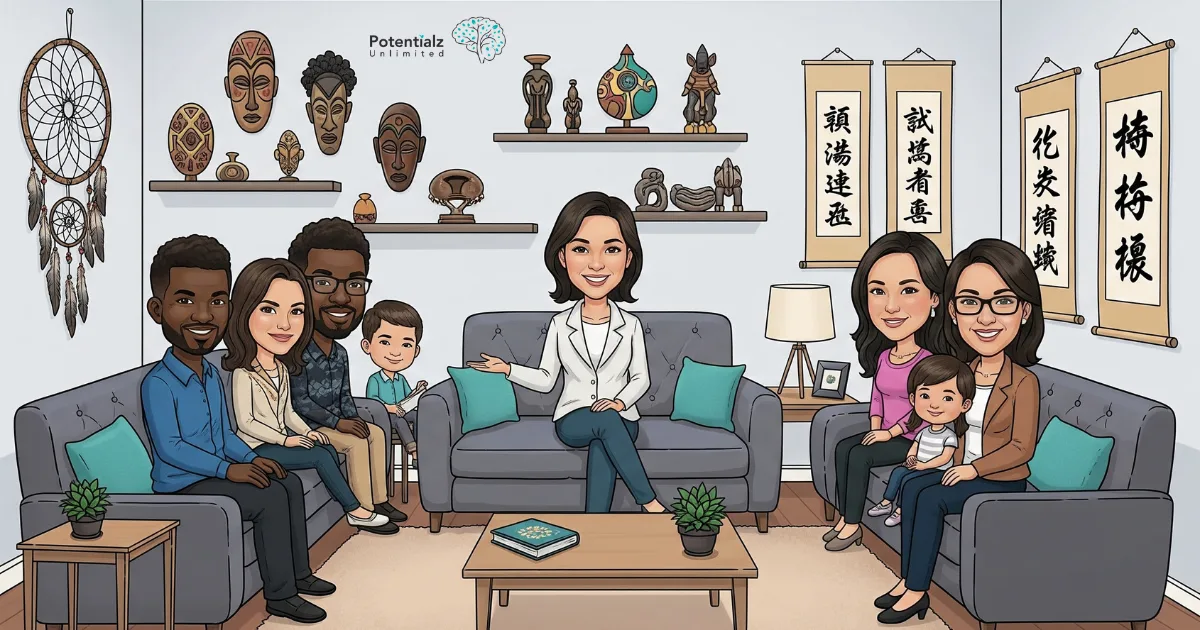 A therapist engages with a multicultural family in a cozy, culturally adorned therapy room, fostering understanding and support.
Types of Relationship Therapy Approaches
Emotionally Focused Therapy (EFT)
EFT focuses on identifying and transforming negative interaction cycles between partners. The approach helps couples:
- Recognize underlying emotions driving conflicts
- Express vulnerable feelings safely
- Develop secure emotional bonds
- Create positive cycles of connection and responsiveness
EFT is particularly effective because it addresses the fundamental human need for secure attachment, making it applicable across cultural backgrounds.
Structural Family Therapy
Based on Salvador Minuchin’s work, structural family therapy examines family interaction patterns and boundaries. This approach:
- Identifies dysfunctional family structures
- Addresses power imbalances and role confusion
- Strengthens appropriate boundaries between generations
- Improves family hierarchy and organization
Research comparing structural family therapy with mindfulness-based approaches shows significant improvements in family cohesion and adaptability.
Gottman Method Couples Therapy
Built on decades of research by Drs. John and Julie Gottman, this approach focuses on:
- Building love maps (detailed knowledge of partners)
- Nurturing fondness and admiration
- Managing conflict constructively
- Creating shared meaning and goals
Narrative Therapy
This approach helps families re-author their stories, particularly valuable for multicultural families who may be integrating different cultural narratives:
- Separating problems from people
- Identifying unique outcomes and strengths
- Exploring preferred identity stories
- Challenging dominant cultural narratives that may be restrictive
Addressing Specific Multicultural Family Dynamics
Parent-Child Relationships Across Cultures
First-generation immigrant parents often face challenges related to:
- Language barriers affecting emotional expression
- Different educational expectations between cultures
- Technology and social media gaps between generations
- Dating and marriage customs and expectations
- Career choices that may conflict with traditional values
Therapy helps families find balance by:
- Creating safe spaces for each generation to express their perspectives
- Developing cultural bridging strategies that honor both traditions
- Teaching communication skills that work across cultural differences
- Building mutual respect and understanding
Couple Relationships in Multicultural Contexts
Partners from different cultural backgrounds may struggle with:
- Gender role expectations varying between cultures
- Financial management approaches and family obligations
- Parenting styles influenced by different cultural values
- Religious or spiritual practices within the relationship
- Extended family relationships and boundaries
Blended Family Challenges
When families combine different cultural traditions, additional complexities arise:
- Integrating different holiday celebrations and traditions
- Managing loyalty conflicts between birth families and new family units
- Addressing children’s questions about cultural identity
- Creating new family traditions that honor multiple heritages
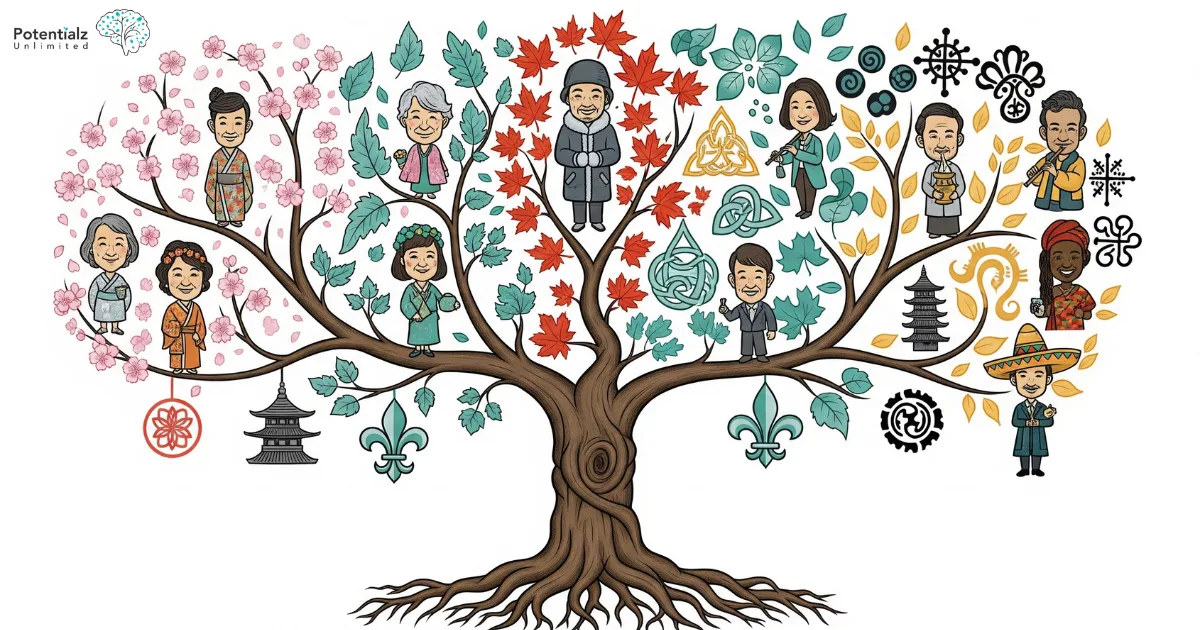 A vibrant family tree illustrating diverse cultural heritage, with each branch adorned with unique symbols and attire, all connecting back to shared roots.
The Role of Medicare and Accessibility
Medicare Coverage for Relationship Counseling
Medicare provides rebates for relationship counseling under specific conditions through the Better Access initiative:
Eligibility Requirements:
- Referral from a General Practitioner (GP)
- Mental Health Care Plan development
- Treatment by a registered mental health professional
- Up to 10 sessions per calendar year (with possible extension to 20 sessions)
What’s Covered:
- Individual sessions focusing on relationship issues
- Couple therapy sessions when both partners have mental health care plans
- Family therapy addressing mental health concerns
How to Access:
- Visit your GP to discuss relationship concerns
- Request a Mental Health Care Plan
- Receive referral to appropriate mental health professional
- Book sessions with Medicare-approved provider
This system makes relationship therapy more accessible for families who might otherwise struggle with the cost of private therapy.
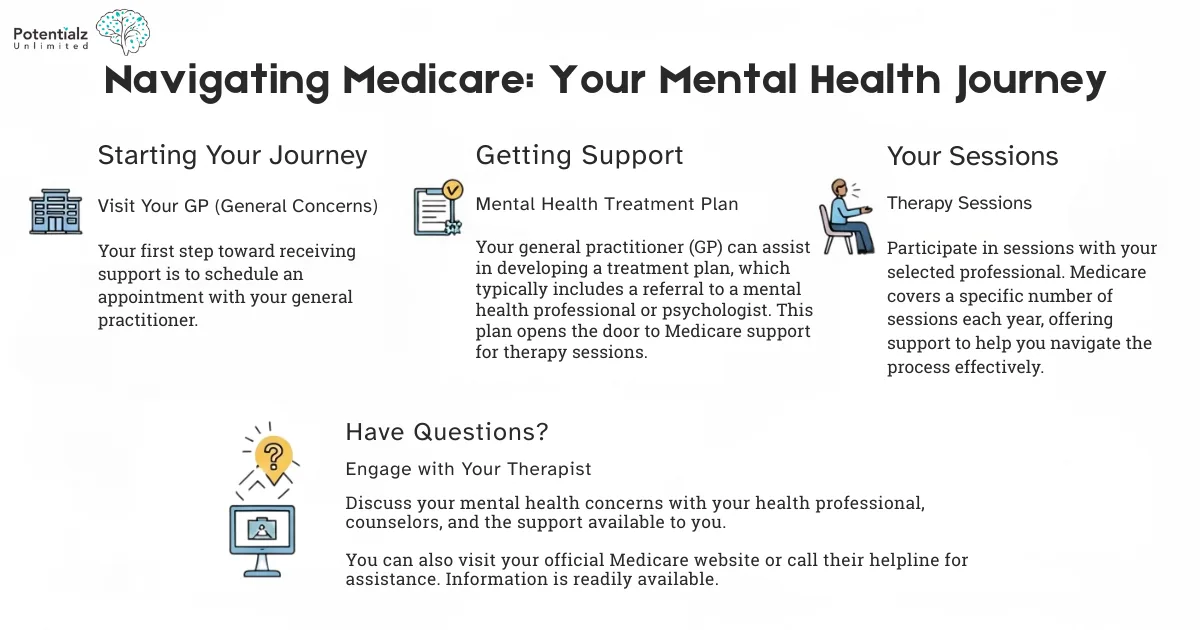 Navigating Medicare for mental health involves starting with a GP visit, developing a treatment plan, and attending covered therapy sessions, with support readily available for questions.
Practical Strategies for Relationship Success
Communication Skills for Multicultural Families
Active Listening Across Cultures:
- Recognize that different cultures have varying communication styles
- Understand that silence may have different meanings across cultures
- Practice patience when language barriers slow communication
- Ask clarifying questions to ensure understanding
Expressing Emotions Respectfully:
- Learn about your partner’s cultural expressions of emotion
- Respect different comfort levels with emotional expression
- Find common ground in non-verbal communication
- Create family rules that honor everyone’s communication style
Conflict Resolution Strategies:
- Identify cultural influences on conflict styles
- Develop fair fighting rules that work for your family
- Practice de-escalation techniques during heated moments
- Seek win-win solutions that respect cultural values
Building Cultural Bridges
Creating Inclusive Family Traditions:
- Blend holiday celebrations from different cultures
- Rotate between different cultural practices throughout the year
- Involve children in learning about all family cultures
- Create new traditions that represent your unique family blend
Managing Extended Family Relationships:
- Set clear boundaries while respecting cultural obligations
- Communicate decisions as a united couple to extended families
- Find compromises that honor family traditions without sacrificing your relationship
- Seek support when cultural expectations create stress
Teaching Cultural Identity to Children:
- Help children understand and appreciate their multicultural heritage
- Provide language learning opportunities for heritage languages
- Connect with cultural communities and organizations
- Address identity questions with patience and support
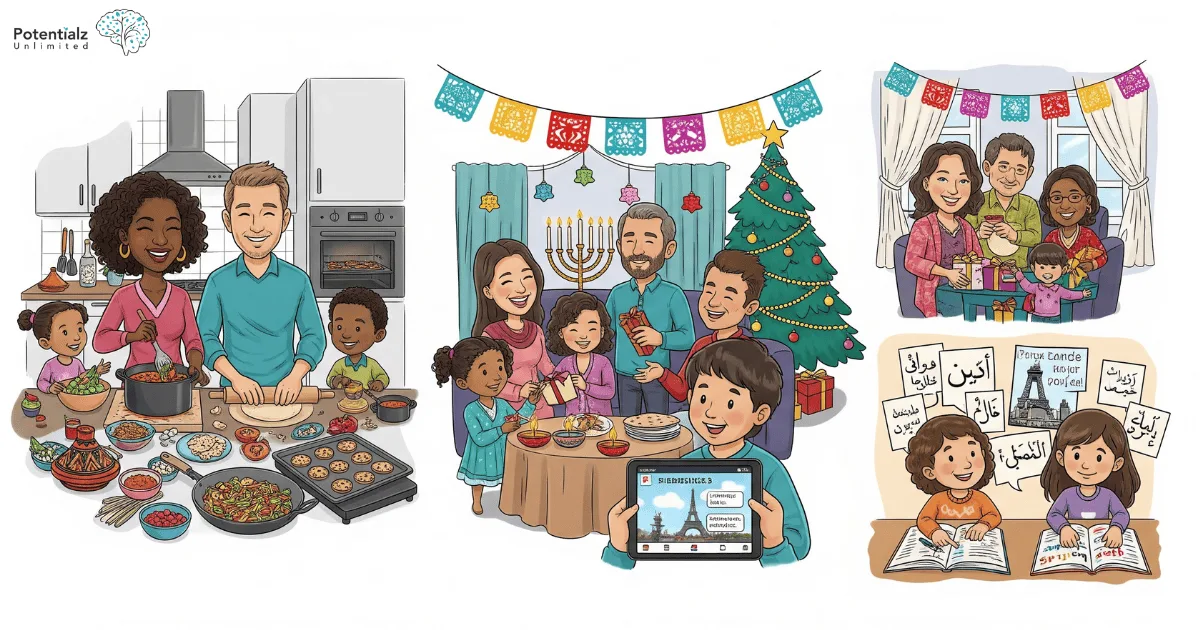 Families embracing cultural diversity through cooking, celebrating holidays, and learning languages together.
Overcoming Common Relationship Therapy Barriers
Cultural Stigma Around Mental Health
Many cultures view seeking therapy as shameful or as a sign of personal failure. Addressing these concerns:
- Education about therapy: Explaining that therapy is about growth, not pathology
- Normalizing help-seeking: Sharing success stories from similar cultural backgrounds
- Respecting privacy concerns: Ensuring confidentiality and cultural sensitivity
- Finding culturally matched therapists: When possible and desired by clients
Language and Communication Barriers
Effective multicultural therapy addresses language needs:
- Professional interpreters: When English is not the primary language
- Bilingual therapists: Who understand cultural nuances and expressions
- Cultural brokers: Who can explain cultural contexts to therapists
- Written materials: In appropriate languages when available
Financial Accessibility
Making therapy accessible regardless of economic circumstances:
- Medicare rebates: Utilizing government support systems
- Sliding scale fees: Many therapists offer reduced rates based on income
- Community counseling services: Lower-cost options in community health centers
- Group therapy: More affordable than individual sessions while still effective
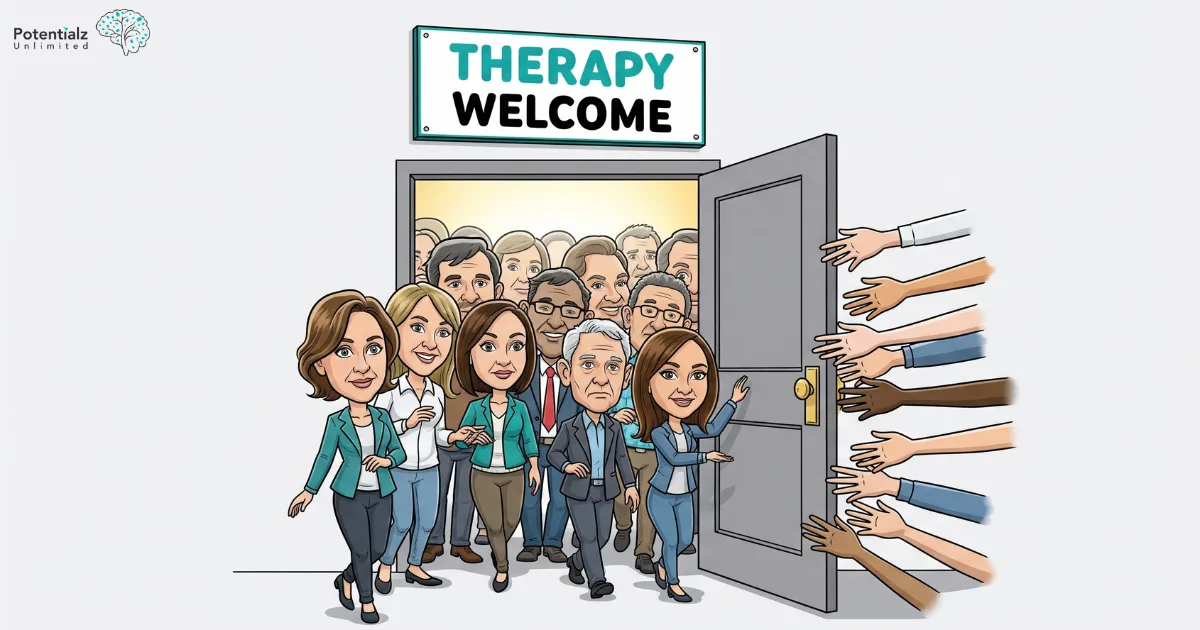 Access to Therapy: A Welcoming Space for Everyone Seeking Help.
Technology and Modern Relationship Therapy
Online and Telehealth Options
The COVID-19 pandemic accelerated the adoption of online therapy, revealing both benefits and challenges:
Benefits of Online Therapy:
Increased accessibility for families in remote areas
- Reduced travel time and costs
- Comfort of receiving therapy in familiar environments
- Greater scheduling flexibility for busy families
Considerations for Multicultural Families:
- Ensuring privacy in multi-generational households
- Addressing technology barriers for older family members
- Maintaining cultural sensitivity in virtual settings
- Adapting therapeutic techniques for online delivery
Digital Tools Supporting Relationship Health
Modern technology offers various tools to support relationship therapy:
- Relationship apps for homework between sessions
- Communication tracking tools to identify patterns
- Mindfulness and meditation apps for emotional regulation
- Cultural learning resources to understand different traditions
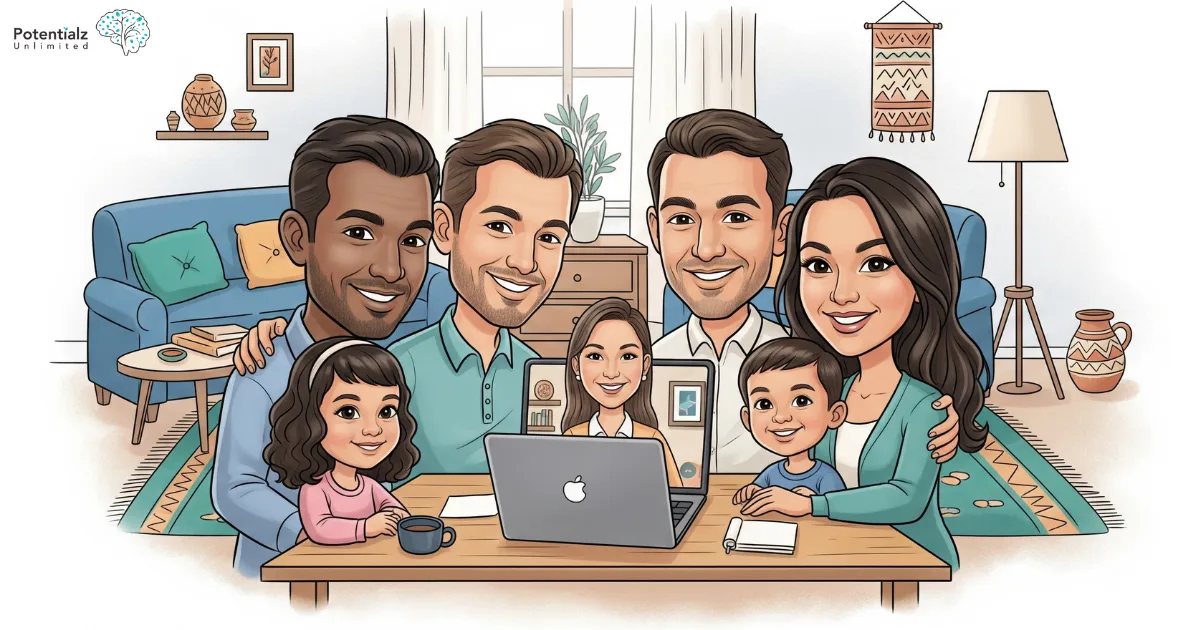 A family connecting through video call with their therapist
Specialized Approaches for Unique Situations
Trauma-Informed Relationship Therapy
Many multicultural families have experienced:
- Migration trauma from leaving home countries
- Discrimination and racism in new countries
- Intergenerational trauma passed down through families
- Domestic violence or other relationship traumas
Trauma-informed therapy approaches:
- Recognize the impact of trauma on relationship patterns
- Address safety as the primary concern
- Help families develop resilience and coping strategies
- Support healing while maintaining cultural identity
LGBTQ+ Multicultural Families
Families dealing with both cultural adaptation and LGBTQ+ identity face unique challenges:
- Coming out within traditional cultural contexts
- Finding acceptance in both cultural and LGBTQ+ communities
- Parenting children while managing multiple minority identities
- Building chosen families when biological families are unsupportive
Interfaith and Cross-Cultural Marriages
Couples from different religious or cultural backgrounds benefit from specialized approaches:
- Respectful exploration of different belief systems
- Conflict resolution around religious practices and holidays
- Parenting decisions about religious education for children
- Extended family negotiation when families disapprove of the union
 People from diverse backgrounds come together in therapy sessions, demonstrating its universal effectiveness in strengthening all types of relationships.
Building Resilience Through Relationship Therapy
Developing Emotional Intelligence
Relationship therapy teaches families to:
- Recognize emotional triggers and patterns
- Express feelings appropriately and constructively
- Empathize with different perspectives and cultural viewpoints
- Regulate emotions during stressful situations
Strengthening Family Systems
Healthy family systems share common characteristics:
- Clear boundaries between different family roles
- Open communication that respects cultural differences
- Flexibility to adapt to changing circumstances
- Mutual support during times of stress or transition
Creating Lasting Change
Effective relationship therapy results in:
- Improved conflict resolution skills that last beyond therapy
- Stronger emotional connections between family members
- Better stress management during life transitions
- Enhanced cultural pride and identity integration
 A majestic tree symbolizes strength and growth, with deep roots representing cultural heritage and expansive branches epitomizing adaptation and new beginnings, as figures connect with its enduring presence against a serene sunset.
Finding the Right Therapist for Your Family
Questions to Ask Potential Therapists
About Cultural Competence:
- “What experience do you have working with families from [your culture]?”
- “How do you address cultural differences in your therapy approach?”
- “Do you work with interpreters or speak my family’s language?”
- “How do you handle conflicts between traditional values and modern life?”
About Approach and Methods:
- “What therapeutic approaches do you use for relationship therapy?”
- “How do you measure progress in therapy?”
- “What’s your typical timeline for seeing improvements?”
- “How do you involve all family members in the process?”
About Practical Considerations:
- “Do you accept Medicare for relationship counseling?”
- “What are your fees and payment options?”
- “Do you offer online therapy sessions?”
- “How do you maintain confidentiality for family therapy?”
Red Flags to Avoid
Be cautious of therapists who:
- Make assumptions about your culture without asking questions
- Dismiss cultural concerns as unimportant
- Push specific cultural assimilation without considering your values
- Lack training in multicultural competency
- Show discomfort discussing cultural or religious differences
Success Stories: Real Families, Real Results
The Chen Family: Bridging Generational Differences
The Chen family, originally from Taiwan, sought therapy when their teenage daughter began rejecting traditional cultural expectations. Through family therapy, they:
- Learned to communicate across language and cultural barriers
- Found ways to honor Taiwanese traditions while embracing Australian culture
- Developed mutual respect for different generational perspectives
- Created new family traditions that blended both cultures
Maria and Ahmed: Interfaith Marriage Success
Maria (Catholic, from Colombia) and Ahmed (Muslim, from Lebanon) struggled with religious differences affecting their parenting decisions. Therapy helped them:
- Understand each other’s religious perspectives without judgment
- Create respectful compromises for holiday celebrations and children’s education
- Navigate extended family pressures with a united front
- Build a strong spiritual foundation that honored both faiths
The Patel Extended Family: Three-Generation Harmony
When three generations of the Patel family lived together after immigration from India, conflicts arose over parenting styles and household management. Family therapy resulted in:
- Clear boundaries and roles for each generation
- Improved communication between grandparents and grandchildren
- Respect for traditional Indian values while adapting to Australian life
- Stronger family bonds through better understanding
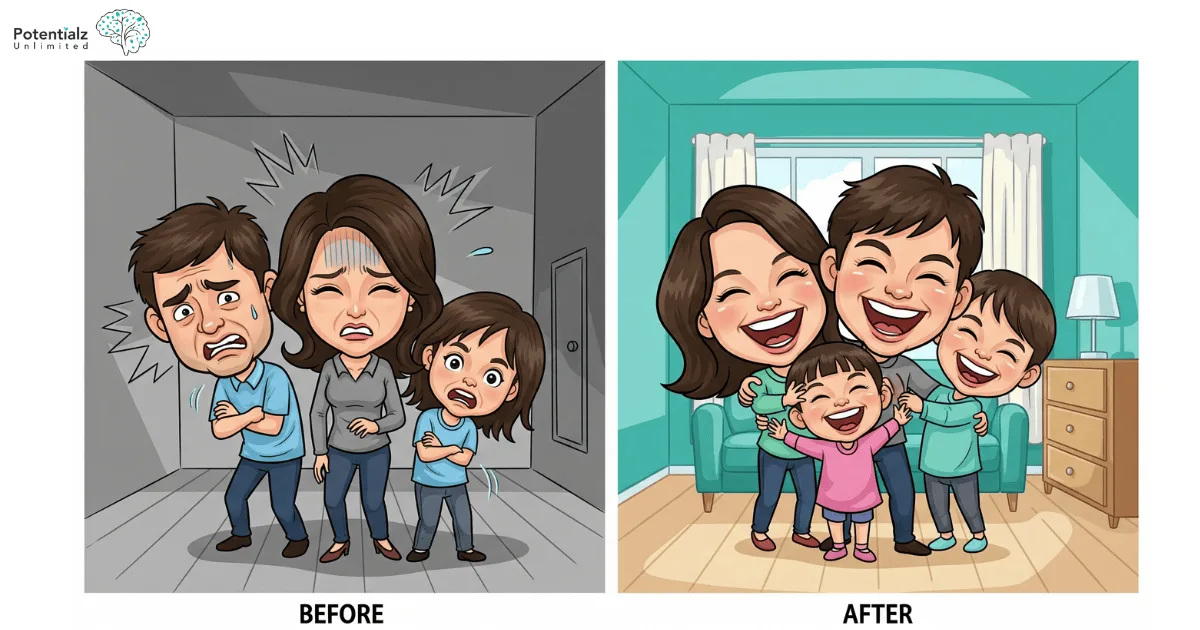 The transformative power of therapy: From stress and conflict to joy and togetherness in family life.
Maintaining Progress After Therapy
Ongoing Relationship Maintenance
Successful families continue growing by:
- Regular family meetings to address concerns before they escalate
- Cultural celebration planning that involves all family members
- Continued learning about each other’s perspectives and needs
- Professional check-ins during major life transitions
Building Community Connections
Strong relationships extend beyond immediate family:
- Connecting with other multicultural families facing similar challenges
- Participating in cultural organizations and community events
- Building support networks that understand your unique situation
- Mentoring other families beginning their therapy journey
Teaching Relationship Skills to Children
Parents who’ve benefited from therapy can:
- Model healthy communication and conflict resolution
- Teach children about cultural identity and pride
- Help children navigate their own multicultural experiences
- Create emotionally safe environments for future generations
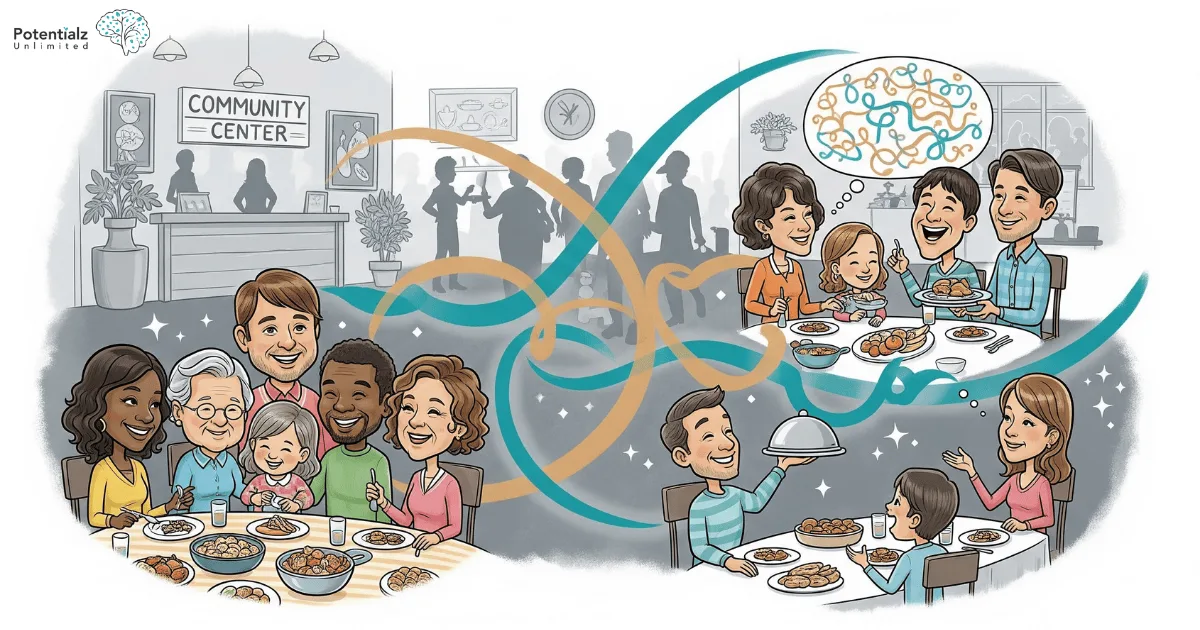 Multicultural families gather at the community center, sharing food, laughter, and stories, creating a tapestry of connection and joy.
Test Your Knowledge
Conclusion: Investing in Your Family’s Future
Family and marriage therapy offers scientifically-proven pathways to stronger, healthier relationships, with particular benefits for multicultural families navigating the complex terrain of cultural integration and identity formation. The research is clear: couples who engage in evidence-based therapy like EFT experience remarkable improvements, with 90% seeing significant positive changes in their relationships.
For families in Sydney’s diverse communities—from the Hills to Hawkesbury—relationship therapy provides invaluable support during life transitions, cultural adaptation, and intergenerational challenges. It’s not just about solving problems; it’s about building resilience, creating secure attachments, and developing the skills needed to thrive in an increasingly complex world.
The investment you make in relationship therapy today pays dividends for generations. Children who grow up in families that model healthy communication, cultural pride, and conflict resolution carry these skills into their own relationships. The healing and growth that occurs in therapy ripples outward, strengthening not just individual families but entire communities.
Remember that seeking relationship therapy is not a sign of failure—it’s a sign of commitment to your family’s wellbeing and future success. Every culture values strong families and healthy relationships, even if the specific expressions of those values vary. Quality relationship therapy honors your cultural background while providing the tools needed to build the relationships you desire.
Whether you’re navigating the early stages of cultural adaptation, dealing with intergenerational conflicts, or simply wanting to strengthen already good relationships, professional support is available. The combination of evidence-based therapeutic approaches and culturally sensitive practice creates powerful opportunities for growth and healing.
Your family’s unique cultural blend is not a challenge to overcome—it’s a strength to celebrate and build upon. Through relationship therapy, you can learn to navigate differences with grace, communicate across cultural divides with understanding, and create a family legacy of love, respect, and resilience that honors your heritage while embracing your future.
Take that first step toward stronger relationships. Your family’s journey toward healing and growth starts with a single conversation, and the benefits will last for generations to come.
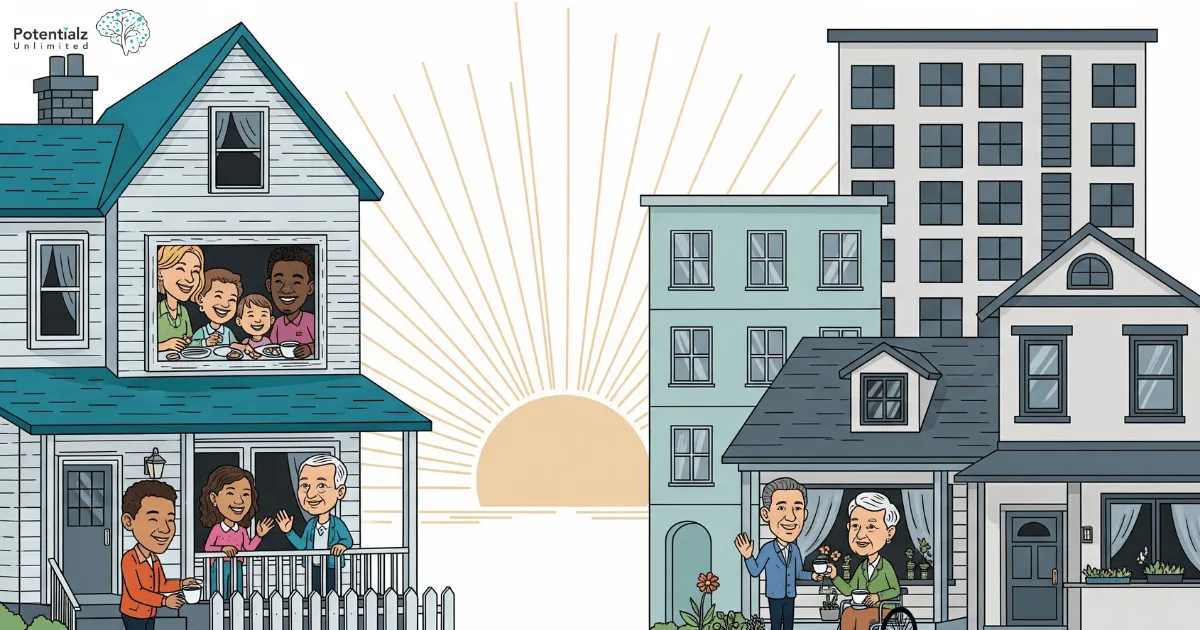 Sunrise illuminates a vibrant neighborhood, highlighting the diverse and joyful community within.
Related Potentialz.com.au Links:
Need Professional Support?
If you're experiencing mental health concerns, our team is here to help.