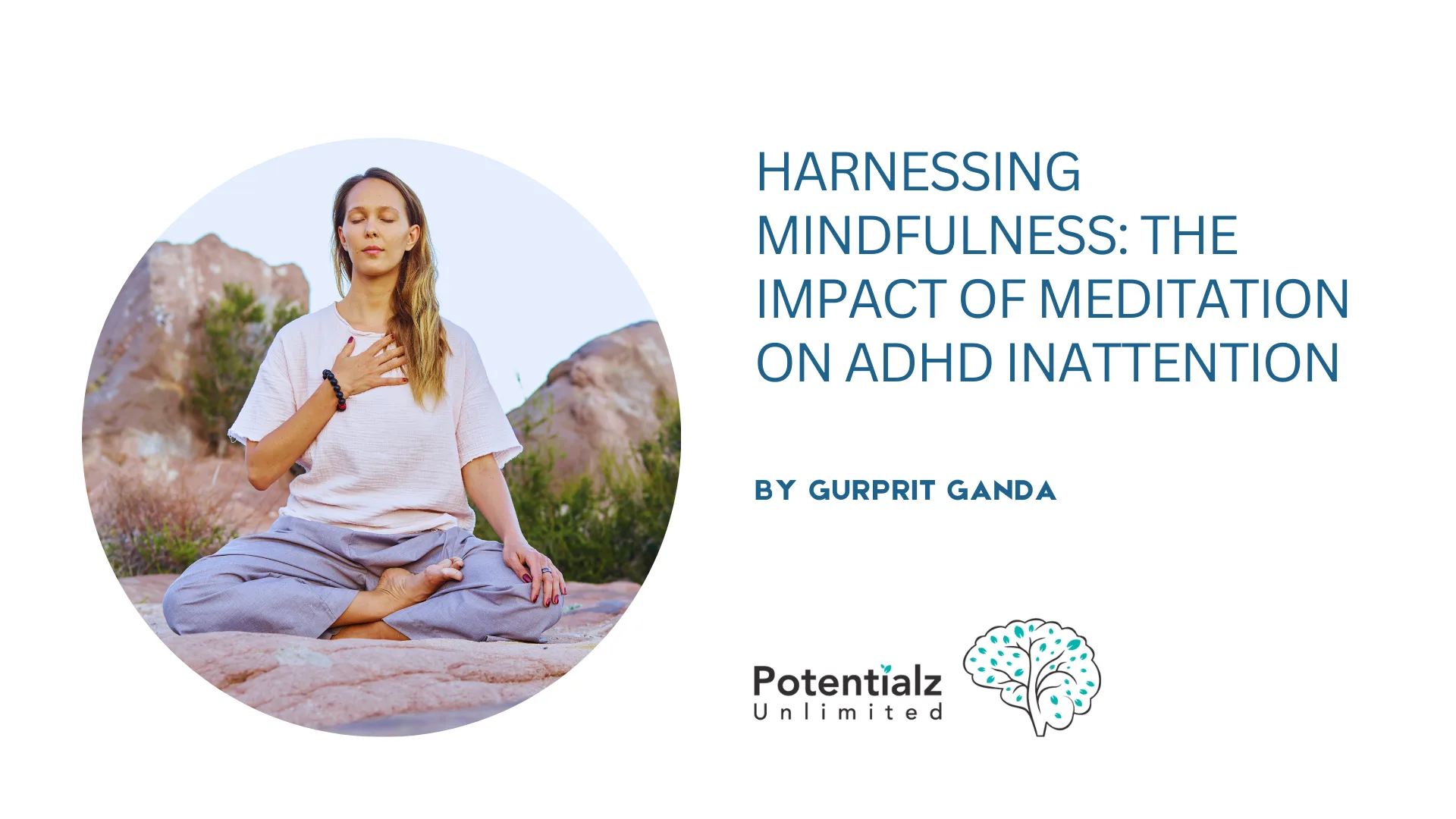
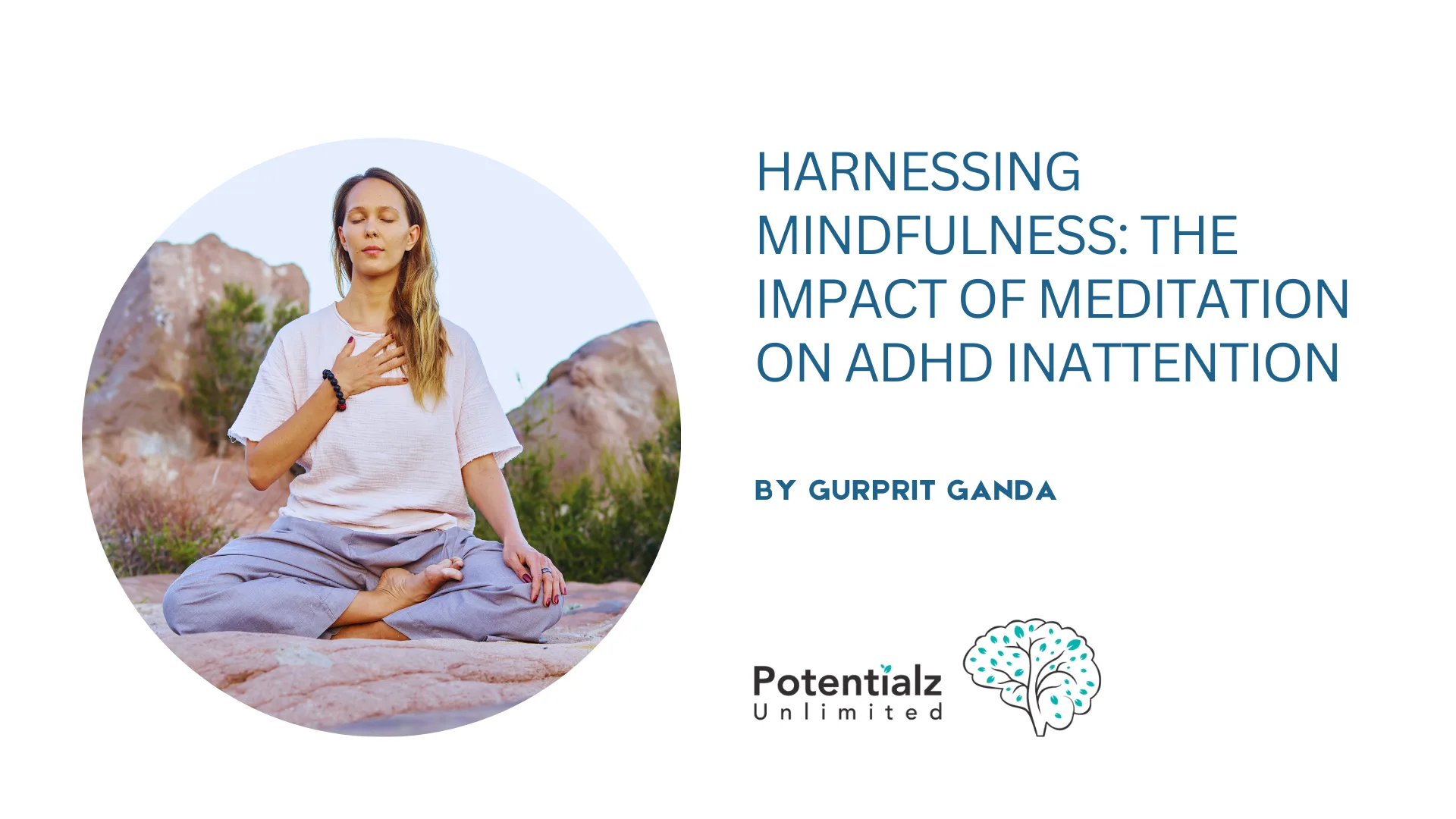
For individuals with ADHD, inattention isn’t merely a lack of focus—it’s a neurocognitive hurdle shaped by dysregulated brain networks and emotional overwhelm. Emerging research reveals that mindfulness meditation can recalibrate attention systems, offering a science-backed tool to combat distractibility. Studies show that regular practice thickens the prefrontal cortex (critical for focus) and enhances connectivity in the brain’s default mode network, which is often underactive in ADHD. Holistic Counsellor Samita Rathor, a registered therapist at Potentialz Unlimited, bridges ancient mindfulness traditions and modern psychology to help clients cultivate these neural shifts.
How Meditation Targets ADHD Inattention
1. Neuroplasticity and Attention Networks
Mindfulness meditation strengthens key brain regions through:
- Prefrontal cortex** activation**: Improves executive functions like task initiation and impulse control.
- Default mode network (DMN)** connectivity**: Enhances self-awareness and reduces mind-wandering, a common ADHD challenge.
- Dopamine regulation: Boosts motivation and sustains attention by increasing dopamine availability, which is typically deficient in ADHD brains.
A UCLA study found that 8 weeks of mindfulness training reduced inattention by 30% in ADHD participants, with effects lasting months post-intervention.
2. Emotional Regulation and Task Aversion
Meditation mitigates emotional barriers driving procrastination:
- Nonjudgmental awareness: Helps individuals observe distractions without self-criticism, breaking shame cycles.
- Stress reduction: Lowers cortisol levels, easing the overwhelm that exacerbates inattention.
- Impulse control: Teaches pause-and-reflect responses, reducing impulsive task avoidance.
Samita Rathor’s Holistic Approach to ADHD Mindfulness Training
As a Registered Counsellor and Yoga Therapist at Potentialz Unlimited, Samita Rathor combines decades of clinical expertise with ancient mindfulness practices to address ADHD inattention. Her methodology includes:
The Basics of Meditation & Yoga with Acharya Samita Rathor #yogapractice #yogaforbeginners #yoga
1. Personalized Meditation Plans
- Breath-focused techniques: Uses pranayama (yogic breathing) to anchor attention and calm racing thoughts.
- Body-mind integration: Tailors yoga postures and movement meditations to improve somatic awareness, reducing restlessness.
- Micro-meditations: Teaches 2–5 minute practices for clients struggling with sustained focus, aligning with ADHD-friendly “small steps” strategies.
2. Science-Backed Mindfulness Strategies
- Mindful task initiation: Clients learn to “surf the urge” to procrastinate by focusing on sensory details (e.g., the feel of a keyboard) to bypass overwhelm.
- Body doubling: Offers guided sessions where clients meditate alongside Samita, leveraging social accountability to maintain engagement.
- Dopamine pairing: Combines meditation with rewarding stimuli (e.g., nature sounds) to reinforce practice consistency.
3. Trauma-Informed Compassion
Samita’s approach emphasizes:
- Self-compassion exercises: Replaces self-criticism with affirmations like, “Distraction is a signal, not a failure”.
- Environmental audits: Identifies and minimizes sensory overload triggers in clients’ workspaces.
- Progress tracking: Uses visual tools like meditation streak calendars to celebrate incremental wins.
Practical Techniques for Clients
Samita’s clients gain actionable tools, such as:
- The “Blue Sky” visualization: Imagining thoughts as passing clouds to detach from distractions.
- Walking meditations: Focusing on foot sensations to ground attention during hyperactivity.
- Mindful transitions: Pausing for 3 breaths before switching tasks to reduce mental clutter.
**Conclusion: The **Impact of Meditation on ADHD
I laid out above the Impact of Meditation on ADHD. It is essential to note that mindfulness meditation isn’t a cure for ADHD, but a potent adjunct to traditional therapies. By rewiring attention networks and softening self-judgment, it empowers individuals to navigate inattention with curiosity rather than frustration. Samita Rathor’s holistic framework—rooted in yoga therapy, neuroscience, and compassionate counselling—provides a roadmap for clients to harness these benefits. As research evolves, integrating such multimodal approaches will be key to addressing ADHD’s complex layers.
References
- American Psychiatric Association. (2013). Diagnostic and statistical manual of mental disorders (5th ed.). https://doi.org/10.1176/appi.books.9780890425596
- Mitchell, J. T., Zylowska, L., & Kollins, S. H. (2015). Mindfulness Meditation Training for Attention-Deficit/Hyperactivity Disorder in Adulthood: Current Empirical Support, Treatment Overview, and Future Directions. Cognitive and behavioral practice, 22(2), 172–191. https://doi.org/10.1016/j.cbpra.2014.10.002
- Rathor, S. (2024). Holistic integrative counselling. Potentialz Unlimited. https://potentialz.com.au/our-team
- Zylowska, L., et al. (2008). Mindfulness meditation training in adults and adolescents with ADHD. Journal of Attention Disorders, 11(6), 737–746. https://doi.org/10.1177/1087054707308502
Need Professional Support?
If you're experiencing mental health concerns, our team is here to help.