Understanding Your Learning Potential: The Gateway to Academic Success
Have you ever wondered why some students seem to breeze through maths problems while others struggle, or why reading comprehension comes naturally to some but feels like climbing Mount Everest to others? The answer often lies in understanding our unique cognitive strengths and challenges through comprehensive IQ assessments.

Intelligence testing isn’t about labeling students as “smart” or “not smart” – it’s about creating a detailed map of how your brain processes information. Think of it like having a GPS for your mind that shows you the best routes to academic success.
What Makes an IQ Assessment “Comprehensive”?
A comprehensive IQ assessment goes far beyond a simple online quiz or single test score. Modern individually-administered IQ tests show high reliability and strong construct validity, measuring multiple aspects of cognitive functioning that directly impact academic performance.
Core Components of Intelligence Assessment
Verbal Comprehension
This measures your ability to understand and use language effectively. Students with strong verbal comprehension often excel in:
- English and literature classes
- History and social studies
- Foreign language learning
- Essay writing and presentations
Working Memory
Think of this as your brain’s notepad – how much information you can hold and manipulate at once. Working memory assists in retaining and manipulating information, which is crucial for:
- Multi-step maths problems
- Following complex instructions
- Taking notes while listening to lectures
- Science experiments requiring multiple steps
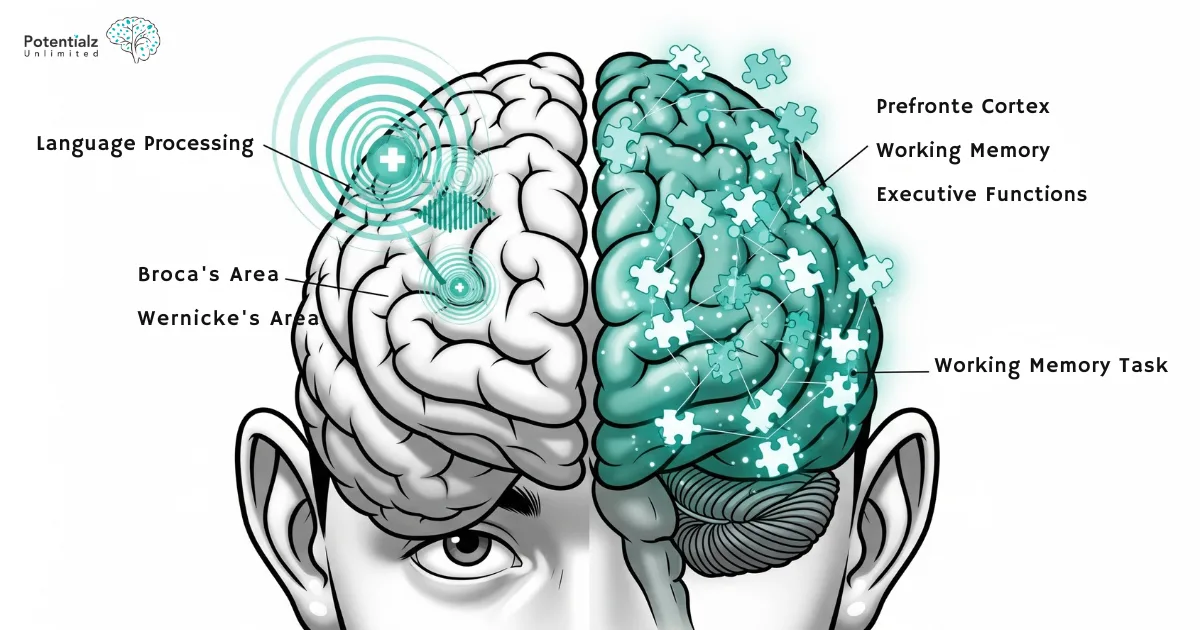
Processing Speed
This isn’t about being rushed – it’s about how efficiently your brain handles routine cognitive tasks. Students with good processing speed often find advantages in:
- Timed tests and assignments
- Quick recall of basic facts
- Keeping up with classroom discussions
- Managing multiple assignments
Perceptual Reasoning
This involves solving problems using visual-spatial information and logical thinking. Perceptual reasoning and processing speed — these components are crucial for success in most educational disciplines. Strong perceptual reasoning helps with:
- Geometry and spatial concepts
- Science diagrams and models
- Art and design projects
- Pattern recognition in various subjects
The Academic Connection: How IQ Relates to School Performance
Research consistently demonstrates a meaningful relationship between cognitive abilities and academic achievement. There is consistent evidence of a moderate to strong correlation between academic grades and measured intelligence, with correlations ranging from 0.40 to 0.81 across different studies.
However, it’s crucial to understand that IQ serving as a significant, though not exclusive, predictor of educational success. Intelligence provides the foundation, but many other factors contribute to academic success.
Breaking Down the Academic Impact
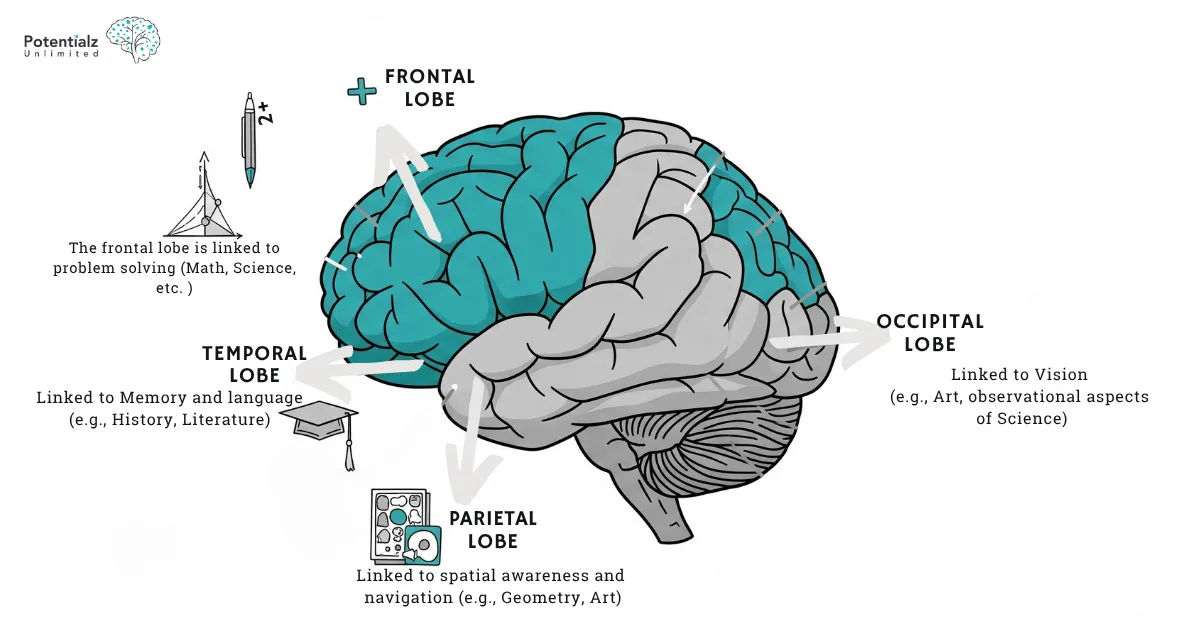
Mathematics Performance
Students with strong numerical reasoning and working memory often find mathematical concepts more intuitive. IQ can well predict how individuals perform in tests of reading, social sciences, natural sciences, and mathematics.
Reading and Language Arts
Verbal comprehension directly impacts reading comprehension, vocabulary development, and written expression skills.
Science Subjects
The combination of logical reasoning, working memory, and processing speed supports scientific thinking and problem-solving.
Social Studies
Verbal comprehension and reasoning abilities help students analyze historical events, understand cause-and-effect relationships, and form arguments.
Beyond the Numbers: Emotional and Environmental Factors
While cognitive abilities are important, the level of EQ can strongly associate with and predict how much students can achieve in academic settings. Emotional intelligence (EQ) often acts as a bridge between cognitive potential and actual performance.
The Bigger Picture of Academic Success
Motivation and Effort
Even if you are not really smart, with a huge motivation you can learn a lot and be “excellent student”. Determination often trumps raw ability.
Study Skills and Strategies
Knowing how to study effectively can multiply the impact of natural cognitive abilities.
Environmental Support
Access to quality education, parental involvement, and socioeconomic status significantly influence academic achievement.
Teaching Quality
The child’s IQ is independent of the quality of teachers and schools–in other words excellent teachers and curriculum can raise achievement.
Practical Strategies for Academic Enhancement
Understanding your cognitive profile is just the beginning. Here’s how to transform assessment insights into academic improvements:
For Students with Strong Verbal Abilities
- Take advantage of reading-based learning strategies
- Use verbal rehearsal for memorizing information
- Participate actively in class discussions
- Consider subjects like literature, history, and debate
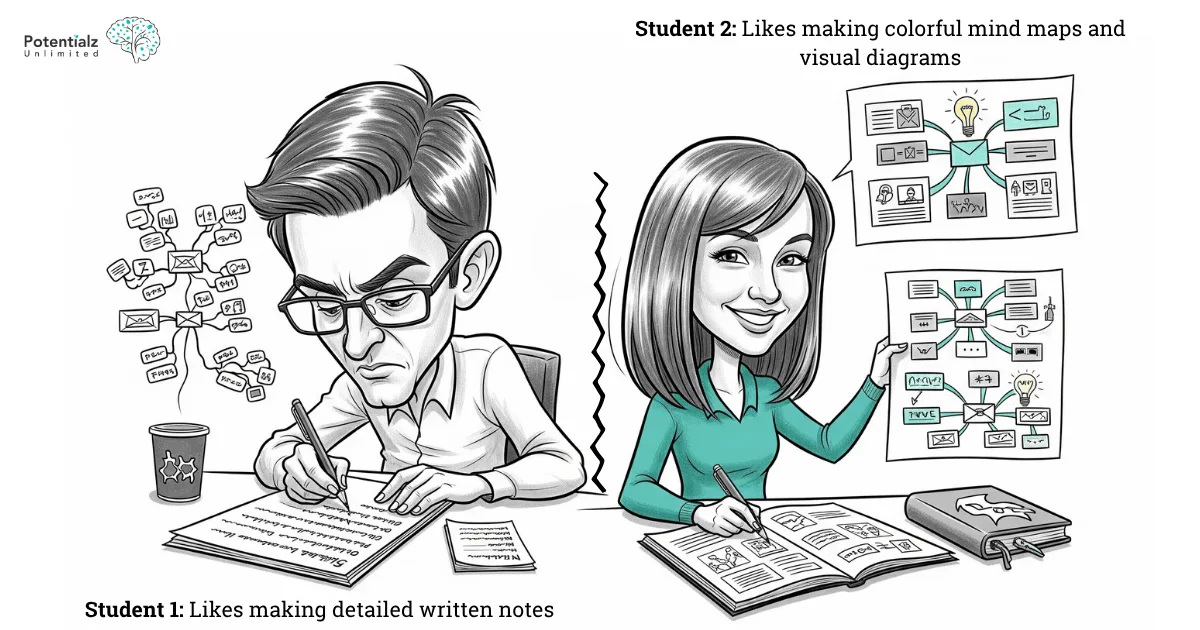
For Students with Strong Visual-Spatial Skills
- Use diagrams, charts, and visual aids for studying
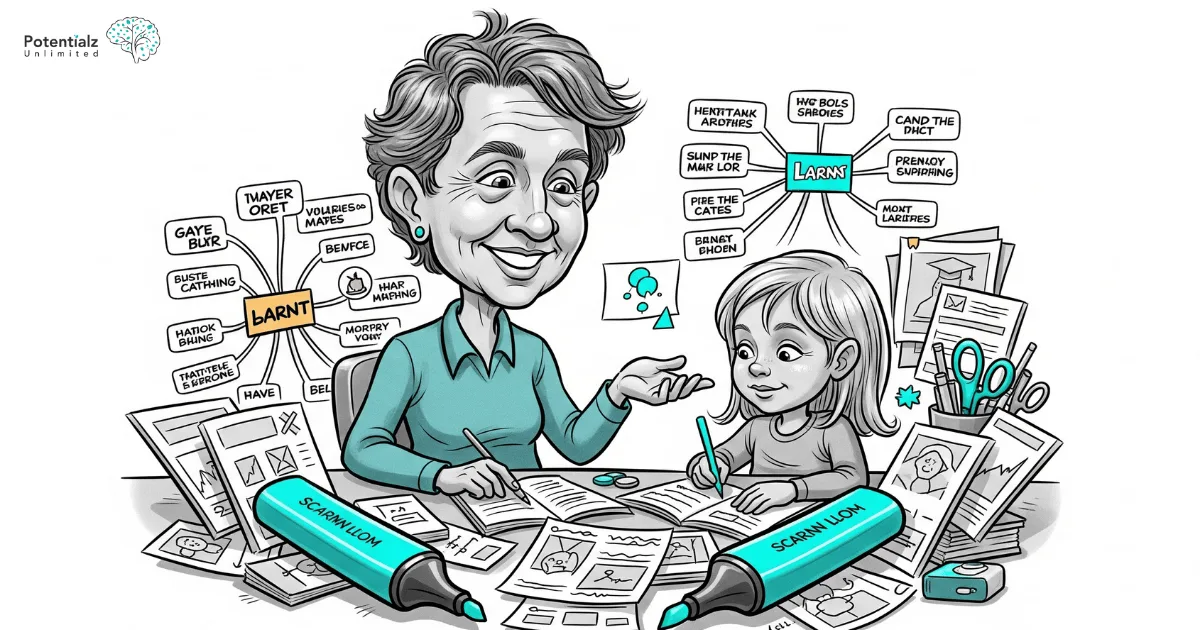
- Try mind mapping for organizing information
- Excel in geometry, art, and design subjects
- Use color-coding systems for notes and materials
For Students with Strong Working Memory
- Break complex tasks into smaller steps
- Use organizational tools and checklists
- Practice mental math and memory games
- Take on leadership roles in group projects
For Students with Quick Processing Speed
- Participate in timed academic competitions
- Help classmates with organizing information
- Use speed-reading techniques
- Consider careers requiring quick decision-making
Addressing Cognitive Challenges
If assessments reveal areas of difficulty, don’t worry – the brain is remarkably adaptable! Newer studies find that the effects of IQ on job performance have been greatly overestimated, and there are many ways to work around cognitive challenges.
Strategies for Working Memory Difficulties
- Write down important information immediately
- Use external aids like calculators and note-taking apps
- Break assignments into smaller chunks
- Practice memory exercises regularly
Supporting Processing Speed Challenges
- Request extended time on tests when appropriate
- Focus on accuracy over speed initially
- Use technology tools to reduce writing demands
- Develop strong organizational systems
Enhancing Verbal Comprehension
- Read regularly across different genres
- Build vocabulary through word games and apps
- Practice explaining concepts in your own words
- Join discussion groups or debate teams
Strengthening Perceptual Reasoning
- Solve puzzles and brain teasers regularly
- Practice with visual-spatial games
- Work with building blocks or construction toys
- Study patterns in art and nature
The Role of Professional Assessment
Getting a proper comprehensive IQ assessment requires working with qualified professionals. Intelligence quotient was assessed using the Raven´s Standard Progressive Matrices (RSPM) and other standardized tools that provide reliable, valid results.
What to Expect During Assessment
Preparation Phase
No special preparation is needed – assessments work best when you’re simply being yourself.
Testing Session
Expect to spend 2-4 hours working through various cognitive tasks that feel more like interesting puzzles than traditional tests.
Results Discussion
A qualified psychologist will explain your results in detail, focusing on strengths and providing practical recommendations.
Follow-up Support
Many professionals offer ongoing support to help implement strategies based on your results.

Technology and Modern Assessment
The field of intelligence testing continues to evolve. Modern assessments may include digital components that make testing more engaging and provide more precise measurements of cognitive abilities.
Benefits of Updated Assessment Methods
- More engaging and interactive tasks
- Precise timing and scoring
- Reduced examiner bias
- Better accessibility options
- Immediate preliminary results
Creating Your Personal Learning Profile
Once you understand your cognitive strengths and challenges, you can create a personalized approach to learning that maximizes your academic potential.
Step 1: Identify Your Cognitive Strengths
Look for patterns in your assessment results that show where your brain works most efficiently.
Step 2: Recognize Challenge Areas
Understanding difficulties isn’t about limitation – it’s about knowing where to apply extra effort or different strategies.
Step 3: Match Strategies to Strengths
Use your cognitive strengths to support areas of challenge.
Step 4: Set Realistic Goals
Based on your profile, set academic goals that stretch your abilities while remaining achievable.
Step 5: Monitor Progress
Regularly check how well your strategies are working and adjust as needed.

Test Your Knowledge
Looking to the Future
The relationship between cognitive assessment and academic success continues to evolve. The future may see a more integrated assessment of cognitive abilities, emotional intelligence, and other factors contributing to academic achievement.
Emerging Trends
- Integration of multiple intelligence types
- Technology-enhanced assessment methods
- Personalized learning algorithms
- Strengths-based educational approaches
Conclusion: Unlocking Your Academic Potential
Comprehensive IQ assessments offer a powerful window into understanding how your mind works best. While cognitive abilities provide important insights, remember that academic success results from the interaction of intelligence, motivation, support, and effective strategies.
The goal isn’t to label or limit anyone, but to provide each student with the tools and understanding needed to reach their full academic potential. Whether you’re a student, parent, or educator, understanding cognitive profiles can transform the learning experience from frustrating struggle to empowered growth.

Remember: every brain is unique, and every student has the potential for academic success when given the right support and strategies. Comprehensive IQ assessments are just the beginning of an exciting journey toward enhanced learning and academic achievement.
Related Resources
For more information about cognitive assessment and educational support, explore these related articles:
- Understanding Child Cognitive Assessment: Identifying Blocks to Learning
- The Multifaceted Dimensions of Intelligence
- IQ Testing Services in Bella Vista
- Understanding ADHD Triggers
Contact us to learn more about comprehensive IQ assessments and how they can support academic success.
Need Professional Support?
If you're experiencing mental health concerns, our team is here to help.