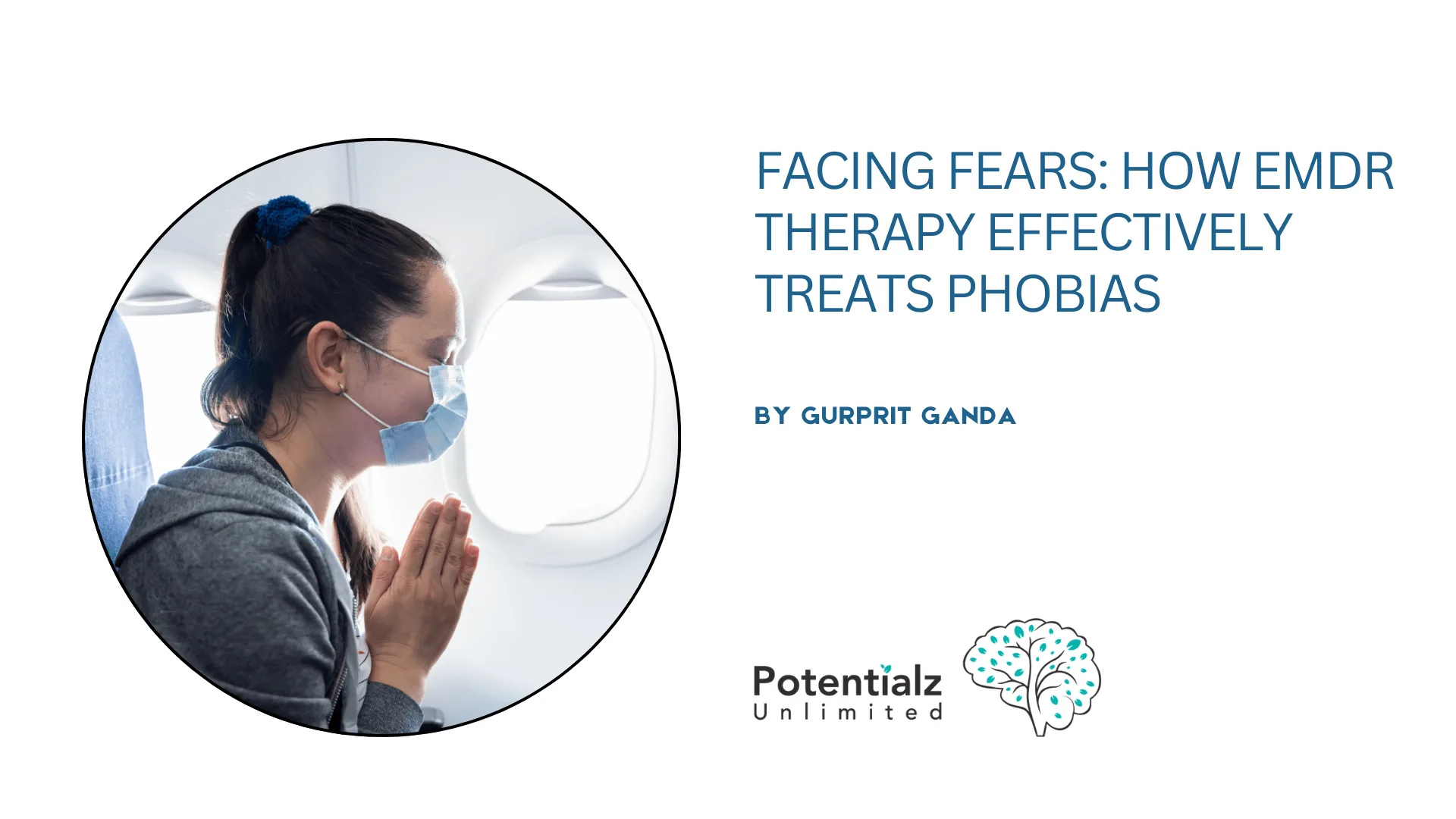
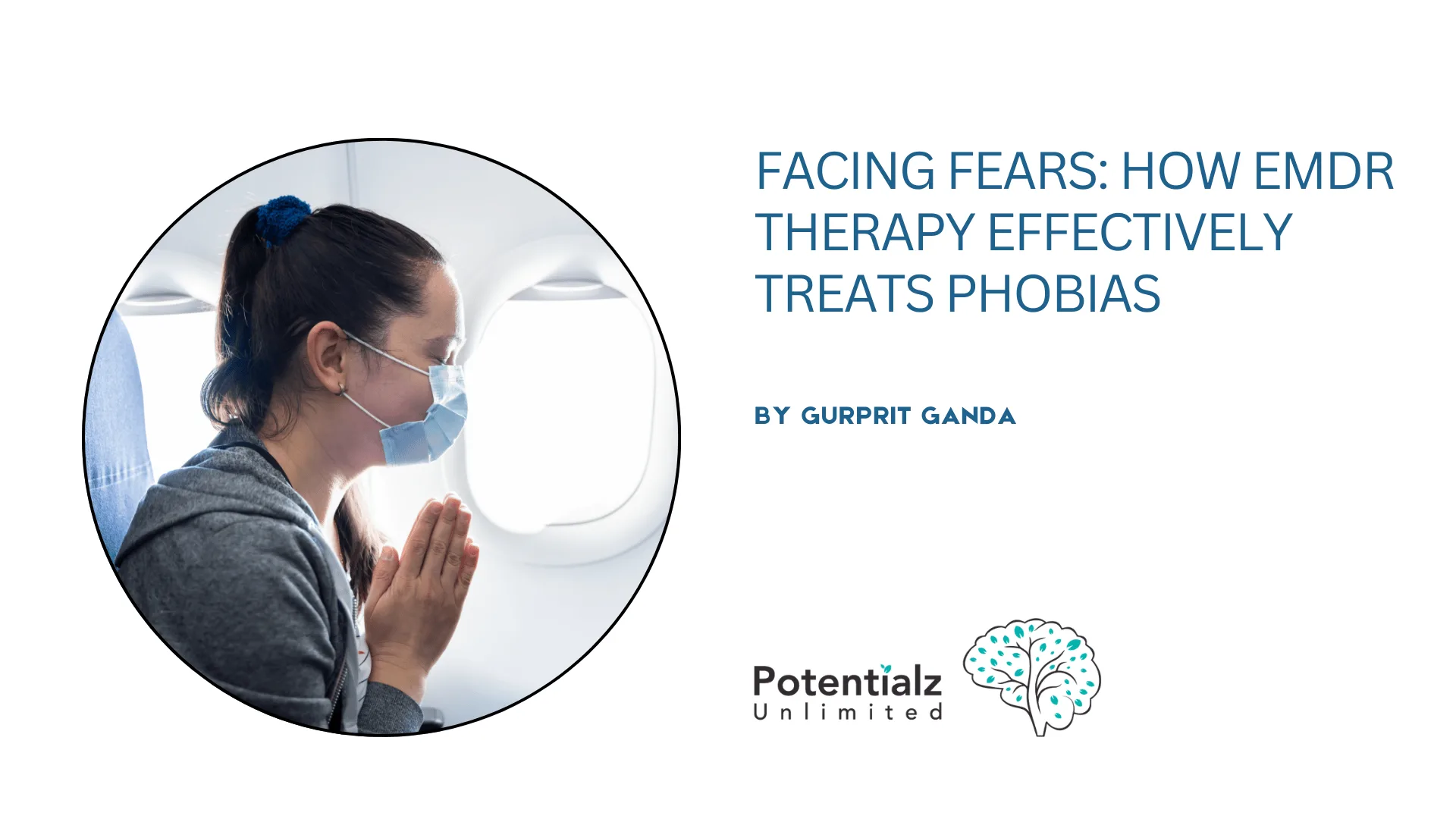
Have you ever felt your heart race at the sight of a spider? Or perhaps you’ve canceled flights because the thought of being in an airplane makes you dizzy with fear? If so, you’re not alone. Phobias affect approximately 19 million adults in the United States alone, making them among the most common anxiety disorders. While traditional treatments like exposure therapy have been the go-to solution for decades, many people find them too overwhelming or ineffective. Enter EMDR therapy – a revolutionary approach that’s changing how we treat phobias, offering hope to those who thought they’d have to live with their fears forever.
What Makes a Phobia Different from Normal Fear?
Before diving into treatments, it’s important to understand what we’re dealing with. A phobia isn’t just being scared of something – it’s an intense, irrational fear that causes significant distress and interferes with your daily life.
Unlike normal fears that might make you uncomfortable but don’t stop you from functioning, phobias can lead to:
- Panic attacks when exposed to the feared object or situation
- Extreme avoidance behaviors that disrupt your life
- Physical symptoms like sweating, trembling, and nausea
- A persistent fear that’s out of proportion to the actual danger
For example, being cautious around snakes is normal. Refusing to go hiking, avoiding nature documentaries, or checking under your bed every night for snakes would suggest a phobia.
The Limitations of Traditional Phobia Treatments
For years, exposure therapy has been considered the gold standard for treating phobias. This approach gradually exposes you to what you fear in increasing doses until your anxiety response diminishes. While effective for many, it has significant drawbacks:
- It can be extremely distressing, leading many people to drop out of treatment
- Progress can be slow, requiring many sessions
- Some people never fully habituate to their fears despite repeated exposure
- It doesn’t always address the underlying causes of the phobia
Other approaches like cognitive-behavioral therapy (CBT) help challenge irrational thoughts but may not fully resolve the emotional component of phobias.
How EMDR Offers a Gentler Yet Effective Alternative
Eye Movement Desensitization and Reprocessing (EMDR) therapy was originally developed for trauma treatment in the late 1980s by psychologist Francine Shapiro. However, researchers and clinicians quickly discovered its effectiveness extended to other conditions, including phobias.
EMDR works differently than exposure therapy. Rather than requiring you to endure prolonged exposure to what you fear, EMDR helps your brain process and integrate the memories and experiences that underlie your phobic response. This often results in a more comfortable treatment experience with lasting results.
As one client described it: “Instead of having to white-knuckle my way through facing my fear over and over, EMDR felt like it was actually changing how my brain responded to heights. The fear just started to fade away naturally.”
The Science Behind Phobias
To understand why EMDR works for phobias, we need to look at how phobias develop in the first place.
How Phobic Responses Get Encoded in the Brain
Phobias often begin with a distressing experience that gets stored in our brain’s emotional memory network. When 10-year-old Jamie was stung by a bee and had an allergic reaction, her brain created a powerful association between bees and danger. This association activated her fight-or-flight response, flooding her body with stress hormones whenever she encountered anything bee-related.
The problem is that this memory network doesn’t always process logically. Jamie’s brain began generalizing the threat to include wasps, flies, and even the buzzing sound of certain electronics. This happens because the brain’s amygdala (our emotional alarm system) responds faster than our prefrontal cortex (our logical thinking center).
The Role of Past Experiences in Developing Phobias
Interestingly, not all phobias can be traced back to a single traumatic event. Some develop through:
- Witnessing others’ fear responses (like seeing a parent panic around dogs)
- Receiving negative information (being repeatedly told snakes are dangerous)
- Evolutionary predispositions (humans seem naturally primed to fear certain threats like heights or snakes)
Sometimes the original experiences happened so early in life that we have no conscious memory of them, yet they continue to affect our responses.
Why Logic Often Fails to Overcome Phobic Reactions
Have you ever told yourself, “This small dog can’t hurt me,” yet still felt terrified? That’s because phobias operate primarily in the emotional brain rather than the logical brain. You can intellectually know flying is statistically safer than driving, but your emotional brain still triggers panic at the airport.
This is precisely why EMDR can be so effective – it works directly with the emotional brain networks where the phobia is stored.
Research-Backed Success with Specific Phobias
The evidence supporting EMDR for phobia treatment continues to grow. Here’s what research shows about its effectiveness for different types of phobias:
Flight Anxiety and Travel Phobias
A 2017 study published in the Journal of EMDR Practice and Research found that participants with severe flight phobia showed significant improvement after just three 90-minute EMDR sessions. Remarkably, 85% of participants were able to take flights comfortably following treatment, compared to none before treatment.
One participant noted: “I’d tried exposure therapy twice before and couldn’t get through it. With EMDR, I was able to process my fear of flying without having to sit in a plane feeling terrified for hours. Three months later, I flew across the country for my daughter’s graduation.”
Medical and Dental Phobias
Research published in the Journal of Anxiety Disorders demonstrated that EMDR was particularly effective for medical phobias, which often have clear traumatic origins. In one study of needle phobia, 83% of participants no longer met the criteria for phobia after four EMDR sessions.
For dental phobia, a condition that prevents millions from seeking necessary dental care, EMDR has shown promising results. A 2019 study found that patients who received EMDR before dental procedures reported significantly less anxiety and were more likely to return for follow-up appointments than those who received standard care.
Animal Phobias
Animal phobias are among the most common, and EMDR has demonstrated effectiveness here too. A comparative study found that EMDR produced results comparable to exposure therapy for spider phobia but with less distress during treatment and fewer dropouts.
One case study described a woman with a severe cat phobia who couldn’t visit friends or family members who owned cats. After six EMDR sessions targeting childhood experiences with an aggressive cat, she was able to pet cats and even considered adopting one.
Situational Phobias
For situational phobias like claustrophobia (fear of enclosed spaces) or agoraphobia (fear of places where escape might be difficult), EMDR has shown particular promise. A 2020 review of treatments found that EMDR was especially helpful for complex situational phobias that hadn’t responded to other treatments.
The EMDR Phobia Protocol
EMDR for phobias follows a structured approach that’s been adapted from the standard EMDR protocol. Here’s what the process typically looks like:
How the Standard Protocol is Modified for Phobia Treatment
The phobia protocol typically includes:
- **History-taking and preparation: **Your therapist will learn about your phobia, its impact on your life, and any related experiences. They’ll also teach you coping skills to manage anxiety during processing.
- Target identification: Together, you’ll identify specific memories related to your phobia, including: The first time you remember experiencing the fear
The worst experience related to the phobia
Recent situations where the phobia caused problems 3. Desensitization: Using bilateral stimulation (eye movements, taps, or tones), you’ll process these memories while noticing your thoughts, emotions, and physical sensations. Unlike exposure therapy, you don’t need to stay with the distressing image continuously. 4. Installation of positive beliefs: After processing the negative memories, you’ll strengthen new, positive beliefs about your ability to cope with the feared object or situation.
The Role of Future Templating in Phobia Treatment
A unique aspect of EMDR for phobias is “future templating” – mentally rehearsing successfully handling future encounters with what you fear. After processing past experiences, your therapist will guide you through imagining future scenarios where you encounter your phobic trigger but remain calm and in control.
This mental rehearsal helps your brain create new neural pathways, essentially “pre-programming” a calmer response for real-life encounters.
Typical Number of Sessions Needed for Different Phobias
The number of sessions varies depending on the complexity of the phobia and any underlying trauma, but research suggests:
- Simple phobias with clear origins often resolve in 3-5 sessions
- More complex phobias or those with multiple traumatic experiences may require 6-12 sessions
- Phobias linked to deeper issues like childhood trauma might be part of longer-term therapy
Many people notice improvement after just 1-2 sessions, though complete resolution typically takes more time.
The Client Experience: What to Expect
If you’re considering EMDR for a phobia, here’s what the process typically looks like from the client’s perspective:
Initial Assessment and Preparation
Your first session will focus on gathering information about your phobia and its impact on your life. Your therapist will explain how EMDR works and teach you grounding techniques to help manage any distress that might arise during processing.
This preparation phase is crucial – it builds the foundation for successful treatment and ensures you have tools to stay within your “window of tolerance” during processing.
The Actual Processing Experience
During processing sessions, you’ll briefly focus on an image related to your phobia while engaging in bilateral stimulation – typically following the therapist’s fingers with your eyes or holding small buzzers that alternate vibrations between your hands.
Unlike exposure therapy, you don’t need to stay focused on the distressing image continuously. Instead, you’ll notice whatever comes up – thoughts, feelings, body sensations – and share these with your therapist between sets of eye movements.
Many clients describe the experience as surprisingly manageable: “I was worried I’d be overwhelmed by panic during the sessions, but the eye movements seemed to help me stay present while processing the fear. It felt like my brain was making new connections.”
How Progress Typically Unfolds
Progress with EMDR for phobias often follows a pattern:
- Initial relief: Many people notice decreased anxiety about their phobia after just 1-2 sessions.
- Processing deeper layers: As treatment continues, you might discover connections between your phobia and other experiences you hadn’t previously associated with it.
- Generalization of improvement: Fear reduction typically generalizes from the specific memories you process to the phobia as a whole.
- Testing in real life: Eventually, you’ll test your progress in real-world situations, often finding that your fear response has significantly diminished.
Maintenance and Follow-up
After completing the active phase of treatment, your therapist might recommend:
- A follow-up session after you’ve had real-world exposure to your phobic trigger
- Occasional “booster” sessions if you notice any return of fear
- Techniques for maintaining your progress independently
Beyond Symptom Reduction: Quality of Life Improvements
The benefits of overcoming a phobia extend far beyond just reducing fear. Clients often report significant improvements in their overall quality of life:
Freedom to Engage in Previously Avoided Activities
After successful EMDR treatment, people often reclaim activities they’d given up due to their phobias:
- A woman with a driving phobia was able to accept a job that required commuting
- A father with a water phobia finally learned to swim so he could join his children in the pool
- A student with a public speaking phobia successfully completed an oral presentation for the first time
Reduced Anticipatory Anxiety
Many clients report that one of the biggest changes is the elimination of the constant worry about encountering their phobic trigger. This “fear of the fear” often causes more life disruption than actual encounters with the feared object or situation.
As one client put it: “I used to spend hours checking weather reports before trips, terrified there might be a thunderstorm. Now I don’t even think about it. That mental freedom is incredible.”
Improved Confidence and Self-Efficacy
Successfully overcoming a phobia often creates a positive ripple effect, boosting confidence in other areas of life. When you’ve conquered something that once seemed impossible, other challenges start to seem more manageable.
A client who overcame a severe elevator phobia shared: “After getting past my elevator fear with EMDR, I found myself taking on other challenges I’d been avoiding. It was like my brain realized ‘if I can do that, maybe I can do this too.’”
Finding the Right Help for Your Phobia
If you’re considering EMDR for a phobia, here are some practical steps:
Look for Qualified EMDR Therapists
Not all therapists are trained in EMDR, and not all EMDR therapists have experience with phobia treatment. Look for:
- Certification from EMDRIA (EMDR International Association)
- Experience specifically with phobia treatment
- A good personal connection – feeling safe with your therapist is essential
Questions to Ask Potential Therapists
Before starting treatment, consider asking:
- What is your experience using EMDR specifically for phobias?
- How many sessions do you typically recommend for my type of phobia?
- What is your approach if we encounter unexpected emotional material during processing?
- How will we measure progress?
Preparing for Success
To maximize your chances of success:
- Be honest about your fears and any previous treatment experiences
- Practice the self-regulation techniques your therapist teaches you
- Approach the process with patience and openness
- Remember that temporary increases in discomfort during processing are normal and usually lead to resolution
Conclusion: EMDR As An Effective Treatment for Phobias
Phobias don’t have to be lifelong sentences. With EMDR therapy, many people are finding freedom from fears that once controlled their lives – often more quickly and comfortably than they expected.
If you’ve been struggling with a phobia, especially if previous treatments haven’t worked or seemed too overwhelming, EMDR might offer the breakthrough you’ve been hoping for. The research is compelling, the process is generally well-tolerated, and the potential benefits extend far beyond simply reducing fear.
As one former phobia sufferer put it: “I spent fifteen years avoiding elevators, taking stairs to the 10th floor, missing out on opportunities. After EMDR, elevators are just… elevators. Not scary, not exciting, just a way to get where I’m going. That ordinary feeling is actually extraordinary to me.”
Your journey to freedom from phobias could begin with a single step – reaching out to a qualified EMDR therapist to discuss whether this approach might be right for you.
References
- American Psychiatric Association. (2022). Diagnostic and statistical manual of mental disorders (5th ed., text rev.). https://doi.org/10.1176/appi.books.9780890425787
- Talbot, D. (2021). Examination of initial evidence for EMDR as a treatment for obsessive-compulsive disorder. Journal of EMDR Practice and Research, 15(3), 167–173. https://doi.org/10.1891/EMDR-D-21-00004
- de Jongh, A., Ernst, R., Marques, L., & Hornsveld, H. (2013). The impact of eye movements and tones on disturbing memories involving PTSD and other mental disorders. Journal of behavior therapy and experimental psychiatry, 44(4), 477–483. https://doi.org/10.1016/j.jbtep.2013.07.002
- Yunitri, N., Kao, C. C., Chu, H., Voss, J., Chiu, H. L., Liu, D., Shen, S. H., Chang, P. C., Kang, X. L., & Chou, K. R. (2020). The effectiveness of eye movement desensitization and reprocessing toward anxiety disorder: A meta-analysis of randomized controlled trials. Journal of psychiatric research, 123, 102–113. https://doi.org/10.1016/j.jpsychires.2020.01.005
- Horst, F., Den Oudsten, B., Zijlstra, W., de Jongh, A., Lobbestael, J., & De Vries, J. (2017). Cognitive Behavioral Therapy vs. Eye Movement Desensitization and Reprocessing for Treating Panic Disorder: A Randomized Controlled Trial. Frontiers in psychology, 8, 1409. https://doi.org/10.3389/fpsyg.2017.01409
- Kaczkurkin, A. N., & Foa, E. B. (2015). Cognitive-behavioral therapy for anxiety disorders: An update on the empirical evidence. Dialogues in Clinical Neuroscience, 17(3), 337-346. https://doi.org/10.31887/DCNS.2015.17.3/akaczkurkin
- Vučina T. (2021). EMDR Treatment of Phobia of Thirteen Years Old Girl - Case Study. Psychiatria Danubina, 33(Suppl 1), 46–48.
- Trlin, I., & Hasanović, M. (2021). EMDR Treatment of Panic Disorder with Agoraphobia: Case Report. Psychiatria Danubina, 33(Suppl 1), 59–64.
- Shapiro, F. (2018). Eye movement desensitization and reprocessing (EMDR) therapy: Basic principles, protocols, and procedures (3rd ed.). Guilford Press.
- Triscari, M. T., Faraci, P., D’Angelo, V., Urso, V., & Catalisano, D. (2011). Two treatments for fear of flying compared. Aviation Psychology and Applied Human Factors, 1, 9-14. https://doi.org/10.1027/2192-0923/a00003.
- Wardenaar, K. J., Lim, C. C. W., Al-Hamzawi, A. O., Alonso, J., Andrade, L. H., Benjet, C., Bunting, B., de Girolamo, G., Demyttenaere, K., Florescu, S. E., Gureje, O., Hisateru, T., Hu, C., Huang, Y., Karam, E., Kiejna, A., Lepine, J. P., Navarro-Mateu, F., Oakley Browne, M., Piazza, M., … de Jonge, P. (2017). The cross-national epidemiology of specific phobia in the World Mental Health Surveys. Psychological medicine, 47(10), 1744–1760. https://doi.org/10.1017/S0033291717000174
Need Professional Support?
If you're experiencing mental health concerns, our team is here to help.