Introduction
Think about your last family dinner. How many screens were at the table? Was someone checking messages between bites? Did a notification interrupt the conversation? You’re not alone. Australian families are navigating an increasingly digital world where screens have become as common as kitchen appliances.
Research published in 2024 shows that tweens now spend an average of 5.5 hours daily on recreational screens, while teens clock in at 8.5 hours. This doesn’t even include school-related screen time. For parents in Sydney’s multicultural communities like Bella Vista, Castle Hill, and Norwest, managing technology use while respecting diverse cultural values adds another layer of complexity.
Digital wellness isn’t about villainising technology or throwing devices out the window. It’s about creating a healthy, balanced relationship with screens that supports mental health for everyone in your family. This guide will help you understand the real impacts of screen time and give you practical, evidence-based strategies to manage it effectively.
Understanding Digital Wellness
Digital wellness means finding a positive balance between using technology and maintaining good mental, physical, and social health. It’s not simply about counting minutes on devices. Instead, it focuses on how screen time fits into your family’s overall wellbeing.
The Digital Wellness Lab at Boston Children’s Hospital defines it as “a positive state of mental, physical, and social-emotional health pursued through intentional, authentic, and balanced engagement with technology and interactive media.” This definition highlights three important points: wellness is intentional (you make conscious choices), authentic (genuine connections matter), and balanced (technology serves you, not controls you).
For families in Sydney’s northwest, digital wellness takes on special importance. Many households juggle work-from-home arrangements, children’s online learning, staying connected with extended family overseas, and entertainment needs. Technology enables these connections, but without boundaries, it can overwhelm family life.
 Australian family balancing technology use and face-to-face interaction
The Science Behind Screen Time and Mental Health
How Screens Affect Our Brains
When you scroll through social media or play a video game, your brain releases dopamine. This chemical messenger creates feelings of pleasure and reward. It’s the same system that makes you feel good after eating your favourite meal or achieving a goal.
However, constant exposure to screen-based rewards can affect how your brain’s reward system works. A 2024 study in BMC Public Health found that children aged 9-10 with higher screen time showed a 10% increased risk for depression, 7% higher risk for behavioural problems, and 6% increased risk for ADHD symptoms over two years.
Here’s what happens: Digital devices deliver quick, frequent bursts of dopamine. Your brain begins expecting these rapid rewards. Over time, slower, more meaningful activities like reading a book, having a conversation, or playing outside might feel less satisfying by comparison.
This doesn’t mean screens damage your brain permanently. Rather, excessive screen exposure can temporarily shift your brain’s reward sensitivity. The good news? Research published in Nature in 2022 showed that reducing recreational screen time improved wellbeing and mood in adults within just two weeks.
The Mental Health Connection
Recent research reveals clear patterns between excessive screen time and mental health challenges:
Depression and Anxiety: A comprehensive UCSF study tracking nearly 10,000 preteens found that more screen time predicted more severe symptoms of depression and anxiety. The activities most strongly linked to depressive symptoms were video chatting, texting, watching videos, and playing video games.
Sleep Disruption: Screens emit blue light that interferes with melatonin production, the hormone that regulates sleep. Additionally, the mental stimulation from content keeps brains alert when they should be winding down. Poor sleep then contributes to mood problems, difficulty concentrating, and increased anxiety.
Attention Problems: A 2024 analysis in JAMA Network Open found that when families reduced leisure-time screen use for two weeks, children and adolescents showed improvements in behavioural difficulties. The intervention targeted overall screen reduction without focusing on specific types of screen activities.
Social Connection: Interestingly, the impact varies by demographic. For minority adolescents, screens and social media may serve as important platforms to connect with peers who share similar backgrounds. Technology can expand support networks beyond immediate environments, suggesting that context matters significantly.
Understanding Different Types of Screen Time to Manage It
Not all screen time affects mental health equally. Research distinguishes between:
Active vs. Passive Use: Creating content, video chatting with loved ones, or learning new skills engages your brain differently than mindlessly scrolling. Active use tends to have more positive outcomes.
Social vs. Solo Use: Watching a movie together as a family creates shared experiences and opportunities for discussion. This differs from isolated gaming sessions.
Educational vs. Entertainment: Time spent on homework or learning a language serves different purposes than watching TikTok compilations.
A 2024 CDC study found that four or more hours of daily screen time was associated with higher rates of anxiety and depression symptoms in teenagers, but the relationship wasn’t straightforward. Quality of screen activities mattered as much as quantity.
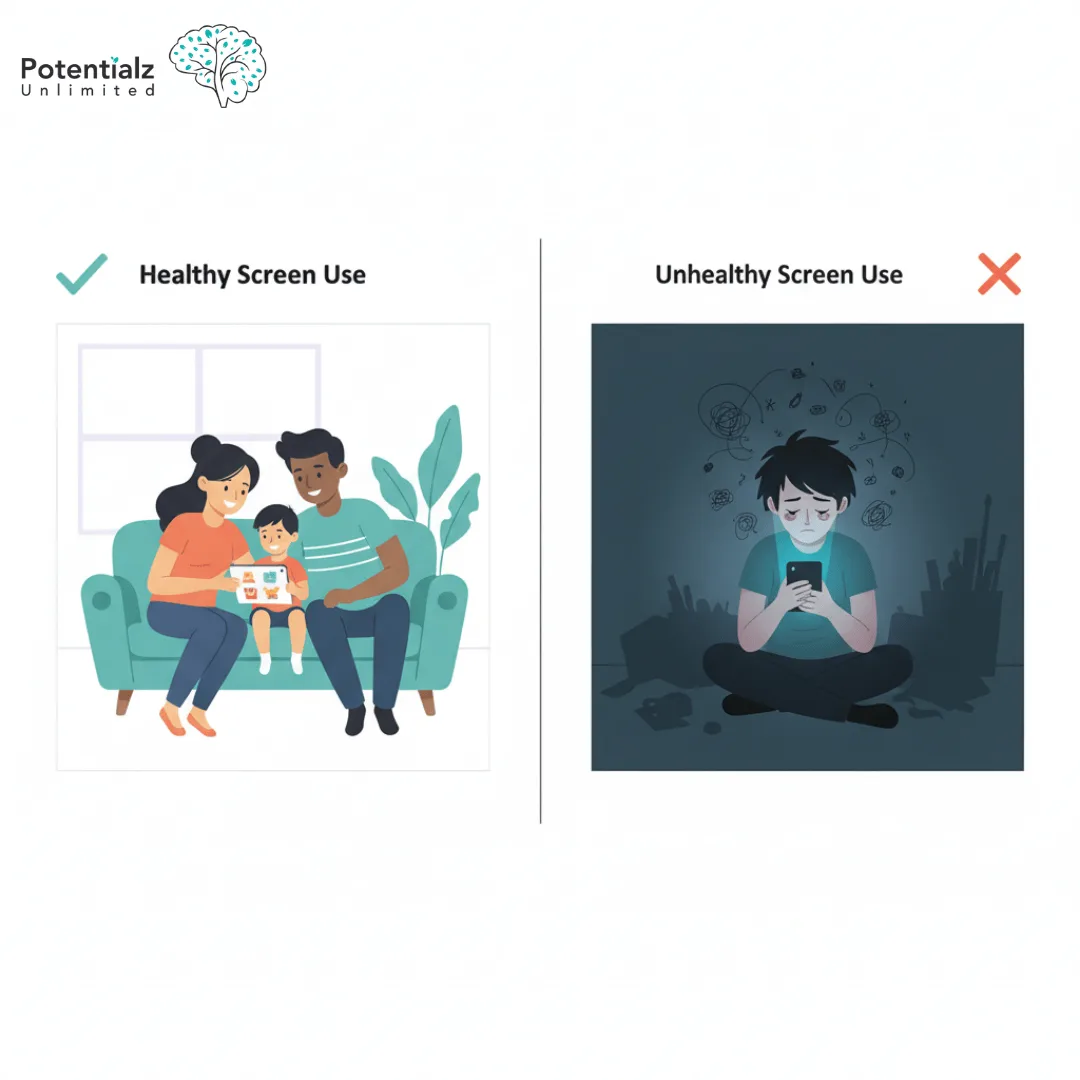 Comparison of healthy family technology use versus isolated problematic screen use showing mental health impacts
Red Flags: When Screen Time Becomes Problematic
How do you know if screen use has crossed from normal to concerning? Watch for these warning signs:
Behavioural Changes
- Irritability when devices are unavailable: Does your child become angry, anxious, or upset when asked to put devices away?
- Neglecting responsibilities: Are homework, chores, or personal hygiene being ignored in favour of screen time?
- Deception: Is your teen sneaking devices after bedtime or lying about usage?
- Loss of interest: Has enthusiasm for previous hobbies, sports, or activities disappeared?
Physical Symptoms
- Sleep problems: Difficulty falling asleep, waking frequently, or sleeping much less than recommended for their age
- Headaches and eye strain: Frequent complaints about vision problems or headaches
- Poor posture: Hunched shoulders, neck pain, or back problems from device use
- Reduced physical activity: Avoiding outdoor play or exercise
Social and Emotional Indicators
- Social withdrawal: Preferring online interactions over face-to-face time with family and friends
- Mood swings: Noticeable changes in emotional regulation
- Anxiety or depression: Persistent sadness, worry, or feelings of inadequacy, especially related to social media comparisons
- Academic decline: Falling grades or difficulty concentrating in school
The “FOMO” Factor
Fear of Missing Out (FOMO) drives much excessive screen use. A 2020 study in the International Journal of Environmental Research and Public Health found that FOMO was significantly linked to mental wellbeing and social connectedness issues. Teens may feel compelled to stay constantly connected, worried they’ll miss important social information.
For families in multicultural communities, FOMO can extend across continents. Children might stay up late to connect with relatives in different time zones, or feel pressure to maintain presence on multiple platforms for different cultural groups.
If you notice several of these red flags, it’s time to take action. This doesn’t necessarily mean there’s a serious problem, but it indicates that your family’s digital wellness needs attention. A clinical psychologist experienced in childhood development can help assess whether intervention is needed.
Age-Appropriate Screen Time Guidelines
The American Academy of Pediatrics (AAP) updated their recommendations in 2024, moving away from strict time limits toward a more nuanced approach called “The 5 Cs”: Child, Content, Calm, Crowding Out, and Communication. However, understanding developmental stages helps set appropriate boundaries.
Birth to 18 Months: Foundation Building
Recommendation: Avoid screens except for video chatting with family members
Why: Babies learn best through hands-on exploration and face-to-face interactions. Their brains are developing rapidly, forming connections through sensory experiences. Screen time can’t replace the learning that happens when a baby touches different textures, sees caregivers’ facial expressions up close, or hears language directed specifically at them.
Cultural Consideration: Many families in Sydney’s northwest use video calls to maintain connections with grandparents overseas. This type of interactive screen time, where babies see and respond to familiar faces, differs from passive screen exposure.
18 Months to 2 Years: Emerging Understanding
Recommendation: Very limited high-quality programming, always co-viewed with parents
Why: Toddlers can begin learning from quality educational content, but only when adults help them understand and apply what they’re watching. A 2025 study found that two-year-olds with more than one hour daily screen time showed lower communication and daily living skills at age four.
Practical Tip: If your toddler watches content, choose programs designed for their age. Sit with them, talk about what’s happening on screen, and connect it to their real-world experiences.
Ages 2-5: Building Foundations
Recommendation: Maximum 1 hour daily of high-quality content, with parental involvement
Why: Preschoolers benefit from educational programs that promote language development, problem-solving, and social skills. However, screens can crowd out critical activities like active play, creative exploration, and conversation that build school readiness.
What “High-Quality” Means: Look for content that encourages participation, teaches positive social behaviours, avoids excessive marketing, and moves at a pace children can follow. ABC Kids, for example, offers age-appropriate Australian content.
Practical Strategy: Create screen-free times during daily routines. Meals, playtime, and the hour before bed should be device-free zones for everyone in the family.
Ages 6-12: Developing Self-Regulation
Recommendation: Consistent limits on time and content type, ensuring screens don’t replace essential activities
Why: School-age children need time for homework, physical activity, family interactions, and adequate sleep. They’re also developing critical thinking skills to evaluate media content.
Balancing Act: This age group increasingly needs screens for schoolwork. Distinguish between educational use and entertainment. Set clear rules about when and where screens are appropriate.
Cultural Note: In multicultural families, children might use technology to maintain language skills or connect with cultural content from their heritage countries. Consider this when setting limits.
Teens (13-17): Supporting Independence
Recommendation: No specific time limit, but focus on balanced lifestyle including sleep, physical activity, face-to-face social time, and academic responsibilities
Why: Research shows that teen screen time measures are often inaccurate (teens may overestimate use). More importantly, the quality and context of use matters more than quantity. Teens need to develop self-regulation skills they’ll use throughout life.
Teen Voices: When developing rules, involve teenagers in the conversation. Research from the AAP found that family media plans work best when adolescents help create them. Ask about their experiences, challenges, and ideas for healthy boundaries.
Special Considerations: A 2024 NHIS-Teen study found associations between four or more hours of daily screen time and various health concerns, including anxiety and depression symptoms. However, for some teens, especially those from minority backgrounds, technology provides vital social connections.
The Quality Over Quantity Principle
The AAP emphasises considering:
- Child development: What’s appropriate for your child’s age and maturity?
- Content quality: Is the material educational, entertaining, or potentially harmful?
- Calm environment: Does screen use promote or disrupt emotional regulation?
- Crowding out: Are screens replacing sleep, physical activity, or social time?
- Communication: Can your family talk openly about technology use?
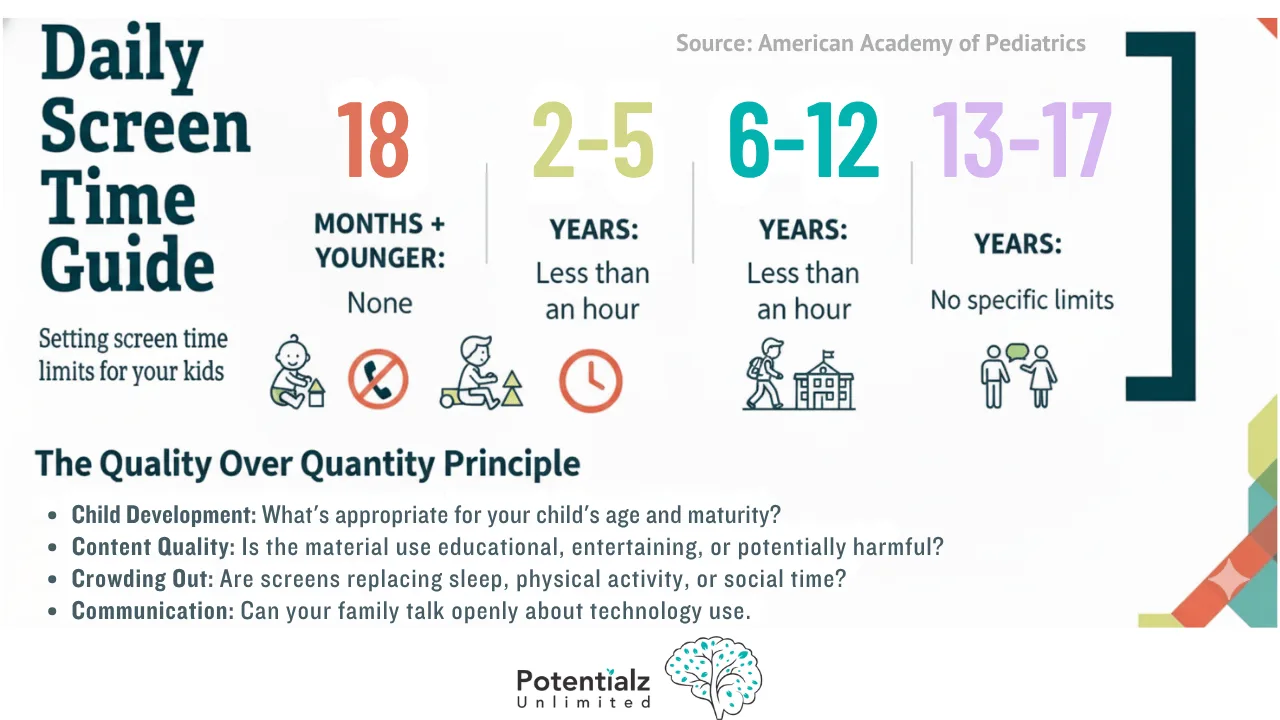 Visual guide showing age-appropriate screen time recommendations for children from birth through teenage years
Creating Your Family Media Plan
A Family Media Plan is a personalised agreement about how technology fits into your household. Research from JAMA Network Open in 2021 found that families who created media plans together showed greater engagement with healthy media rules.
Step 1: Assess Current Patterns
Before making changes, understand your baseline. For one week, have every family member track their screen use honestly:
- Recreational time: Entertainment, social media, gaming
- Educational time: Homework, learning apps, research
- Social time: Video calls with family and friends
- Work time: For parents and older teens with jobs
Many devices have built-in screen time tracking. iPhone users can check Screen Time settings, while Android users can find Digital Wellbeing tools. Apps like Forest, Moment, or Space can provide detailed insights.
Reflection Questions:
- When does most screen time occur?
- What triggers excessive use?
- How do you feel after different types of screen activities?
- What activities are being crowded out by screens?
Step 2: Define Your Family’s Values
Gather everyone for a family meeting. Discuss:
What matters most to us?
- Family connection and quality time together
- Academic success and learning
- Physical health and activity
- Sleep quality
- Cultural connections and language maintenance
- Safety and privacy online
What problems have we noticed?
- Arguments at bedtime about devices
- Distraction during family time
- Difficulty concentrating on homework
- Feeling tired or irritable
- Missing activities we used to enjoy
Step 3: Set Clear, Specific Rules
Based on your values and problems, create specific guidelines. Examples:
Screen-Free Zones:
- “No devices in bedrooms after 8 PM”
- “Phones stay in the kitchen basket during dinner”
- “Screen-free Sunday afternoons for family activities”
Content Guidelines:
- “Gaming limited to age-appropriate ratings”
- “Parents approve new apps before downloading”
- “No social media accounts before age 13”
- “Use parental controls on all children’s devices”
Time Limits:
- “One hour of recreational screen time on school nights”
- “Two hours maximum on weekends after chores and homework”
- “30-minute warning before screen time ends”
Positive Use:
- “Video calls with overseas grandparents count as family time, not screen limits”
- “Educational apps for homework don’t count toward entertainment limits”
- “Family movie night on Fridays is our shared screen time”
Step 4: Model Healthy Habits
The phenomenon called “technoference” occurs when parents’ digital media use interferes with child interactions. Studies show parents checking phones during family time impacts children’s emotional and behavioural development.
For Parents:
- Put your phone away during meals
- Avoid scrolling while children talk to you
- Establish your own screen-free times
- Share your struggles with limiting usage
- Demonstrate healthy boundaries with work emails
Children learn more from watching what you do than hearing what you say. If you’re constantly on devices, they’ll assume that’s normal and healthy.
Step 5: Create Tech-Free Alternatives
What will replace screen time? Stock your home with engaging alternatives:
Physical Activities:
- Sports equipment, bikes, skateboards
- Family walks to local parks in Bella Vista or Norwest
- Active games like charades or dance parties
Creative Outlets:
- Art supplies, craft materials
- Musical instruments
- Building sets, puzzles
- Cooking and baking together
Social Activities:
- Board games and card games
- Reading books together
- Conversations at meal times
- Helping with household tasks together
Outdoor Experiences: A 2024 study in the Children & Nature Network research digest found that time in nature significantly reduced mental health issues associated with screen time. Green time was linked to lower stress and depression in college students, while screen time was associated with increased anxiety, depression, and stress.
Step 6: Use Technology to Manage Technology
Ironic but effective:
Built-in Controls:
- iOS Screen Time and Android Digital Wellbeing
- Windows Family Safety and Mac parental controls
- Game console parental settings
Apps and Tools:
- Forest: Makes reducing phone use into a game
- Freedom or Cold Turkey: Blocks distracting websites and apps
- Qustodio or Net Nanny: Comprehensive parental monitoring
Family-Friendly Features:
- YouTube Kids for safer video content
- Google Family Link for managing children’s Android devices
- Apple Family Sharing for coordinated limits
Step 7: Review and Adjust Regularly
Schedule monthly family meetings to discuss how the media plan is working:
- What’s going well?
- What feels too restrictive or too lenient?
- Have we noticed improvements in mood, sleep, or family connection?
- Do rules need adjusting as children mature?
Remember that media plans aren’t rigid. They should evolve with your family’s changing needs.
Sample Family Media Plan Template:
Our Family Media Plan
Screen-Free Times:
- All meals
- 1 hour before bedtime
- Sunday mornings
Screen-Free Zones:
- Bedrooms (after 8 PM)
- Car trips under 30 minutes
Daily Limits:
- Preschoolers: 1 hour supervised
- School-age children: 1 hour recreational screen time on school nights, 2 hours on weekends
- Teens: Self-monitored but must maintain sleep (8+ hours), exercise (1 hour), homework completion, and family time
Content Rules:
- Age-appropriate ratings only
- No downloading apps without parent approval
- Privacy settings on all social media
- No sharing personal information online
Consequences:
- First violation: Reminder and discussion
- Second violation: Loss of screen privileges for 24 hours
- Repeated violations: Extended loss and family meeting to address underlying issues
Exceptions:
- Video calls with family overseas
- School-related research and homework
- Family movie nights
Signatures:
Parent/Caregiver 1
Parent/Caregiver 2
Child 1
Child 2
Date: ______________ Review Date: ______________
 Multicultural Australian family collaborating on family media plan at dining table with devices set aside
Practical Strategies for Digital Wellness
The “Digital Sunset” Routine
Create a consistent evening routine that gradually reduces stimulation:
- 7:00 PM: Switch devices to night mode (reduces blue light)
- 7:30 PM: Finish any necessary screen work
- 8:00 PM: All devices go to charging station outside bedrooms
- 8:00-9:00 PM: Calming activities—reading, bathing, conversation, light stretches
Research consistently shows that screen use within one hour of bedtime significantly impacts sleep quality. Blue light suppresses melatonin production, making it harder to fall asleep. Additionally, engaging content (whether stressful news or exciting games) keeps minds alert when they should be winding down.
The “Tech Basket” Method
Place a decorative basket in your home’s central location. When family members arrive home or at designated times, devices go into the basket. This creates physical and psychological distance from constant connectivity.
Benefits:
- Reduces temptation to check devices constantly
- Makes screen time more intentional
- Creates natural conversation opportunities
- Helps everyone be present
The “One Screen at a Time” Rule
Multitasking with multiple screens (like scrolling Instagram while watching Netflix) increases cognitive load and reduces enjoyment of both activities. Choose one screen activity and fully engage with it.
The “Earn Your Screen Time” Approach
For children, tie recreational screen time to completion of responsibilities and healthy activities:
- Physical activity: 30 minutes of outdoor play or exercise earns 30 minutes of screen time
- Chores: Completing daily chores unlocks entertainment screens
- Reading: Match recreational screen time with reading time
This approach teaches balance and values health-promoting activities.
The “Tech-Free Family Time” Commitment
Designate specific times when the entire family disconnects:
- Meal times: All meals are device-free for conversation
- Family night: One evening per week dedicated to screen-free activities
- Outdoor adventures: Weekend activities without devices
A 2024 study in JAMA Network Open found that families who collectively reduced screen media use saw positive effects on children’s and adolescents’ behavioural difficulties.
The “Notification Detox”
Constant notifications fragment attention and trigger stress responses. Help your family regain focus:
For Parents:
- Turn off non-essential notifications
- Use Do Not Disturb during work and family time
- Check email at scheduled times rather than constantly
- Remove social media apps from your home screen
For Teens:
- Disable notifications for social media apps
- Keep only essential alerts (calls, texts from family)
- Use apps in dedicated time blocks rather than responding immediately
- Mute group chats during homework and sleep hours
The “Digital Detox” Weekend
Once per quarter, try a family digital detox weekend:
- Friday Evening: After dinner, collect all devices in a locked drawer
- Weekend Activities: Plan engaging alternatives—nature hike, cooking project, board game tournament, visiting museums, picnic at Bella Vista Farm Park
- Sunday Evening: Reflect together on the experience
Research from the University of Southern Denmark found that reducing leisure-time screen media use for just two weeks positively affected children’s and adolescents’ behavioural strengths and difficulties.
The “Mindful Scrolling” Practice
For older children and teens, develop awareness around usage:
Before opening an app, pause and ask:
- Why am I reaching for my device right now?
- Am I bored, anxious, or avoiding something?
- Is this the best use of my time right now?
- How do I want to feel after using this?
After using an app for 15-20 minutes, pause and check in:
- How do I feel right now?
- Is this activity adding value to my day?
- Should I continue or switch to something else?
This metacognitive awareness helps develop self-regulation skills.
The “Connection Before Correction” Approach
When addressing screen use concerns, prioritise understanding over punishment:
Instead of: “You’re always on that phone! Give it to me!”
Try: “I’ve noticed you seem stressed lately. How are you feeling? Is your phone use helping or making things harder?”
Instead of: “Screen time is over! I said NOW!”
Try: “I see you’re in the middle of something. What’s a good stopping point in the next few minutes?”
Respectful communication maintains trust and teaches emotional regulation.
 Real-life examples of digital wellness strategies including outdoor family time, device charging station, and engaged family activities
Special Considerations for Multicultural Families
Sydney’s northwest hosts vibrant multicultural communities where families navigate unique challenges around technology and mental health.
Maintaining Cultural Connections
Technology enables children to stay connected with their heritage:
Positive Uses:
- Video calls with extended family overseas
- Accessing media in heritage languages
- Learning about cultural traditions through apps and videos
- Connecting with diaspora communities online
Balance Considerations: These connections are valuable, but time zone differences can disrupt sleep schedules. A child staying up late to video call grandparents in India or Europe regularly can experience sleep deprivation, affecting mood and school performance.
Strategy: Schedule regular calls at reasonable times. Perhaps weekend mornings work better than late nights. Record messages to send asynchronously when live calls aren’t feasible.
Navigating Different Parenting Approaches
Within multicultural families, parents might have different cultural perspectives on technology:
Common Tensions:
- Differing views on age-appropriate independence with devices
- Varying comfort levels with online activities
- Different expectations about screen time limits
- Conflicting approaches to monitoring and privacy
Resolution Approach:
- Discuss cultural values openly
- Find common ground in wanting children’s wellbeing
- Create family rules that honour both perspectives
- Seek guidance from a culturally competent psychologist when needed
Addressing Mental Health Stigma
Some cultures view mental health challenges as shameful or signs of weakness. Children might hide struggles with anxiety or depression related to social media, fearing disappointing parents or confirming negative stereotypes.
Creating Safe Space:
- Normalise conversations about feelings and stress
- Share your own challenges appropriately
- Emphasise that seeking help shows strength
- Connect with mental health professionals who understand cultural contexts
Potentialz Psychology Practice in Bella Vista is well versed in supporting multicultural families, offering culturally sensitive approaches to technology and mental health challenges.
Language Barriers
Parents who aren’t fluent in English might struggle to monitor online content or understand digital platforms their children use.
Practical Solutions:
- Ask older children to explain platforms in your language
- Use translation tools to understand content
- Connect with other parents in your cultural community
- Work with bilingual professionals who can bridge language gaps
Social Media and Cultural Identity
Teens from multicultural backgrounds often navigate complex identity questions online. They might present different versions of themselves on various platforms—one identity for school friends, another for cultural community, and another at home.
Supporting Healthy Identity Development:
- Acknowledge this complexity is normal
- Encourage authenticity across contexts
- Discuss how online presentation affects self-perception
- Explore what makes them feel most “themselves”
When to Seek Professional Help
Sometimes screen use issues require professional intervention. Consider consulting a clinical psychologist when:
Persistent Mental Health Symptoms
- Depression lasting more than two weeks: Persistent sadness, loss of interest, changes in appetite or sleep
- Significant anxiety: Panic attacks, constant worry, physical symptoms like chest pain or difficulty breathing
- Self-harm or suicidal thoughts: Any mention of wanting to die or harm themselves requires immediate professional attention
Problematic Internet Use
Research indicates that problematic internet use (PIU) shares characteristics with addiction:
- Loss of control over usage despite negative consequences
- Withdrawal symptoms (irritability, anxiety) when unable to access devices
- Tolerance (needing increasing amounts of screen time for satisfaction)
- Continued use despite causing problems in relationships, school, or health
Gaming Disorder
The World Health Organization recognises gaming disorder as a clinical condition characterised by:
- Impaired control over gaming
- Increasing priority given to gaming over other activities
- Continuation despite negative consequences
- Significant impairment in personal, family, social, educational, or occupational functioning
Impact on Daily Functioning
When screen use prevents normal activities:
- Consistent school absences or failing grades
- Complete withdrawal from face-to-face friendships
- Significant sleep deprivation (less than 6-7 hours nightly)
- Neglecting personal hygiene
- Physical health problems from sedentary behaviour
Family Conflict
If technology creates constant, intense family conflict that you can’t resolve:
- Frequent explosive arguments over devices
- Lying and sneaking devices regularly
- Physical aggression when devices are limited
- Complete communication breakdown
Online Safety Concerns
- Exposure to inappropriate content (violence, pornography, extremism)
- Cyberbullying (as victim or perpetrator)
- Online predatory behaviour
- Sharing personal information that compromises safety
What a Psychologist Can Offer
At Potentialz Psychology Practice, our approach includes:
Comprehensive Assessment
- Evaluating patterns of technology use
- Assessing mental health symptoms (anxiety, depression, ADHD)
- Understanding family dynamics and communication patterns
- Identifying underlying issues (trauma, social difficulties, perfectionism)
- Considering cultural and developmental factors
Evidence-Based Treatment
- Cognitive Behavioural Therapy (CBT): Helps identify thought patterns and behaviours that maintain problematic use. Learn to recognise triggers, challenge unhelpful thoughts, and develop healthier coping strategies.
- Dialectical Behaviour Therapy (DBT): Particularly helpful for teens struggling with emotional regulation. Skills include distress tolerance, mindfulness, and interpersonal effectiveness.
- Family Therapy: Addresses communication patterns, strengthens relationships, and helps families work together toward healthier technology use.
- ADHD Support: For children whose excessive screen use relates to attention difficulties, comprehensive ADHD assessment and treatment (including Conners 4 testing) can address underlying challenges.
Practical Skill Building
- Developing self-monitoring and awareness
- Creating personalised management strategies
- Building alternative coping mechanisms
- Strengthening social skills for face-to-face interactions
- Addressing perfectionism and social comparison on social media
Parent Support and Education
- Understanding child development and age-appropriate expectations
- Learning effective limit-setting strategies
- Managing own technology use and modelling
- Addressing guilt and anxiety about parenting in the digital age
Contact Potentialz Psychology Practice:
- Phone: 0410 261 838
- Location: Unit 608, 8 Elizabeth Macarthur Drive, Bella Vista, NSW 2153
- Website: www.potentialz.com.au
- Booking Portal: live.potentialz.com.au
We offer appointments in Bella Vista, conveniently located for families in Castle Hill, Norwest, Kellyville, Baulkham Hills, and surrounding areas.
Conclusion: Finding Balance in a Digital World
Digital wellness isn’t about achieving perfection or completely eliminating screens from your life. That’s neither realistic nor necessary. Instead, it’s about intentionality—making conscious choices about when, how, and why your family uses technology.
The research is clear: excessive, low-quality screen time correlates with mental health challenges in children and adolescents. However, balanced, high-quality technology use can enhance learning, maintain important connections, and provide appropriate entertainment.
Key Takeaways:
- Quality matters more than quantity: Focus on what your family does on screens, not just how long.
- Age-appropriate boundaries protect development: Young children need more limits; teens need skills for self-regulation.
- Model the behaviour you want to see: Children learn most from watching parents’ technology use.
- Create a family media plan together: Collaborative planning increases buy-in and success.
- Balance is essential: Ensure screens don’t crowd out sleep, physical activity, face-to-face social time, and other developmental needs.
- Cultural context matters: In multicultural families, technology serves important roles in maintaining connections and identity.
- Seek help when needed: Professional support can address underlying mental health challenges and develop personalised strategies.
Starting today, choose one small change. Maybe it’s implementing screen-free dinners. Perhaps it’s creating a charging station outside bedrooms. Or possibly it’s scheduling a family meeting to discuss technology use. Small, consistent steps create lasting change.
Remember, you’re not alone in navigating these challenges. Millions of families worldwide are figuring out how to raise healthy, balanced children in an increasingly digital world. Be patient with yourself, stay curious about your children’s digital experiences, and keep communication open.
Technology will continue evolving, but your family’s core values—connection, health, learning, and wellbeing—remain constant. Use those values to guide your digital wellness journey.
Knowledge Check
Internal Links to Potentialz Services
Managing digital wellness effectively sometimes requires professional support. Explore these relevant services:
For Children and Teens:
- Child Psychologist Bella Vista - Comprehensive support for childhood mental health concerns, including technology-related challenges
- ADHD Assessment and Support - Screen use patterns often link to ADHD; comprehensive testing available using Conners 4 assessment
- Anxiety Treatment - Evidence-based therapy for anxiety related to social media and digital pressures
For Families:
- Family and Couples Therapy - Resolve conflicts over technology use and strengthen family communication
- CBT Therapy - Cognitive behavioural approaches to problematic internet use and gaming
For Parents:
- Clinical Psychology Services - Dr. Gurprit Ganda offers over 22 years of experience supporting families with complex challenges
- Depression Support - Treatment for parental depression that may be exacerbated by technology stress
Explore Our Blog:
- Psychology Blog - Read more articles about mental health, parenting, and wellbeing
References (APA7 Format)
- Brown, L., & Kuss, D. J. (2020). Fear of missing out, mental wellbeing, and social connectedness: A seven-day social media abstinence trial. International Journal of Environmental Research and Public Health, 17(12), 4566. https://doi.org/10.3390/ijerph17124566
- Desai, D., Patel, J., Saiyed, F., Upadhyay, H., Kariya, P., & Patel, J. (2024). A literature review on holistic well-being and dopamine fasting: An integrated approach. Cureus, 16(6), e61643. https://doi.org/10.7759/cureus.61643
- Deyo, A., Wallace, J., & Kidwell, K. (2024). Screen time and mental health in college students: Time in nature as a protective factor. Children & Nature Network Research Digest. https://www.childrenandnature.org/resources/research-digest-screen-time-and-green-time/
- Liu, Y., Li, S., Deng, T., Li, L., Wei, R., Zhang, Y., Ou, J., Tao, F., & Wan, Y. (2024). The association between green space around schools, screen time for entertainment, and adolescent depressive symptoms: A nationwide study from China. Environmental research, 263(Pt 2), 120100. https://doi.org/10.1016/j.envres.2024.120100
- Nagata, J. M., Iyer, P., Chu, J., Baker, F. C., Pettee Gabriel, K., Garber, A. K., Murray, S. B., Bibbins-Domingo, K., & Ganson, K. T. (2024). Screen time and mental health: A prospective analysis of the Adolescent Brain Cognitive Development (ABCD) Study. BMC Public Health, 24, 2686. https://doi.org/10.1186/s12889-024-20102-x
- Ng, A. E. (2024). Screen time and health outcomes among U.S. teenagers. National Center for Health Statistics Data Brief, 513. https://www.cdc.gov/nchs/data/databriefs/db513.pdf
- Pera, A. (2020). Cognitive, behavioral, and emotional disorders in populations affected by the COVID-19 outbreak. Frontiers in Psychology, 11, 2263. https://doi.org/10.3389/fpsyg.2020.02263
- Radtke, T., Apel, T., Schenkel, K., Keller, J., & von Lindern, E. (2022). Digital detox: An effective solution in the smartphone era? A systematic literature review. Mobile Media & Communication, 10(2), 190-215. https://doi.org/10.1177/20501579211028647
- Schmidt-Persson, J., Rasmussen, M. G. B., Lauridsen, H. H., Spindler, N., Østergaard, B. S., Pedersen, B. D., Clotworthy, A., & Bjerregaard, A. L. (2024). Screen media use and mental health of children and adolescents: A secondary analysis of a randomized clinical trial. JAMA Network Open, 7(7), e2419881. https://doi.org/10.1001/jamanetworkopen.2024.19881
- Schwarz, S., Krafft, H., Maurer, T., Lange, S., Schemmer, J., Fischbach, T., Emgenbroich, A., Monks, S., Hubmann, M., & Martin, D. (2025). Screen Time, Nature, and Development: Baseline of the Randomized Controlled Study “Screen-free till 3”. Developmental science, 28(1), e13578. https://doi.org/10.1111/desc.13578
- Stiglic, N., & Viner, R. M. (2019). Effects of screentime on the health and well-being of children and adolescents: a systematic review of reviews. BMJ Open, 9(1), e023191. https://doi.org/10.1136/bmjopen-2018-023191
- Thorell, L. B., Burén, J., Ström Wiman, J., Sandberg, D., & Nutley, S. B. (2024). Longitudinal associations between digital media use and ADHD symptoms in children and adolescents: a systematic literature review. European Child & Adolescent Psychiatry, 33(8), 2503–2526. https://doi.org/10.1007/s00787-022-02130-3
- Verbeij, T., Pouwels, J. L., Beyens, I., & Valkenburg, P. M. (2021). The accuracy and validity of self-reported social media use measures among adolescents. Computers in Human Behavior Reports, 3, 100090. https://doi.org/10.1016/j.chbr.2021.100090
- Wang, B., Zhao, B., Han, C., Tang, Y., & Jin, C. (2024). Harnessing the power of nature exposure to mitigate adolescents’ Internet addiction: A chain mediation model. The British Journal of Developmental Psychology, 42(4), 566–582. https://doi.org/10.1111/bjdp.12516
- Zablotsky, B., Ng, A. E., Black, L. I., Bose, J., Jones, J. R., Maitland, A. K., Skalland, B. J., & Akinbami, L. J. (2025). Associations between screen time use and health outcomes among US teenagers. Preventing Chronic Disease, 22, E05. https://doi.org/10.5888/pcd22.240537
Need Professional Support?
If you're experiencing mental health concerns, our team is here to help.