Introduction: Why Your Daily Habits Shape Your Brain
Did you know your brain forms new habits in just 66 days? That’s right – in roughly two months, you can literally rewire your brain to automatically perform behaviors that boost your mental performance every single day. This isn’t just motivational fluff; it’s solid science backed by cutting-edge research in neuroscience and psychology.
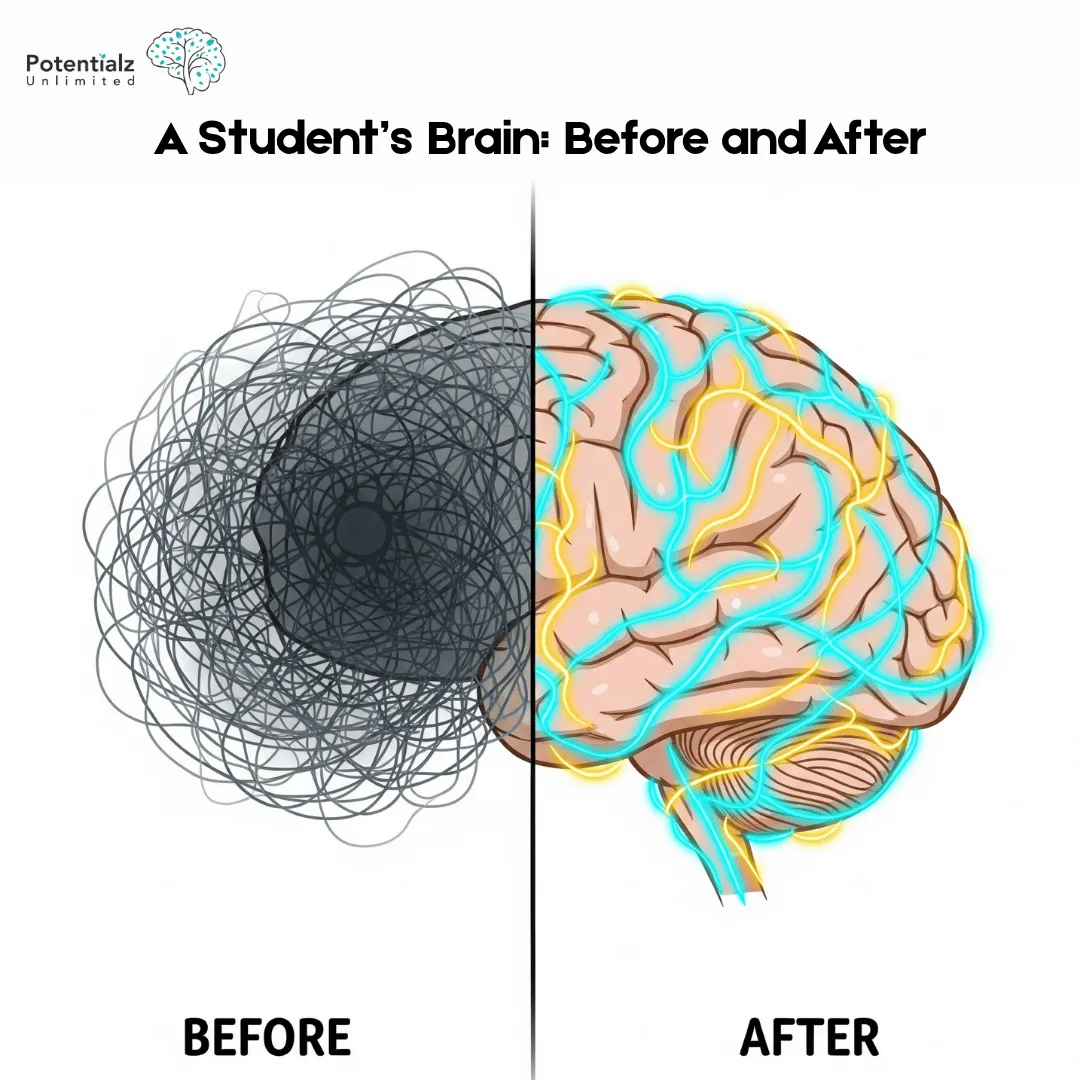 A creative illustration depicting an unfocused versus a focused brain.
Think about it: every morning when you wake up, your brain is making thousands of decisions. What to eat, when to study, how to handle stress, whether to exercise. But what if most of these decisions could happen automatically? This would free up your mental energy for things that truly matter, like acing that math test or pursuing your creative passions.
This is the power of neuroplasticity – your brain’s amazing ability to reorganize itself by forming new neural connections throughout your life. When you repeat behaviors consistently, your brain builds stronger pathways. This makes those behaviors easier and more automatic over time. It’s like creating a superhighway in your mind for success.
Research from Dr. Phillippa Lally and her team at University College London showed that it takes an average of 66 days for a new behavior to become automatic (Lally et al., 2010). Some habits formed faster – drinking a glass of water took just 18 days – while others took longer, up to 254 days for more complex routines. The key insight? Consistency matters more than perfection.
In this comprehensive post, we’ll explore the fascinating psychology behind habit formation and reveal six scientifically proven daily habits that can transform your mental performance. You’ll discover why willpower alone isn’t enough, how to hack your environment for success, and most importantly, how to build a personalized habit system that works with your teenage brain, not against it.
Understanding Habit Formation: The Psychology Behind Your Choices
Understanding how habits work is like having a secret manual for your brain. Researchers have discovered that habits operate through a neurological loop consisting of three parts: a cue (or trigger), a routine (the behavior itself), and a reward (the benefit you gain). This concept, popularized by investigative reporter Charles Duhigg in his groundbreaking book “The Power of Habit,” explains why some behaviors stick while others fade away (Duhigg, 2012).
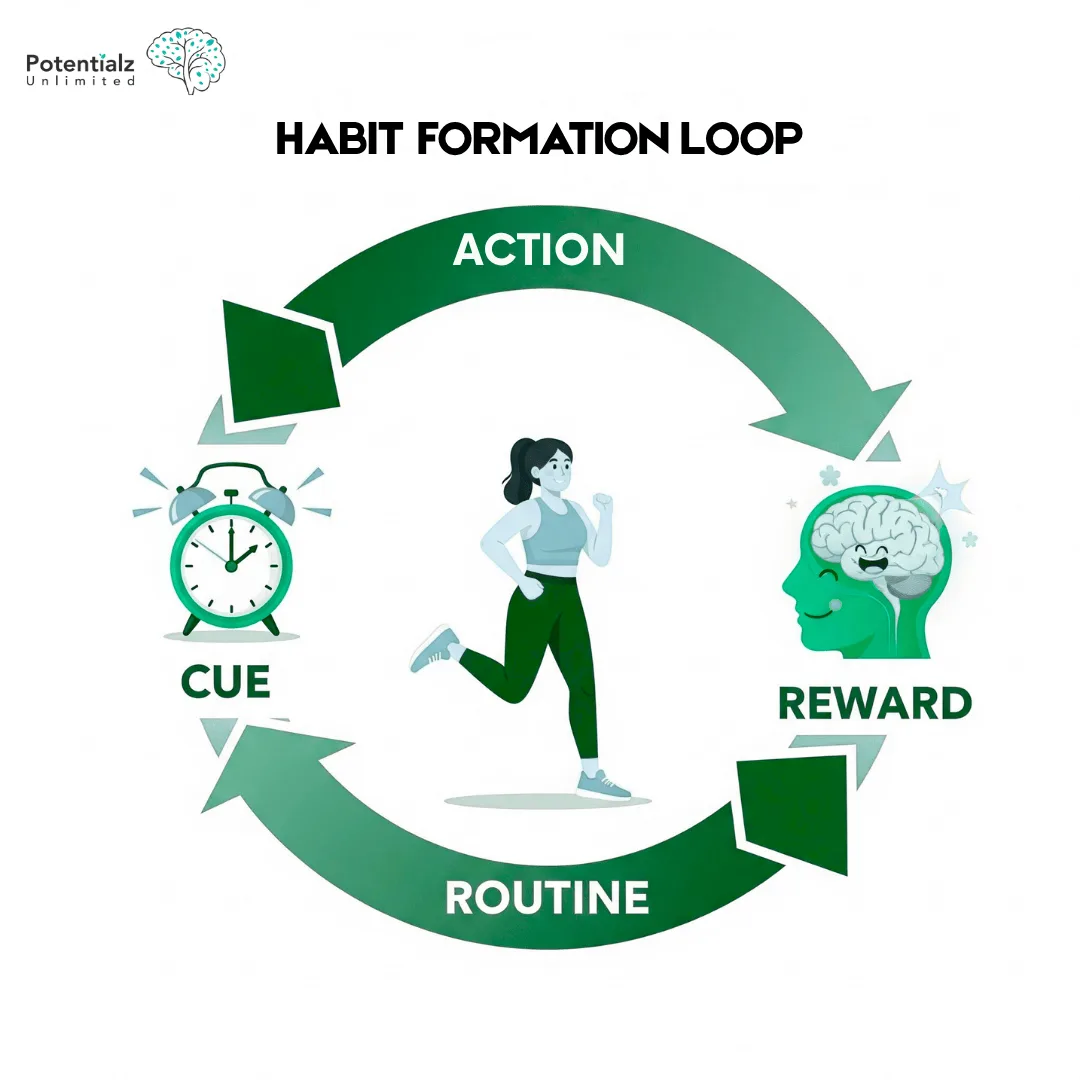
Let’s break this down with an example. Imagine you want to develop a habit of doing homework right after school:
- Cue: Walking through your front door
- Routine: Going straight to your desk and opening your textbooks
- Reward: The satisfaction of checking items off your to-do list and having free time later
The magic happens in your brain’s basal ganglia, a region that plays a crucial role in developing emotions, memories, and pattern recognition. When you first start a new behavior, your prefrontal cortex – the brain’s “CEO” – has to work hard. However, as you repeat the behavior, your basal ganglia takes over, making the action more automatic and requiring less mental effort.
This process is strengthened by myelination – the development of fatty tissue around nerve fibers that allows electrical impulses to travel faster. Consider it like upgrading from a dirt road to a high-speed motorway. The more you repeat a behavior, the more myelinated that neural pathway becomes, making the habit feel automatic.
Unique Teen Brain Development
Here’s where it gets really interesting for teenagers: your brain is still developing until around age 25. This means you have a unique advantage in forming new habits. Your neural plasticity is at its peak, making this the perfect time to establish positive patterns that will serve you for life.
However, a crucial insight most people miss is this: willpower alone isn’t enough to create lasting habits. Research by Stanford psychologist BJ Fogg shows that motivation fluctuates dramatically, but environmental cues remain constant (Fogg, 2019). This is why designing your environment is so much more powerful than relying on motivation.
For instance, if you want to read more, don’t just rely on remembering to pick up a book. Place a book on your pillow so you see it every night. Remove distracting apps from your phone’s home screen, and keep your charger in another room. You’re engineering your environment to make the desired behavior easier and competing behaviors harder.
The Teenage Brain and Motivation
The teenage brain has some unique characteristics that affect habit formation. The reward system is more sensitive. This means you experience stronger positive feelings from achievements, but also stronger negative feelings from setbacks. Understanding this can help you design habits that work with your brain’s natural tendencies rather than against them.
Six Brain-Boosting Daily Habits Backed by Science
Now that we understand how habits work, let’s explore six daily habits that can dramatically improve your mental performance. Each one is backed by solid scientific evidence and is specifically chosen because they’re achievable for busy teenagers.
Habit 1: Morning Movement (The Cognitive Catalyst)
Research shows that physical exercise is one of the most powerful cognitive enhancers available. A groundbreaking study published in Frontiers in Psychiatry followed over 1.2 million adults. It found that people who were physically active had 43% fewer days of poor mental health compared to those who were sedentary (Brown et al., 2024). The benefits peaked at 3-5 exercise sessions per week, lasting 30-60 minutes each.

Why does exercise have such profound effects on your brain? When you exercise, your body releases two powerful chemicals: Brain-Derived Neurotrophic Factor (BDNF) and Insulin-like Growth Factor 1 (IGF-1). BDNF acts like fertilizer for your brain cells, promoting the growth of new neurons and strengthening connections between them. IGF-1 crosses the blood-brain barrier and plays a crucial role in brain development and cognition.
Your morning movement protocol:
- Time needed: Just 10-15 minutes
- Best options: Jumping jacks, push-ups, yoga flow, dancing to favorite songs, or a quick walk around the block
- Cue: Set your workout clothes next to your bed the night before
- Reward: Track your energy levels throughout the day – you’ll notice the difference immediately
Starting small is key. Even 5 minutes of movement can trigger the release of these beneficial brain chemicals. Research shows that the cognitive benefits kick in immediately and can last for hours after exercise.
Habit 2: Mindful Breathing (The Stress Buster)
Stress is the enemy of peak mental performance. When you’re stressed, your brain releases cortisol. This can impair memory formation, reduce focus, and make it harder to think clearly. The good news? You have a powerful stress-busting tool available 24/7: your breath.
Mindfulness meditation and controlled breathing have been shown to reduce cortisol levels, increase grey matter in areas of the brain associated with learning and memory, and improve emotional regulation (Goyal et al., 2014). Even just 5 minutes of daily mindful breathing can create measurable changes in your brain within 8 weeks.
Your simple breathing technique:
- Sit comfortably and close your eyes
- Breathe in for 4 counts through your nose
- Hold for 4 counts
- Exhale for 6 counts through your mouth
- Repeat for 5-10 cycles
Cue: Link this to an existing habit, like right after you brush your teeth in the morning.
Reward: Notice how much calmer and more focused you feel afterward.
This habit is flexible. You can use it before big tests, during stressful moments, or anytime you need to reset your mental state. It’s like having a reset button for your brain.
Habit 3: Strategic Learning Windows (The Timing Optimizer)
Your brain doesn’t operate at the same level all day long. Research on circadian rhythms shows that different cognitive functions peak at different times. Understanding these patterns can dramatically improve your learning efficiency.
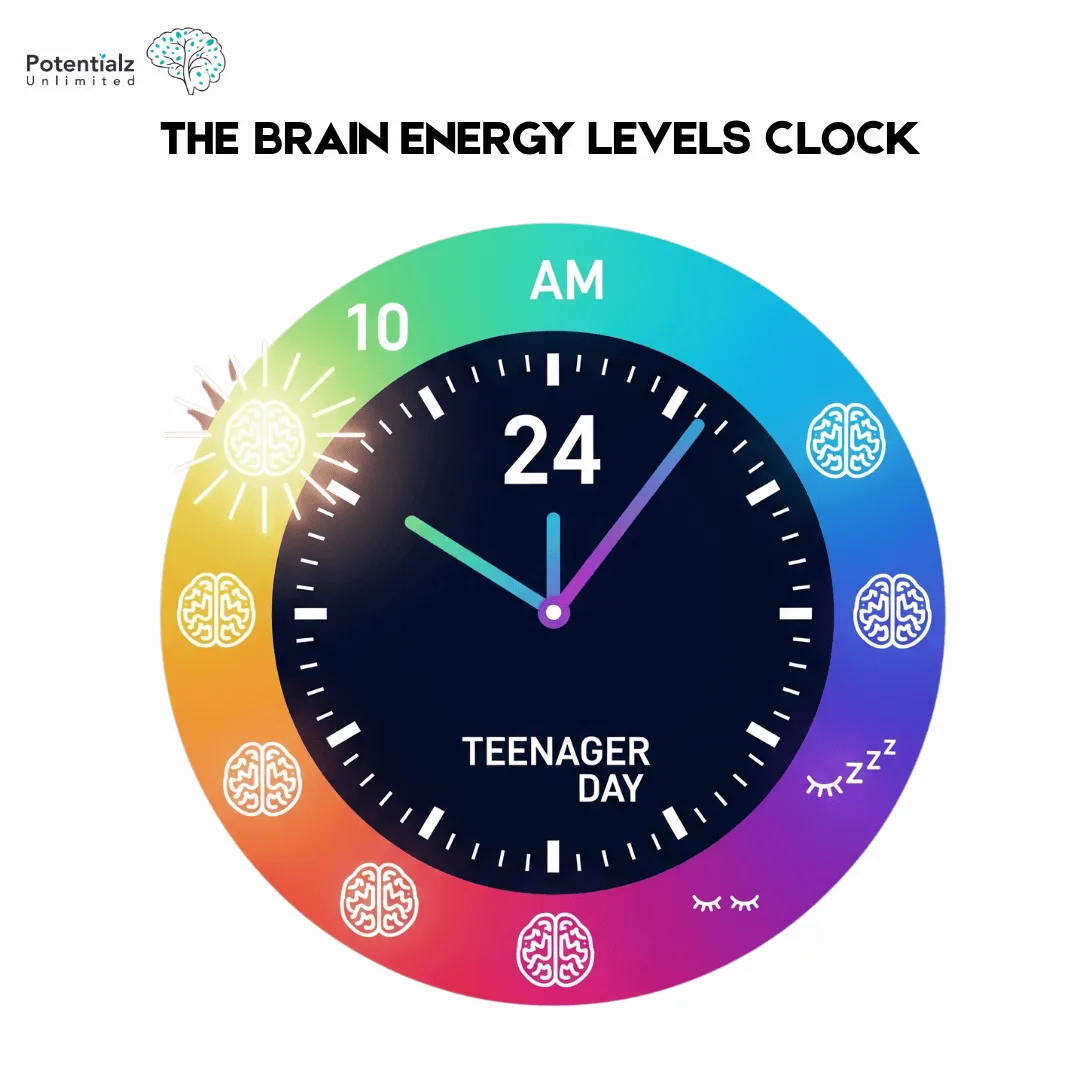
For most teenagers, optimal times are:
- 9-11 AM: Best for absorbing new information and complex learning
- 1-3 PM: Great for creative tasks and problem-solving
- 6-8 PM: Excellent for review and memory consolidation
This timing relates to your body’s natural cortisol rhythm. Cortisol levels are highest in the morning, which enhances focus and alertness. As cortisol decreases throughout the day, creativity increases. Afternoon is therefore perfect for brainstorming and creative projects.
Your strategic learning protocol:
- Schedule your most challenging subjects during your peak hours
- Use afternoon time for creative projects and group work
- Review and consolidate learning in the early evening
- Cue: Set specific phone alarms for your peak learning windows
- Reward: Track your comprehension and retention – you’ll be amazed at the improvement
Remember, these are general patterns. Pay attention to your own energy levels and adjust accordingly.
Habit 4: Social Connection (The Relationship Booster)
Humans are social creatures, and your brain is wired for connection. Research by Dr. John Cacioppo at the University of Chicago revealed that social isolation can trigger a cascade of negative effects. This includes disrupted sleep, elevated blood pressure, increased stress hormones, weakened immune systems, and even cognitive decline (Cacioppo & Hawkley, 2009).
However, face-to-face interaction provides cognitive benefits that digital communication simply can’t match. In-person interaction allows your brain to process facial expressions, body language, tone of voice, and countless other social cues that strengthen neural networks involved in empathy, emotional intelligence, and social cognition.
Your daily connection habit:
- Have at least one meaningful face-to-face conversation each day
- This could be over dinner with family, between classes with friends, or during office hours with a teacher
- Focus on quality over quantity – one genuine 10-minute conversation beats dozens of superficial text exchanges
- Cue: Put your phone away during meals and designated social times
- Reward: Notice how much more connected and supported you feel
Research shows that people with strong social connections live longer, have better mental health, and even perform better academically. It’s not about being popular – it’s about having meaningful relationships where you feel seen, heard, and valued.
Habit 5: Digital Boundaries (The Focus Protector)
Let’s be honest: your devices are designed to be addictive. Tech companies employ neuroscientists and behavioral psychologists to make their apps as engaging as possible. Every notification, like, and swipe triggers a small release of dopamine, the same neurotransmitter involved in addiction.
The issue isn’t just the time spent on devices; it’s how they fragment your attention. Research shows that it takes an average of 23 minutes to fully refocus after a distraction. Constantly checking your phone means you never reach deep focus states where real learning and creative thinking happen.
Your digital boundary system:
- Create phone-free zones: bedroom, study area, and dining table
- Use the “Do Not Disturb” function during study sessions
- Implement a “digital sunset” – no screens 1 hour before bed
- Cue: Place your phone in another room when studying
- Reward: Track your focus sessions and celebrate improvements in concentration
Studies show that students who kept their phones in another room during studying performed significantly better on tests than those who simply turned their phones face-down on their desk. The mere presence of the device, even when silent, can reduce cognitive performance.
Habit 6: Quality Sleep Hygiene (The Ultimate Brain Booster)
Sleep isn’t just rest – it’s when your brain does its most important work. During sleep, your brain consolidates memories, clears out metabolic waste, and strengthens the neural pathways formed during the day. Studies show that students who get adequate sleep (8-10 hours for teenagers) perform significantly better academically than those who are sleep-deprived.

During deep sleep, your brain literally shrinks, allowing cerebrospinal fluid to wash away toxic proteins that accumulate while you’re awake. This “brain washing” process is crucial for maintaining cognitive function and may help prevent neurodegenerative diseases later in life.
Your sleep optimization routine:
- Keep a consistent sleep schedule, even on weekends
- Create a cool, dark, quiet environment (65-68°F is optimal)
- No screens for at least 1 hour before bed – blue light interferes with melatonin production
- Try reading, gentle stretching, or journaling instead
- Cue: Set a phone alarm for “bedtime prep” one hour before sleep
- Reward: Track your energy and mood the next day
Quality sleep also plays a crucial role in habit formation itself. Studies show that sleep helps consolidate the neural pathways associated with new habits, making them easier to maintain.
Creating Your Personal Habit Stack
Now that you know which habits to build, let’s talk about how to do it effectively. The secret isn’t simply willpower – it’s strategy. The most effective approach is called “habit stacking,” a technique developed by behavior change expert James Clear.
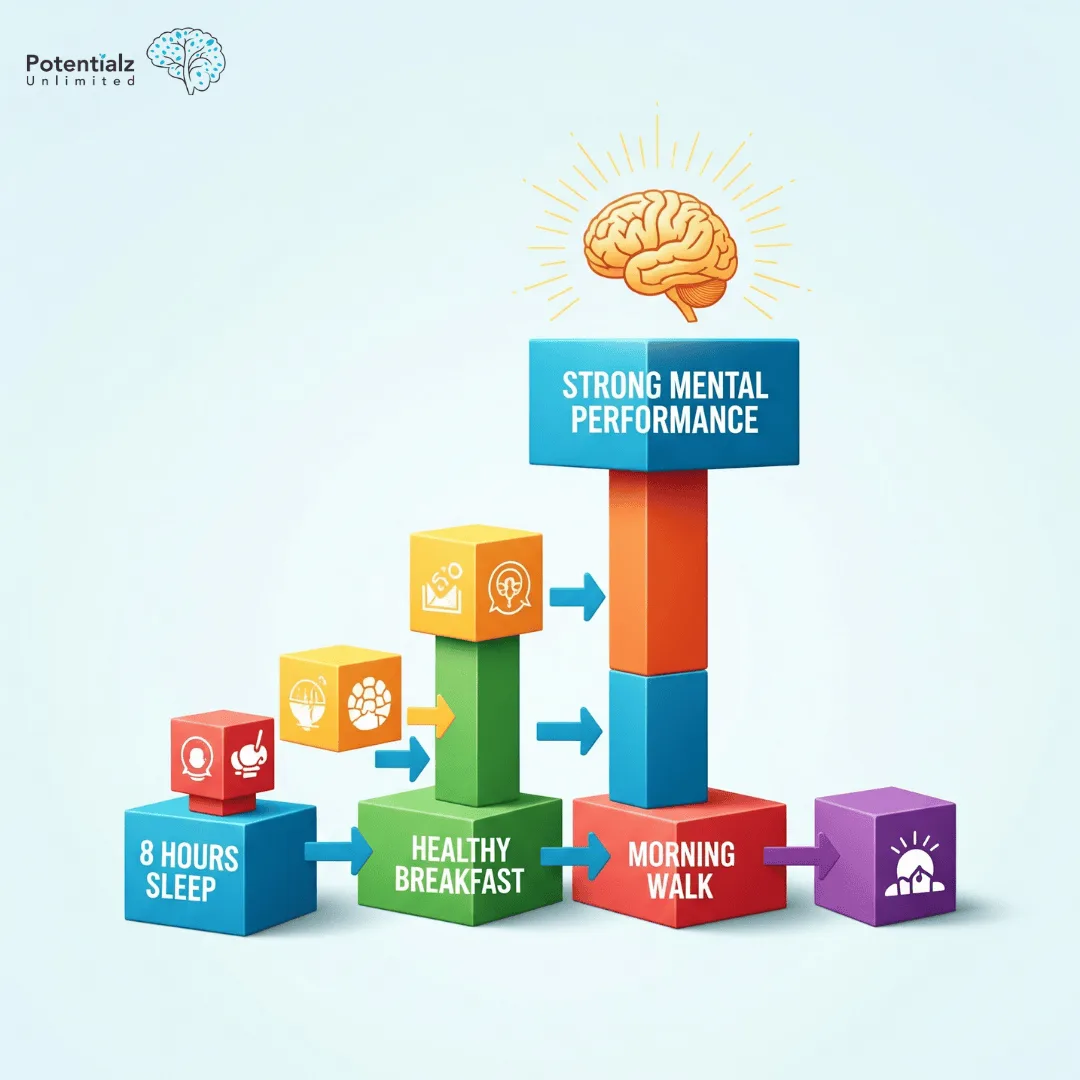
Habit stacking works by linking new habits to existing behaviors that are already automatic. The formula is simple: “After I [current habit], I will [new habit].” This leverages your already built neural pathways, making it much easier to establish new habits.
Here’s a sample morning habit stack:
- After I get out of bed, I will drink a glass of water.
- After I drink water, I will do 2 minutes of stretching.
- After I stretch, I will take 10 deep breaths.
- After I breathe, I will write down three things I’m grateful for.
- After I write, I will review my goals for the day.
Notice how each habit triggers the next one, creating a chain reaction of positive behaviors. Start with just one or two habits, and gradually add more as they become automatic.
The “2-Minute Rule” is crucial for success. When you’re starting a new habit, it should take less than 2 minutes to complete. Want to develop a reading habit? Start with reading one page, not one chapter. Want to exercise daily? Start with putting on your workout clothes, not doing a full workout.
This isn’t about the 2-minute action itself – it’s about establishing the identity of someone who reads daily or exercises regularly. Once the habit is established, you can gradually increase the duration and intensity.
Troubleshooting Common Challenges
Challenge 1: “I keep forgetting to do my new habit.”
- Solution: Link it to an existing habit and use environmental cues. Put your workout clothes next to your bed, place a book on your pillow, or set phone reminders.
Challenge 2: “I miss a day and then give up completely.”
- Solution: Never miss twice in a row. Missing once is a mistake, but missing twice means starting a new (bad) habit. Get back on track immediately.
Challenge 3: “I don’t see results fast enough.”
- Solution: Focus on the process, not the outcome. Track the behavior itself (did you do your 5-minute morning routine?) rather than the results (do you feel more energetic?).
Challenge 4: “My schedule is too unpredictable.”
- Solution: Create “minimum viable habits.” This means the smallest possible version of your habit you can do even on your worst days. Can’t do a 20-minute workout? Do 10 jumping jacks. Can’t meditate for 10 minutes? Take 3 deep breaths.
The key is progress, not perfection. Research shows that people who miss their habit occasionally but get back on track still develop strong neural pathways. Consistency over intensity is the name of the game.
Measuring Your Mental Performance Progress
One of the most motivating aspects of building brain-boosting habits is seeing measurable improvements in your mental performance. But how do you track something as complex as cognitive function? Here are some simple, research-backed methods that don’t require expensive tests or equipment.
Daily Energy and Mood Tracking
Keep a simple 1-10 scale rating each day for:
- Energy levels (morning, afternoon, evening)
- Focus quality during study sessions
- Mood stability throughout the day
- Sleep quality (how rested you feel upon waking)
Academic Performance Indicators
- Time required to complete homework assignments
- Comprehension speed when reading new material
- Ability to recall information without notes
- Quality of creative work and problem-solving
Stress Resilience Measures
- How quickly you bounce back from setbacks
- Ability to stay calm during high-pressure situations
- Quality of decision-making when stressed
- Physical symptoms of stress (headaches, tension, etc.)
Technology Tools That Actually Help
While we discussed the importance of digital boundaries, there are some apps that can genuinely support your habit-building journey:
- Habit tracking apps like Streaks or Habitica can provide visual feedback on your consistency.
- Sleep tracking through your phone or a wearable device can help optimize your sleep habits.
- Focus apps like Forest or Freedom maintain digital boundaries during study sessions.
- Meditation apps like Headspace or Calm can guide your mindfulness practice.
The 30-60-90 Day Check-ins
Mark your calendar for regular progress reviews:
- 30 days: Are your habits feeling more automatic? What’s working well? What needs adjustment?
- 60 days: Notice significant improvements in energy, focus, or academic performance? Time to add new habits or increase intensity.
- 90 days: Celebrate your success! By this point, your new habits should feel natural and automatic.
Remember, the goal isn’t to achieve perfection – it’s to create sustainable improvements in your daily mental performance. Some days will be better than others, and that’s completely normal. The key is having systems in place that help you consistently show up for yourself, even when motivation is low.
When to Adjust Your Routine
Your needs will change as you grow, face new challenges, and move through different seasons of life. Here are signs it might be time to modify your habits:
- Consistently struggling to maintain certain habits for more than a week
- Feeling overwhelmed by too many new behaviors at once
- Major life changes (new school, moving, family changes)
- Achieving your initial goals and are ready for new challenges
Understanding habit psychology allows you to apply the same principles to any area of your life. Whether you want to improve your athletic performance, develop creative skills, or build stronger relationships, the fundamental principles remain the same: start small, be consistent, link to existing habits, and focus on progress over perfection.
Conclusion: Your Journey to a Thriving Brain Starts Today
Building habits that support peak mental performance isn’t about achieving an impossible standard. It’s about making small, consistent choices that compound over time to create remarkable results. The research is clear: your daily habits have the power to literally rewire your brain, improve your cognitive abilities, and set you up for success in every area of life.
You have a unique advantage as a teenager. Your brain’s neuroplasticity is at its peak now, making this the perfect time to establish positive patterns that will serve you for decades to come. The habits you build now – morning movement, mindful breathing, strategic learning, social connection, digital boundaries, and quality sleep – aren’t just good for your grades. They are investments in your future self.
Start with just one habit from this guide. Choose the one that feels most achievable and appealing to you right now. Use the habit stacking technique to link it to something you already do automatically. Give yourself at least 66 days to see real results, and remember that missing a day here and there won’t derail your progress – just don’t miss twice in a row.
Your brain is remarkably adaptable and constantly changing based on what you do with it. By understanding the psychology of habit formation and applying these evidence-based strategies, you’re not just improving your mental performance. You’re taking control of your neuroplasticity and actively shaping the person you want to become.
The journey of a thousand miles begins with a single step. Your journey to a thriving brain begins with a single habit. Which one will you choose?
Knowledge Check Quiz
Question 1: According to research, how long does it take on average to form a new habit?
- a) 21 days
- b) 66 days
- c) 90 days
- d) 1 year
Question 2: What are the three components of the habit loop?
- a) Trigger, Action, Consequence
- b) Cue, Routine, Reward
- c) Start, Middle, End
- d) Think, Act, Reflect
Question 3: Which daily habit showed the most significant impact on reducing poor mental health days?
- a) Meditation
- b) Reading
- c) Regular exercise
- d) Healthy eating
Question 4: What brain chemical acts like “fertilizer” for brain cells during exercise?
- a) Dopamine
- b) Serotonin
- c) BDNF (Brain-Derived Neurotrophic Factor)
- d) Cortisol
Question 5: According to the “2-Minute Rule,” how long should a new habit take when you’re first establishing it?
- a) Less than 2 minutes
- b) Exactly 2 minutes
- c) 2-5 minutes
- d) It doesn’t matter
Answer Key:
- b) 66 days
- b) Cue, Routine, Reward
- c) Regular exercise
- c) BDNF (Brain-Derived Neurotrophic Factor)
- a) Less than 2 minutes
References
- Brown, C. E. B., Richardson, K., Halil-Pizzirani, B., Hughes, S., Atkins, L., Pitt, J., Yücel, M., & Segrave, R. A. (2024). PEAK Mood, Mind, and Marks: A pilot study of an intervention to support university students’ mental and cognitive health through physical exercise. Frontiers in Psychiatry, 15, Article 1379396. https://doi.org/10.3389/fpsyt.2024.1379396
- Cacioppo, J. T., & Hawkley, L. C. (2009). Perceived social isolation and cognition. Trends in Cognitive Sciences, 13(10), 447-454. https://doi.org/10.1016/j.tics.2009.06.005
- Clear, J. (2018). Atomic habits: An easy & proven way to build good habits & break bad ones. Avery.
- Duhigg, C. (2012). The power of habit: Why we do what we do in life and business. Random House.
- Fogg, B. J. (2019). Tiny habits: The small changes that change everything. Houghton Mifflin Harcourt.
- Goyal, M., Singh, S., Sibinga, E. M., Gould, N. F., Rowland-Seymour, A., Sharma, R., Berger, Z., Sleicher, D., Maron, D. D., Shihab, H. M., Ranasinghe, P. D., Linn, S., Saha, S., Bass, E. B., & Haythornthwaite, J. A. (2014). Meditation programs for psychological stress and well-being: A systematic review and meta-analysis. JAMA Internal Medicine, 174(3), 357-368. https://doi.org/10.1001/jamainternmed.2013.13018
- Lally, P., Van Jaarsveld, C. H., Potts, H. W., & Wardle, J. (2010). How are habits formed: Modelling habit formation in the real world. European Journal of Social Psychology, 40(6), 998-1009. https://doi.org/10.1002/ejsp.674
Need Professional Support?
If you're experiencing mental health concerns, our team is here to help.